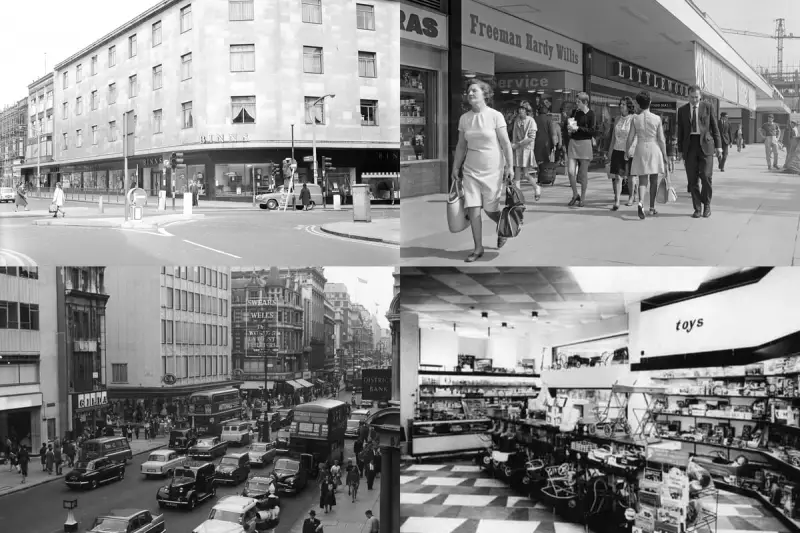
Before the rise of online shopping, the department store reigned supreme as the ultimate destination for convenience, offering everything a family needed under one magnificent roof. These high street giants were more than just shops; they were social hubs and places of wonder, especially for children. The advent of the internet and changing consumer habits spelled the end for many of these beloved chains, leaving a void on Britain's high streets and in the nation's collective memory.
The Golden Age of the High Street
For those who grew up in the 1960s and 70s, a trip to a department store was a special occasion. It wasn't just about purchasing goods; it was an experience. The magical toy sections, the treat of a meal in the in-store cafe, and the joy of picking sweets from a pick 'n' mix counter are fondly remembered rituals. These stores were pillars of the community, and their demise has left a tangible sense of loss.
Remembering the Retail Giants
Let's take a step back in time and revisit nine of the biggest department store chains that once defined the British shopping experience.
1. British Home Stores (BHS)
Launched in 1928, BHS was a household name for decades. Shoppers particularly adored its extensive lighting department. It was also the go-to destination for school uniforms and underwear. No visit was complete without a classic meal of egg, ham and chips at its popular in-store cafe.
2. Binns
With origins dating back to 1807 in Sunderland, Binns expanded to include branches in Hartlepool, Newcastle, and Edinburgh. Renowned for its quality clothing, the chain was also a favourite for a sit-down meal in its restaurant. Although bought by House of Fraser in 1953, the Binns name endured for years. All stores were eventually rebranded, except for the Darlington branch, which still operates as Binns today.
3. Woolworths
A true high street titan, Woolworths opened its first UK store in Liverpool in 1909. It traded for an impressive 100 years before the last branches closed in January 2009. For many, it is synonymous with its legendary pick 'n' mix sweets. It was also a hotspot for music lovers and a trusted source for children's clothes, toys, and games.
4. Littlewoods
Beginning in 1923 as a football pools company, Littlewoods grew into a retail behemoth. It started as a mail-order firm, with its first high street store opening in 1937. Many have fond memories of browsing the famous Littlewoods catalogue. Its cafes were hugely popular, especially for their hearty full English breakfasts. The final Littlewoods stores closed in 2005, with many sites being sold to Primark.
A Legacy of Fond Memories
The closure of these department store chains represents more than just a shift in retail; it marks the end of an era. These were places where memories were made, from a child's first glimpse of a toy department wonderland to a family's weekly shopping ritual. Their absence is a poignant reminder of how the high street has transformed, leaving behind a powerful sense of nostalgia for the golden age of British retail.