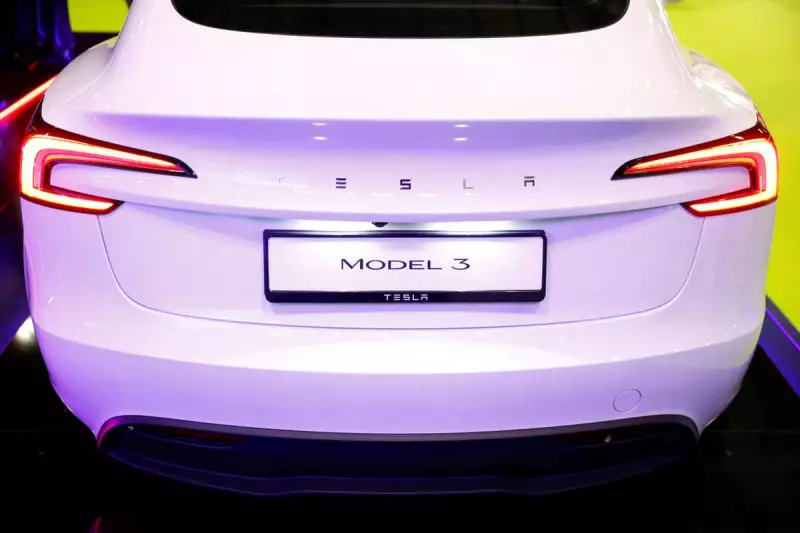
Tesla has taken decisive action to counter a significant downturn in its European sales, launching a more affordable version of its Model 3 sedan across the continent. This strategic price reduction comes as the electric vehicle (EV) pioneer grapples with a potent mix of weakening consumer demand, intense competition from China, and a growing backlash against the polarising political activities of its chief executive, Elon Musk.
Price Cuts and Political Headwinds
The newly introduced Model 3 Standard is now listed at €37,970 in Germany, 330,056 Norwegian kroner, and 449,990 Swedish kronor. This follows a similar move with Tesla's bestselling Model Y SUV, indicating a broader strategy to stimulate demand by appealing to a wider, more price-sensitive audience. Musk has publicly argued that this lower-cost option, first launched in the US in October, is key to reinvigorating the company's sales momentum.
However, Tesla's challenges in Europe extend beyond pricing. Analysts point to a tangible buyer backlash against Elon Musk's political engagements, particularly his support for Donald Trump's election campaign and his subsequent work within the Trump administration. As head of the so-called 'Department of Government Efficiency' (Doge), Musk oversaw extensive job cuts before resigning in May after a disagreement over fiscal policy.

Further alienating potential customers, Musk has made several controversial interventions, including appearing to give a Nazi salute at a Trump rally, expressing support for Germany's far-right AfD party, and levelling unsubstantiated accusations at UK Labour leader Keir Starmer and other senior politicians.
Fierce Competition and a Cooling EV Market
The political drama unfolds against a backdrop of increasingly fierce market competition. Tesla's sales have slumped across Europe as Chinese automaker BYD, now the world's largest EV producer, outsold the American giant in the region for the first time this past spring. This shift marks a significant moment in the global EV race, highlighting the formidable challenge posed by well-funded and agile Chinese manufacturers.
Broader market conditions are also softening. In the UK, electric car sales grew at their slowest rate in two years this November, at just 3.6%, according to the Society of Motor Manufacturers and Traders (SMMT). Mike Hawes, SMMT's chief executive, warned that this trend "should be seen as a wake-up call that a sustained increase in demand for EVs cannot be taken for granted."
Critics argue that recent government policy is further undermining demand. The Chancellor's announcement of a new pay-per-mile road tax for EVs, set at 3p per mile from April 2028, will cost the average motorist an additional £250 annually. Hawes criticised the move, stating, "We should be taking every opportunity to encourage drivers to make the switch, not punishing them for doing so."
Can Affordability Overcome Controversy?
Tesla's European strategy is now clear: use aggressive pricing to win back market share and attract new buyers who may have been priced out previously. The success of this gambit is far from guaranteed. The company must now navigate a perfect storm of political brand damage, a more cost-competitive landscape led by BYD, and a general cooling of enthusiasm for electric vehicles in some key markets.
The coming months will be a critical test of whether the allure of a cheaper Tesla can outweigh the reputational damage associated with its CEO's actions and whether the brand can reclaim its dominance in a European market it once led virtually unchallenged.