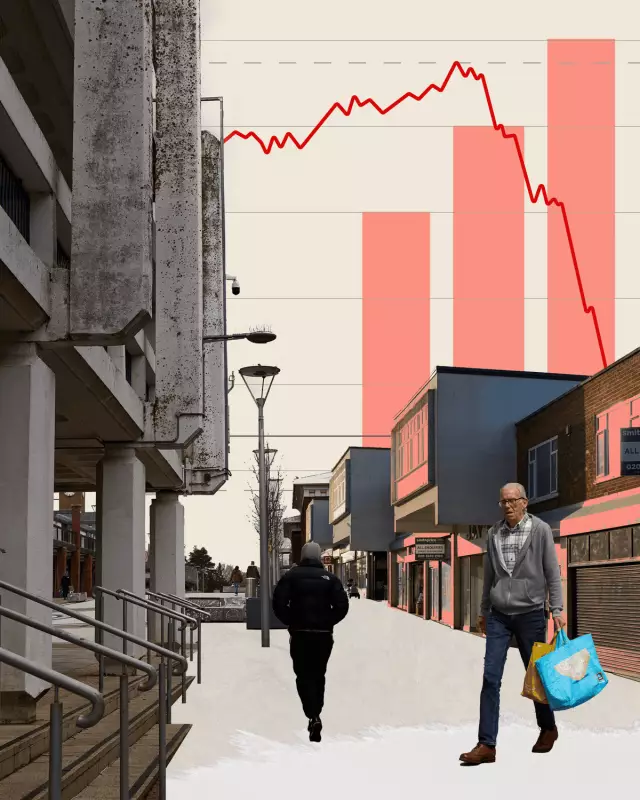
From Royal Celebration to Retail Desolation: The Fall of Newton Aycliffe's High Street
Under brilliant blue skies adorned with celebratory bunting, thousands of residents from across County Durham gathered to witness a historic moment. On 27 May 1960, a young Queen Elizabeth II, on her first provincial tour after the birth of Prince Andrew, officially opened the town of Newton Aycliffe. The occasion, marked by Light Infantry buglers and commemorative pamphlets, symbolised a bold new vision for postwar Britain—a modern, prosperous community rising from wartime rubble.
Six miles north of Darlington, this former industrial wasteland had been personally selected by William Beveridge, architect of the welfare state, as the site for a pioneering new town in the late 1940s. Beveridge envisioned a "paradise for housewives" centred on a high street he proudly named Beveridge Way. For decades, families relocated from across England, drawn by reliable manufacturing jobs and the promise of a better quality of life.
A High Street in Crisis: Vacant Shops and Fading Hope
Nearly eighty years later, Beveridge Way tells a profoundly different story. Of its forty-five retail units, twenty-three stand empty—a vacancy rate nearly four times the national average. The remaining businesses include a Ladbrokes betting shop, a Greggs bakery, four charity shops, several discount stores, and a pawnbroker. The banks have long departed, with the nearest now requiring a ninety-minute round trip by bus to Darlington.

Faded signage bears witness to an exodus of household names: Wilko, Select, and Peacocks among them. "In the 60s it was a fabulous place to live," recalls Ian Gaul, 67, over a pint in the adjacent Phoenix working men's club. "The town centre was absolutely beautiful. You couldn't wish for a better place to live." His assessment today is starkly different: "You would be ashamed to bring someone here now. It's unrecognisable."
Colin Whitehead, 70, who moved to Newton Aycliffe in 1969, remembers the enduring impact of the Queen's visit. However, he observes that since the early 2000s, the high street has "only ever gone backwards." The opening of a large Tesco superstore nearby, which one politician claimed "sucked £1m a week out of the local economy," accelerated the decline. "There was all sorts before that, then one by one over the years it all vanished. Now it's disgraceful," he laments.
The Billionaire Landlord: A Remote Owner and Local Frustration
What makes Newton Aycliffe's situation particularly notable is that its entire town centre is owned by one of Britain's wealthiest yet most discreet property tycoons. Benzion Freshwater, 77, heads a family worth £2.6bn according to the Sunday Times Rich List. His company, Daejan Holdings, has owned Beveridge Way since 1990.
While the high street represented a solid investment during the retail golden age of the 1990s, its fortunes have dramatically waned. Company accounts reveal Daejan made a £4m loss on the town over the past two years. Yet this sum is negligible within their transatlantic empire; the £3.2m worth of property on Beveridge Way constitutes just 0.12% of their global holdings. "It's just a line on a spreadsheet," remarks one local government expert.
Local shopkeepers express deep frustration with the absentee landlord. They report that vacant units are left to deteriorate rather than being offered at discounted rates or let temporarily to community groups. Electrical faults go unfixed, and buildings suffer from leaks and decay. "They're making it awkward for people to stay," says Nadine Nesbitt, co-owner of Petite Boutique, who notes that her £720 monthly rent hasn't increased for years, but others have left due to rent disputes. "It's like they're hanging on to what's left and that's it—they're not bothered if shops go."
Durham County Council, which holds near-quarterly meetings with Daejan, states the wider town centre vacancy rate was 26% last year—still nearly double the national average. Graham Wood, the council's economic development manager, acknowledges the challenges posed by changing shopping habits and online retail pressure, but insists work is ongoing with Daejan to develop a new strategic plan for the town.

Political Repercussions: High Street Decline Fuels Reform UK's Rise
The deterioration of Beveridge Way is not merely a local issue; it reflects a national political dynamic. Research consistently shows a direct correlation between high street decline and growing support for Reform UK. The thinktank Power To Change identified that in the 100 areas with the most derelict high streets, Reform soared to second place in 24% of them during the general election, compared to 14% across the rest of England.
County Durham was among ten English local authorities won by Nigel Farage's party in last year's local elections—a victory he celebrated in a Newton Aycliffe working men's club. Reform came a strong second in the newly created Newton Aycliffe constituency in the 2024 general election, nearly 9,000 votes behind Labour.
Alan Strickland, Newton Aycliffe's Labour MP, acknowledges the pressing need for action. "The high street had 'lacked attention for too long'," he states. "We need strong leadership from the landlord and the county council to bring forward ambitious plans for its future." He highlights the Labour government's national "Pride in Place" programme, which will allocate £20m each to 250 struggling areas, as a potential avenue for regeneration.
A National Pattern: The Changing Face of British Retail
Newton Aycliffe's experience mirrors broader transformations across the UK. Nearly one in three retail sales now occurs online, compared to just 5% in 2008. As traditional retailers vanish, high streets are increasingly populated by service-based businesses that cannot be digitised. Since the pandemic, barbers and vape shops have been among the fastest-growing sectors, with the number of vape shops in England rising by 1,200% over the past decade.
An Ipsos poll last year found high street decline was the second biggest concern for people about their local area, after high shop prices. Nearly 70% of respondents said there were too many vape shops, while 58% criticised the proliferation of barbers. These changes are felt most acutely in Labour's traditional heartlands across the Midlands and north-east England, creating significant political vulnerability.
As Sandra Seal, 78, who minds the till at Thames grocers, summarises the local sentiment towards the distant owners: "Because they don't live here, they don't see it. None of them live like we live." Her son's shop struggles with faulty lights that the town centre manager, employed by Daejan, has failed to address. The town's Christmas decorations and a malfunctioning 77ft clock tower, which couldn't be trusted to chime accurately on Remembrance Day, further symbolise the neglect.
The story of Newton Aycliffe's high street serves as a potent symbol of wider economic and social shifts. From its hopeful beginnings as a model postwar community to its current state of neglect under billionaire ownership, Beveridge Way illustrates how physical decay can fuel political disillusionment. As Britain grapples with the future of its town centres, the fate of this Durham precinct may well indicate broader national trends in retail, community identity, and political allegiance.