MPs Demand Serious Fraud Office Investigation Into UK Home Insulation Sector
Members of parliament have called for an urgent investigation by the Serious Fraud Office into the UK's home insulation industry, following what they describe as a clear and catastrophic failure of two major government-backed schemes. The parliamentary public accounts committee has revealed that more than 30,000 households have been left with significant defects, with thousands facing immediate health and safety risks in their own homes.
Scale of Damage and Defects
The committee's report, published on Friday, details extensive problems affecting properties across the country. Approximately 3,000 dwellings were found to be so severely damaged that they presented immediate health and safety risks to occupants. The defects include widespread mould growth, water ingress problems, and substantial damage to the structural fabric of walls.
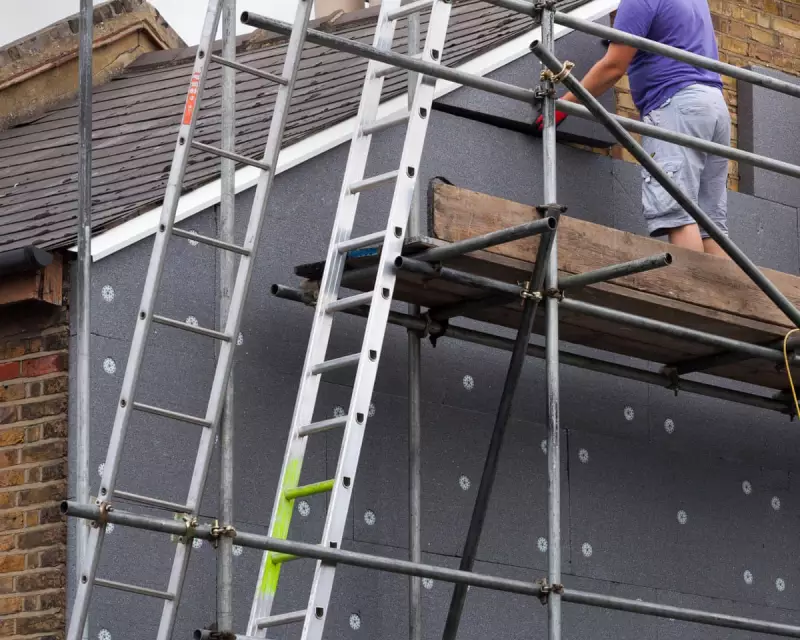
Households that had external cladding installed through these schemes - numbering about 23,000 properties - bore the worst of the damage. An astonishing 98% of these externally clad homes were found to be damaged and in need of repair. Additionally, 29% of homes fitted with internal wall insulation also required remedial work.

Scheme Failures and Government Response
The problematic schemes, known as Eco4 and the Great British Insulation Scheme, were initiated and primarily operated under the previous Conservative government. These programmes formed part of the broader energy company obligation framework, which has since been discontinued by the current Labour administration.
Geoffrey Clifton-Brown, chair of the public accounts committee, delivered a damning assessment of the situation. "This amounts to the most catastrophic fiasco that I have seen on this committee," he stated. "The project was doomed to failure from the start." He attributed the problems to fragmented responsibility among multiple organisations that failed to communicate effectively, combined with a systemic failure to address emerging issues promptly.
Financial and Health Implications
The financial consequences for affected households have been severe. While repair costs have varied considerably, the committee documented one case where remedial work exceeded £250,000. More typical repair bills ranged from £250 to approximately £18,000, creating significant financial burdens for homeowners.
Compounding the problem, many insulation companies responsible for the defective work have since ceased trading, leaving homeowners struggling to secure repairs through guarantee schemes. The parliamentary committee expressed particular concern about vulnerable residents, noting that many affected households contained elderly or low-income occupants who were specifically targeted by the schemes.
Political Fallout and Future Plans
The scandal has created substantial political repercussions, with the current Labour government inheriting responsibility for rectifying the problems. Despite implementing a "find and fix" strategy, progress has been slow - only about 3,000 homes had been repaired by October of last year when the National Audit Office examined the situation.
Jonathan Bean, spokesperson for the charity Fuel Poverty Action, emphasised the human impact: "Ministers need to focus on fixing the already damaged homes and ending the suffering of tens of thousands of often vulnerable people who live in them. Victims of botched retrofits are sick of vague promises - what they want is a public inquiry into this scandal and a guarantee their homes will be fixed."
Broader Energy Policy Implications
The insulation scandal has emerged alongside changes to the government's broader energy efficiency strategy. The new Warm Homes Plan, announced this week, will replace the previous schemes and expand to include funding for solar panels and heat pump installations alongside insulation measures.

However, the government has simultaneously reduced its annual heat pump installation target from 600,000 to 450,000 units. Energy experts have warned that this reduction could potentially jeopardise the UK's ability to meet its statutory carbon emission reduction targets, though government representatives have defended the revised target as realistic and adequately supported.
The Department for Energy Security and Net Zero faces continued scrutiny over its handling of the insulation schemes, with the parliamentary committee criticising the department and associated agencies for being far too slow to act as problems emerged. The committee's report represents one of the most severe criticisms of government retrofit programmes in recent parliamentary history.