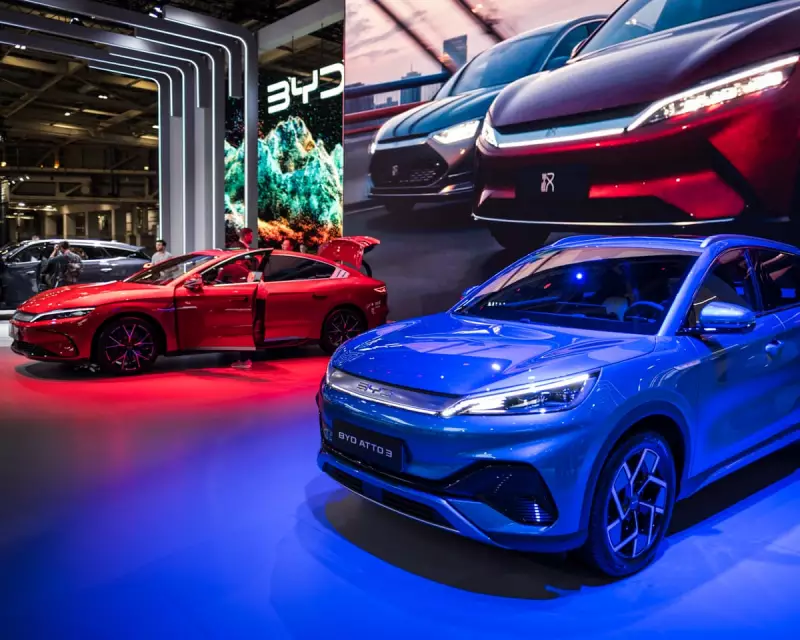
The landscape of British roads is undergoing a dramatic transformation as Chinese electric vehicle manufacturers accelerate their presence in the UK market, with BYD emerging as the surprising sales leader.
West London Showroom Signals Chinese Arrival
What was once Tesla's prime advertising spot at Hogarth Roundabout in west London now showcases Chinese brands Omoda and Jaecoo, both owned by state-controlled manufacturer Chery. This symbolic takeover reflects a broader trend sweeping across Britain's automotive sector.
Steve Young, managing director of the Hogarth dealership, observes the remarkable success firsthand. "Every minute or so the traffic lights change, and drivers are stuck outside our window," he notes, highlighting the strategic location that exposes brands to half a million daily commuters.

UK Becomes Gateway to European Market
According to Berlin-based automotive analyst Matthias Schmidt, Britain has become the crucial entry point for Chinese manufacturers targeting Europe. Of the half-million Chinese cars sold in Western Europe between January and September, 30% were purchased by British buyers.
The sales push has been spearheaded by BYD, which is expected to overtake Tesla as the world's largest battery electric vehicle manufacturer this year. The UK has surprisingly become BYD's biggest market outside China, with September sales surging tenfold compared to the previous year.
State-owned Chery actually emerged as the top-selling Chinese manufacturer in the UK during October, while MG - though bearing a classic British name - is now produced by state-owned SAIC and has overtaken Vauxhall in monthly sales.
Open Market Policy Fuels Chinese Expansion
Unlike the United States, which imposes 100% tariffs on Chinese electric and hybrid cars, or the EU with tariffs ranging from 17% to 38%, the UK has maintained an open market approach. This policy stance has made Britain particularly attractive for Chinese manufacturers seeking European expansion.
Mike Hawes, chief executive of the Society of Motor Manufacturers and Traders, defends this approach: "UK car buyers benefit from a choice of more than 50 global brands and the market has always been open to new entrants." He adds that Chinese brands are "driving competition as more established market players demonstrate their agility."
Tu Le, founder of Sino Auto Insights consultancy, offers a more pragmatic explanation: "The biggest influence in the UK not imposing tariffs is there isn't a domestic automotive manufacturer to protect."
Historical Patterns Repeat with Chinese Twist
Analyst Matthias Schmidt sees history repeating itself. In the 1980s, Margaret Thatcher successfully attracted Japanese manufacturers Nissan, Honda and Toyota to use Britain as their European gateway. The subsequent wave featured Korean imports, and now Chinese brands are following the same pattern.
What distinguishes this latest wave is the dramatic improvement in quality. Steve Young of the Hogarth dealership acknowledges that "some of the initial product was not fit for the UK market. The brands generally have upped their game."
The appeal to consumers becomes clear when examining the vehicles themselves. Chinese manufacturers offer advanced features like driver assistance technology and even in-built karaoke apps at significantly lower prices than European premium brands.
Tanya Sinclair, chief executive of Electric Vehicles UK, confirms that "UK drivers are benefiting" from this new competition. "Some names may be new, but the appeal is clear: high standards, competitive pricing, and innovation that raises the bar for everyone."
As Tu Le succinctly puts it: "At the end of the day, it's value. These cars are good. If I build better products that provide more value to my customer, I win." With Chinese manufacturers backed by substantial government support and facing intense price wars at home, their determined push into the UK market shows no signs of slowing.