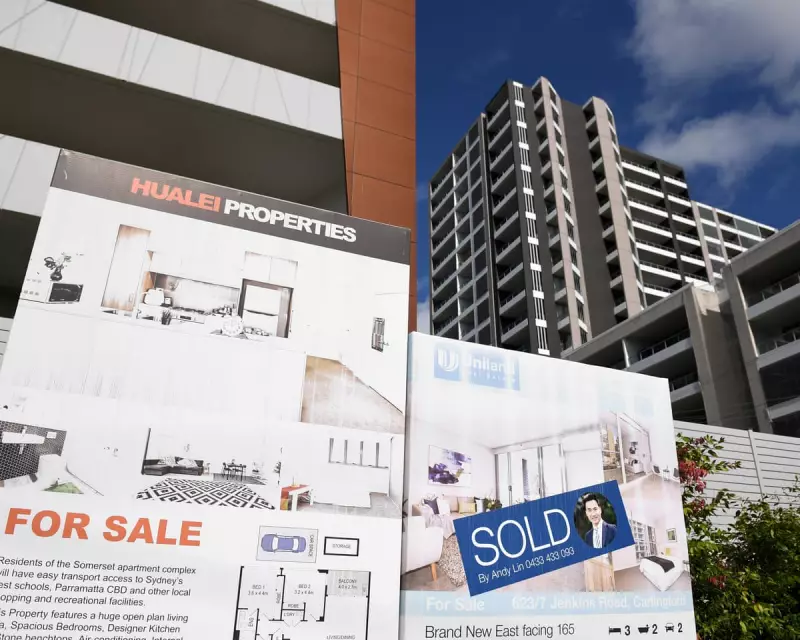
Recent housing finance statistics from Australia indicate that property prices are poised for significant increases as investors flood the market to capitalise on opportunities before the implementation of a new government scheme for first-time buyers.
Policy Sparks Investor Frenzy
According to analysis by economist Greg Jericho, the Australian government's forthcoming 5% deposit scheme for first home buyers, scheduled to begin on 1st October, has triggered an unexpected consequence. Rather than simply assisting new entrants into the property market, the policy has stimulated a surge in investor activity as experienced buyers seek to purchase properties before the scheme takes effect.
The data reveals an 18% increase in investor lending during the September quarter, representing the third-largest quarterly jump witnessed in the past two decades. This substantial growth means that investor property loans now account for more than 40% of all new home loans for the first time since 2017.

Regional Variations and Market Impact
The investor boom has been particularly pronounced in New South Wales and Victoria, where the value of such loans has increased by 18% and 27% respectively over the past year. This regional concentration demonstrates how the policy is affecting different housing markets across the country.
Historical patterns strongly connect housing finance growth with property price movements. After a slight slowdown in housing loan growth during the first half of the year, the recent surge in investor activity has reversed this trend. Property prices, which previously showed signs of moderating towards the end of 2025 and beginning of 2026, now appear set for rapid escalation.
Broader Housing Policy Context
This development represents the latest chapter in what critics describe as Australia's 25-year history of flawed housing policy. Governments have consistently focused on stimulating demand through mechanisms like the 50% capital gains tax discount and negative gearing provisions that advantage investors, while simultaneously reducing investment in public housing supply.
The government's own promotional materials for the 5% scheme illustrate its substantial impact. A hypothetical purchaser seeking an $800,000 property would normally need to save $160,000 for a deposit, but under the new scheme would require only $40,000. This effectively functions as a $120,000 first home buyer grant, increasing borrowing capacity and consequently driving up property prices through heightened competition.
Building approval data released recently shows some improvement in construction activity, with public-sector approvals increasing from 2023 lows and exceeding pre-pandemic levels. However, when considered alongside population growth and historical trends, public housing continues to play a diminishing role in Australia's overall housing landscape.
In a striking contrast to domestic housing challenges, the Australian government recently amended the Defence Housing Australia Act to provide public housing for visiting American naval personnel as part of the Aukus submarine agreement. This juxtaposition highlights what critics describe as a fundamental policy contradiction: stimulating demand to make housing less affordable for Australians while providing quality public housing for international military personnel.
The combination of these factors creates what analysts term a special kind of policy failure, where government intervention not only increases prices after implementation but also stimulates pre-emptive market activity that drives prices upward before the policy even takes effect.