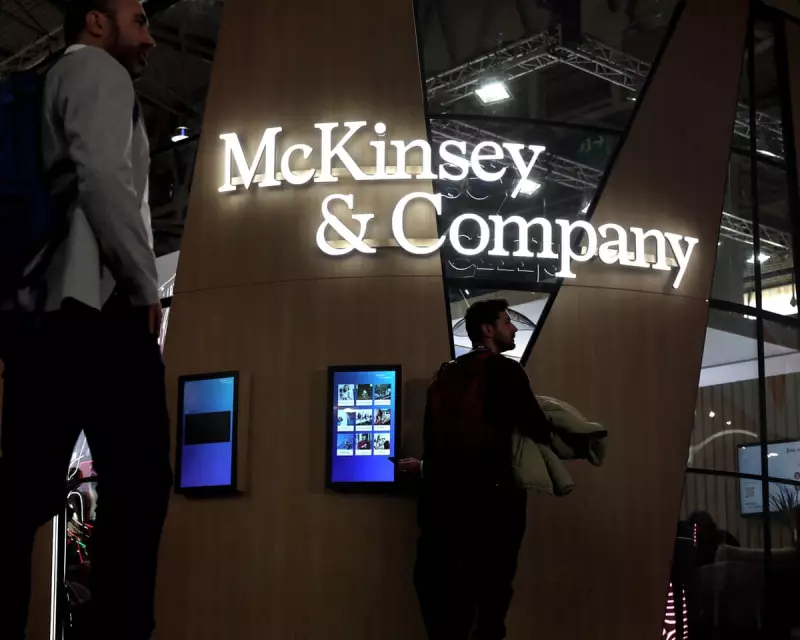
One of the world's most prestigious management consultancies, McKinsey & Company, has begun integrating artificial intelligence directly into its graduate hiring process. Candidates vying for highly competitive roles are now expected to demonstrate their ability to work alongside an AI chatbot named Lilli during final-stage assessments.
The AI-Powered Interview
According to insights from the US-based firm CaseBasix, which coaches applicants for top-tier consulting jobs, McKinsey has introduced an "AI interview" component in select final rounds for graduate roles, particularly in the United States. During this assessment, candidates are presented with a realistic business scenario akin to actual consulting work.
Instead of relying solely on their own analysis, applicants must use McKinsey's proprietary AI tool, Lilli, as a support system. The task involves prompting the AI, critically reviewing its output, and applying professional judgment to formulate a structured and insightful response. The core objective is to evaluate a candidate's reasoning and collaborative skills with AI, rather than their technical expertise in the field.
A New 'Workforce' of AI Agents
This recruitment shift aligns with McKinsey's broader strategic embrace of artificial intelligence. The firm's global managing partner, Bob Sternfels, revealed in a discussion with the Harvard Business Review that the company operates a "workforce" of 20,000 AI agents. These digital employees work in tandem with McKinsey's 40,000 human staff members.
Furthermore, in 2024, Microsoft announced that McKinsey would be an early adopter of its Copilot Studio project. This initiative focuses on developing autonomous AI agents capable of handling client inquiries and identifying new sales opportunities. Other inaugural users of this technology include the international law firm Clifford Chance and the UK retailer Pets at Home.
The Rising Tide of AI in Hiring
The move by McKinsey underscores a rapidly growing trend identified by UK recruitment specialists. Last year, experts told The Guardian that affinity and competence with AI tools are becoming crucial differentiators in the selection process for elite professional roles.
During the McKinsey AI interview, candidates are not tested on advanced prompting techniques. The emphasis is squarely on their capacity to use AI as a "productive thinking partner" and to communicate their thought process clearly—a skill directly analogous to how consultants guide junior team members.
The AI assessment forms part of a final-round trio of evaluations, which also includes tests on problem-solving and structured thinking, as well as an assessment of personal impact, leadership, and values. The Financial Times first reported on the use of Lilli in business school graduate interviews, though McKinsey itself has declined to comment publicly on the new process.
This development signals a definitive shift in the landscape for graduate employment at the highest level. As AI becomes embedded in core business functions, the ability to effectively collaborate with intelligent machines is transitioning from a niche skill to a fundamental requirement for the next generation of consultants and business leaders.