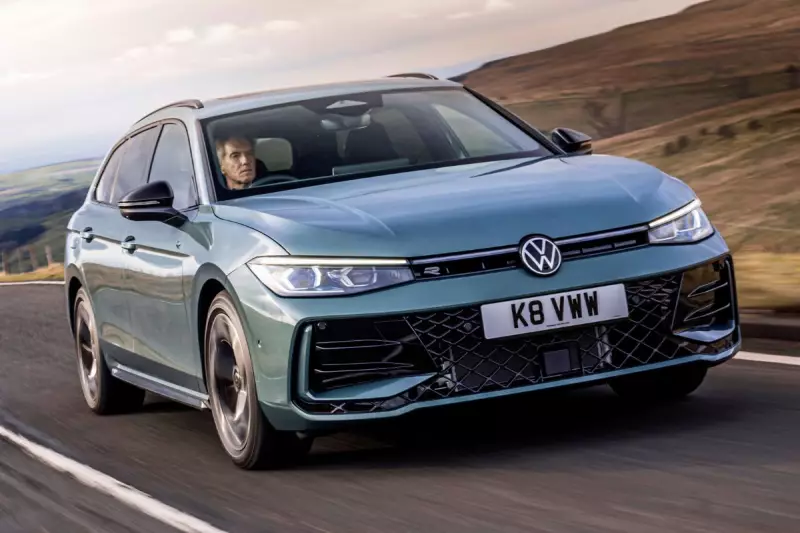
Volkswagen Passat Estate Review: A Spacious Contender in a Shrinking Segment
While Volkswagen has recently celebrated significant anniversaries for models like the Polo and Golf, the Passat—first launched in 1973—marked its 50th birthday without a special commemorative edition. However, the German automaker has introduced a new version of the Passat, now available exclusively as an estate for European customers. This move reflects the declining popularity of four-door saloons and the ongoing challenge from SUVs, which have significantly impacted estate car sales.
Shared Development and Market Positioning
In a sensible approach to economies of scale, Volkswagen developed the new Passat using the same platform and powertrains as the Skoda Superb, with both models produced at the same facility in Bratislava, Slovakia. This means the Passat's closest competitor comes from within the Volkswagen Group, as the Superb Estate undercuts it on price. Despite this, the Volkswagen's upmarket badge positions it against alternatives such as the BMW 3 Series Touring and Mercedes-Benz C-Class Estate, alongside numerous family SUVs.
Design and Engine Options
Although the Passat shares much with the Skoda Superb, Volkswagen's design team has ensured it looks distinct, resulting in a handsome, albeit slightly anodyne, estate car with an impressive 0.25 drag coefficient—making it the most aerodynamic petrol-powered Volkswagen estate to date. A major change for the UK market is the absence of diesel engines, with Volkswagen opting for petrol-only options. The model lineup has been updated to include a turbocharged 1.5-litre four-cylinder engine with varying degrees of electrification, ranging from a 150hp mild hybrid to a 272hp plug-in hybrid. A seven-speed DSG automatic is standard for mild hybrid models, while plug-in hybrids feature a six-speed gearbox, and manual transmissions have been discontinued.
Performance and Driving Experience
The 150hp eTSI mild hybrid setup is likely to be the most popular choice due to its affordability and efficiency, but with only 184lb ft of torque, it can feel overwhelmed by the Passat's size, taking 9.3 seconds to accelerate from 0-62mph. On motorways, where the Passat will spend much of its time, this engine is less intrusive, though some extra refinement would be welcome given Volkswagen's premium aspirations. Official WLTP figures suggest over 50mpg, but real-world consumption may be closer to 40mpg. Plug-in hybrid versions offer 204hp or 272hp, with up to 78 miles of electric-only range, potentially making for a more relaxing drive if budget allows.
Volkswagen has focused on comfort and refinement in the driving experience, with most trim levels featuring 17- or 18-inch alloy wheels and chunky tyres to absorb bumps. Higher-spec R-Line and Black Edition models have 19-inch rims, but ride comfort remains cossetting compared to many SUVs. Adaptive Chassis Control on high-spec models provides 15 suspension damper settings, with the softest mode ideal for motorway cruising. Handling is accurate but not particularly engaging, with Sport mode adding steering weight that feels counter-intuitive to the car's character.
Practicality and Interior Features
The main appeal of the Passat Estate is its boot capacity, offering 690 litres with rear seats in place—matching the Skoda Superb Estate. Plug-in hybrid versions have reduced space at 530 litres due to batteries under the boot floor, but non-PHEV models provide a cavernous 1,920 litres with seats folded. The cabin is spacious, with ample headroom and legroom for rear passengers, and well-adjusted front seats. Unlike the Superb, which uses 'Smart Dials' for climate control, the Passat relies on a touchscreen, though Volkswagen has improved its infotainment software and added real buttons to the steering wheel. Entry-level models feature a 12.9-inch touchscreen, while fancier versions get a 15.0-inch display.
Quality and Pricing
The Passat's interior stands out with its quality design, including elaborate ambient lighting and plush materials, feeling suitably upmarket. This is important as the Passat costs around £3,000 more than an equivalent Superb, though it just edges out the Skoda in this regard. The updated model range starts from just under £41,000 for entry-level Life trim, which includes a reversing camera, satellite navigation, and front seats with massage function. At the top end, the 272hp plug-in hybrid in Black Edition spec costs close to £51,500, featuring 19-inch alloy wheels, gloss black exterior trim, and sports seats.
Verdict
In a market where large estate cars are dwindling due to SUV dominance, the Volkswagen Passat Estate remains a compelling option after more than five decades. It offers huge practicality, a comfortable and refined driving experience, and a long list of standard equipment, with a wide selection of engines to suit different needs. Low Benefit-in-Kind tax rates make plug-in hybrid versions particularly appealing to company car drivers. However, the Passat's biggest challenge is the Skoda Superb Estate, which provides similar space and performance at a lower cost, with only a marginally inferior ambience. Unless badge prestige is a priority, the Skoda may be the smarter choice.
PRICE: From £40,860
POWER: 150hp
0-62MPH: 9.3 seconds
TOP SPEED: 138mph
FUEL ECONOMY: 51.5mpg
CO2 EMISSIONS: 125g/km