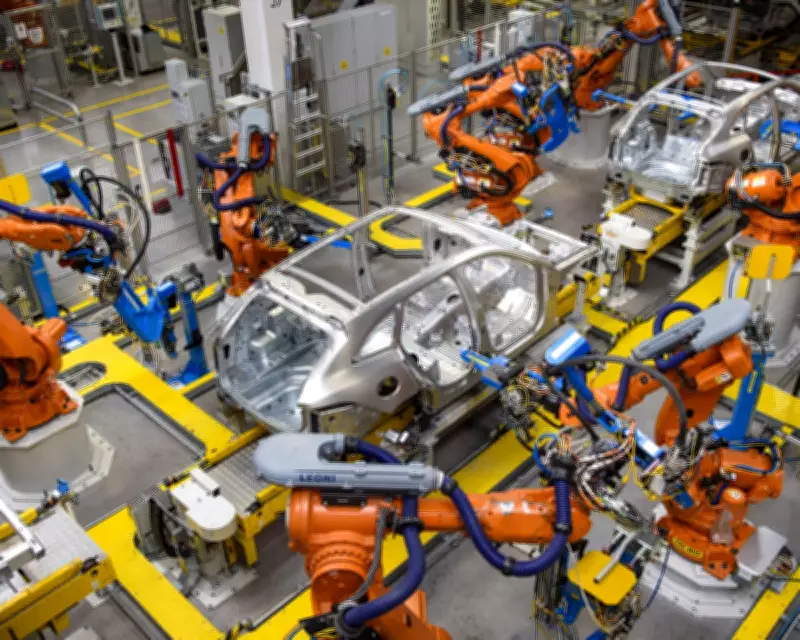
The UK automotive sector faces a pivotal challenge in meeting ambitious production targets, with industry leaders warning that significant new manufacturing capacity will be required to achieve political goals. According to Mike Hawes, chief executive of the Society of Motor Manufacturers and Traders (SMMT), the country probably needs a large new factory to reach the target of building 1.3 million cars annually by 2035.
Labour's Industrial Strategy Under Scrutiny
Labour's industrial strategy centres on nearly doubling vehicle production from current levels, aiming for 1.3 million vehicles rolling off production lines by 2035. This ambitious target compares starkly with the 764,715 cars and vans manufactured in 2025, as revealed by new SMMT data. Hawes has cast doubt on the feasibility of this plan without substantial new investment in manufacturing infrastructure.
"To get to 1.3 million you kind of need a new plant," Hawes stated, outlining the three-pronged approach required: "keep what you've got, grow what you've got, and then also try and attract some additional inward investment."
Production Slump and Recovery Hopes
The UK vehicle production landscape presents a challenging picture, with output slumping 15.5% in 2025 compared with the previous year. This decline represents the lowest production level since 1952, excluding the Covid-19 lockdown periods. Hawes described it as "the toughest year in a generation," citing multiple factors including US trade tariffs, turmoil at Nissan, and a cyber-attack that crippled Jaguar Land Rover's production in August and September.
Despite these difficulties, there are glimmers of hope for recovery. A record 41.7% of new cars produced in 2025 were battery electric or hybrid vehicles, representing 298,813 units and marking an 8.3 percentage point increase compared with 2024. This shift toward electrification could drive industry revival in 2026 and beyond.
Chinese Investment as Potential Catalyst
Chinese manufacturers are emerging as the most likely candidates to build new electric vehicle assembly plants in the UK. This potential investment comes as Keir Starmer visits China with a business delegation including executives from Jaguar Land Rover, McLaren, and Octopus Energy. Hawes pointed to this diplomatic mission as a potential catalyst for new investment, noting: "In terms of who is expanding their production globally, it's the Chinese. There is dialogue taking place."
Market Dynamics and Manufacturing Strategy
The growing presence of Chinese car brands in the UK market strengthens the case for local manufacturing investment. Chinese vehicles accounted for 9.7% of UK new car sales in 2025, nearly doubling their market share in just twelve months. Leading brands including MG, BYD and Chery (which also operates Jaecoo and Omoda) have made significant inroads in the UK market, which unlike the US or EU has not imposed tariffs on Chinese imports.
Chery indicated last summer that it was "actively considering" building a plant in the UK as part of a "localisation" strategy. Hawes explained the strategic rationale: "In this volatile world, producing close to where you sell gives more assurance and certainty to your business." He added that when discussing new industry entrants, "there is really only one game in town," referring specifically to Chinese carmakers.
Trade Policy and Investment Climate
The UK's historical approach to trade relationships could prove advantageous in attracting manufacturing investment. Hawes emphasised: "The fact that the UK has always stood for free and fair trade and open trade, and it's been welcoming for investors for many decades, puts us in a position where we can say that we are very we are open."
This openness contrasts with protectionist measures implemented by other major economies, potentially positioning Britain as an attractive manufacturing base for companies seeking to serve European markets while avoiding import tariffs.
The coming years will prove crucial for the UK automotive industry as it navigates technological transition, international competition, and political expectations. Whether the country can attract the necessary investment to build new manufacturing capacity will determine its ability to meet ambitious production targets and maintain its position in the global automotive landscape.