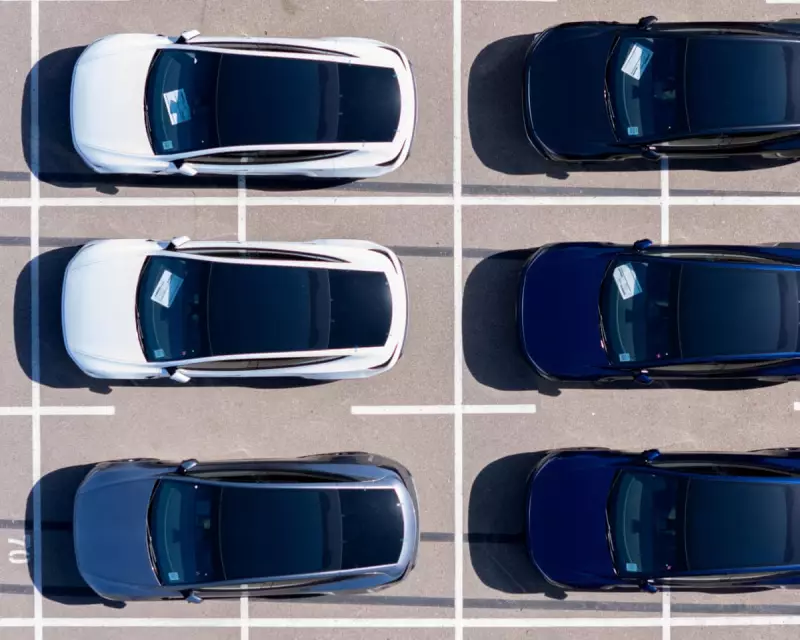
Elon Musk's Tesla has suffered a significant drop in its European market share, with sales falling sharply as Chinese competitors make substantial gains, according to new industry data.
Sales Slump Amidst Political Controversy
New car registrations for Tesla across the European Union fell by over a third in November. The company sold 12,130 new cars, a steep decline from the 18,430 vehicles sold in November the previous year.
This slump has reduced Tesla's slice of the overall EU car market from 2.1% to just 1.4%, based on figures released by the European Automobile Manufacturers' Association (Acea). The sales downturn began late last year, coinciding with Musk's foray into European politics.
The world's richest man publicly backed Germany's far-right Alternative für Deutschland (AfD) party and appeared virtually at campaign events for them and similar British groups. He also formed a prominent alliance with Donald Trump, which later collapsed spectacularly over issues including electric vehicle subsidies.
Chinese Carmakers Charge Ahead
While Tesla struggles, Chinese manufacturers are accelerating their presence in Europe. BYD recorded the fastest sales growth, with European registrations up to November almost tripling year-on-year to 42,500 vehicles.
Another Chinese giant, state-owned SAIC – which owns the MG brand – saw sales increase by 26%, reaching 217,000 units. Both companies offer a mix of battery-electric vehicles and hybrids, a strategy that appears to be resonating with European consumers.
The Hybrid Surge and Regulatory Shift
The European market is currently experiencing a notable shift towards hybrid vehicles. Sales of hybrids, including plug-in models, accounted for a substantial 44% of all new car sales in the period.
This consumer trend has been accompanied by intense lobbying from European carmakers, who find hybrids more profitable. Their efforts recently bore fruit, with the EU confirming it would weaken its 2035 zero-emissions target, now allowing 10% of new car sales to have internal combustion engines after that date.
Despite this, pure battery-electric cars have still grown their market share, accounting for 18.8% of sales in the first eleven months of the year, up from 15% in the same period last year. This makes Tesla's decline as the only pure-electric brand tracked by Acea particularly striking.
Market Context and Musk's Fortune
Overall, the EU new car market saw a modest increase of 1.4% in the year to November, marking a fifth consecutive month of growth. For the first eleven months, including the UK and European Free Trade Area, sales rose 1.9% to 12.1 million units.
Despite Tesla's sales slowdown, Elon Musk's paper wealth remains unparalleled. The Bloomberg Billionaires Index estimates his net worth at $647 billion (£480 billion), largely driven by his stake in SpaceX. His Tesla shareholding is valued at approximately $200 billion.
Tesla's total market valuation exceeds $1.5 trillion, more than all other Western carmakers combined. However, analysts suggest much of this premium is based on investor belief in Musk's vision for robotics and artificial intelligence, rather than the fundamentals of the automotive business.