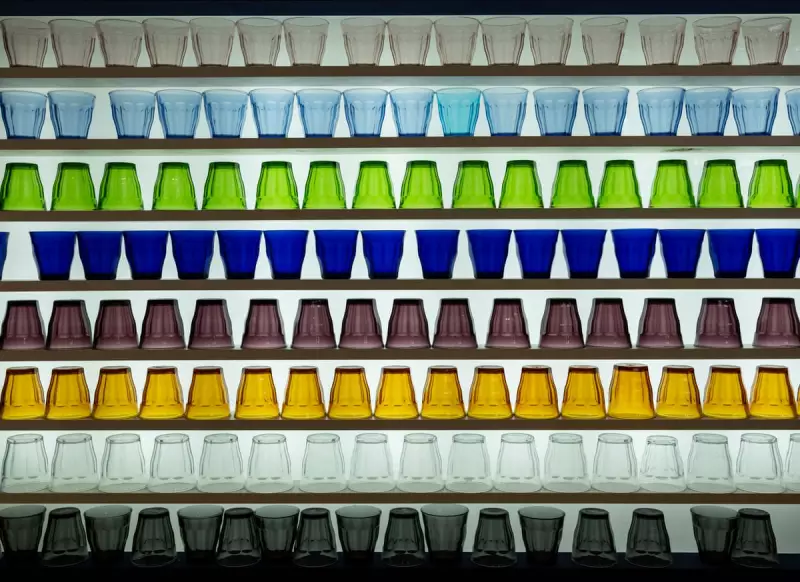
The iconic French glassmaker Duralex, famous for its near-indestructible tumblers, has staged a spectacular comeback after a public fundraising appeal generated an overwhelming response. The company, which had sought €5 million in emergency funding, saw its target met in a mere five hours and 40 minutes. The campaign was so successful that pledges ultimately soared to nearly €19 million within just 48 hours, forcing the company to call a halt to further investment.
A Tsunami of Public Support
François Marciano, the 59-year-old director general of Duralex, admitted the team was astonished by the public's reaction. He revealed they had anticipated the initial €5m target would take five or six weeks to reach. The immense wave of support, he suggested, is deeply tied to the brand's place in the French national psyche. For many, Duralex glasses are a powerful symbol of nostalgia, instantly evoking memories of school canteens.
"We’re like Proust’s madeleines," Marciano said, referencing the famous literary symbol of involuntary memory. "The French people want to save us. They are fed up with factories closing and the country’s industries declining." This sentiment was echoed by Suliman El Moussaoui, a union representative at the factory, who described the aftermath as a "tsunami of orders." He confirmed the company is now struggling to keep up with demand, which spikes with every new media mention.
The Magic and Challenge of Making Duralex
The company's resilience mirrors the durability of its products. The manufacturing process, a form of simple alchemy, has remained largely unchanged since the firm's founding in 1945. At its factory in La Chapelle-Saint-Mesmin, near Orléans, a secret recipe of sand, soda ash, and limestone is heated to a blistering 1,440°C. The molten glass is then shaped, moulded, and cooled into the iconic designs.
Quality control is rigorous. Random samples are subjected to extreme stress tests, including being heated to 150°C and then plunged into cold water to test for thermal shock, and dropped from counter height onto metal to ensure they don't shatter dangerously. This process guarantees the famed durability that has made the Picardie glass, first introduced in 1954, a modern design icon. British design guru Patrick Taylor has ranked it alongside Levi's jeans and the Swiss Army knife, calling it "the ultimate drinking vessel created by man."
Securing a Sustainable Future
The road to this point has not been smooth. Eighteen months ago, Marciano oversaw a staff buyout after the company was placed in receivership for the fourth time in two decades. Today, 180 of the 243 employees are co-owners of the cooperative. The €5m in funding that was finally accepted—the maximum allowed under financial rules for a cooperative—will be used to modernise the factory and develop new products.
These new ventures include a patriotic set of Gigogne glasses in red, white, and blue for the Élysée presidential palace shop, and a strategic push into international markets. The company plans to create moulds for "pint" glasses with a measure line specifically tailored for British pubs and American bars, identifying these as key growth areas. The challenge, as explained by head of strategy Vincent Vallin, is building the same nostalgic connection abroad that the brand enjoys at home.
Despite the soaring cost of gas and electricity—the factory consumes a staggering 360 cubic metres of gas per hour—the future looks brighter. Since becoming a cooperative, turnover has increased by 22%, and Marciano is hopeful Duralex will be breaking even by 2027, proving that some classic brands, just like their products, are built to last.