
UK-Based Brothers' Messaging App Accused of Aiding Iranian Regime Surveillance
In a startling revelation, the co-founders of an Iranian messaging application accused of providing user data to Tehran's authorities have been found to be residing in a British coastal town. Hadi and Mahdi Anjidani, the brothers behind TS Information Technology, operate from West Sussex while their company develops tools that critics say enable government surveillance in Iran.
The Sussex Connection to Iranian Tech
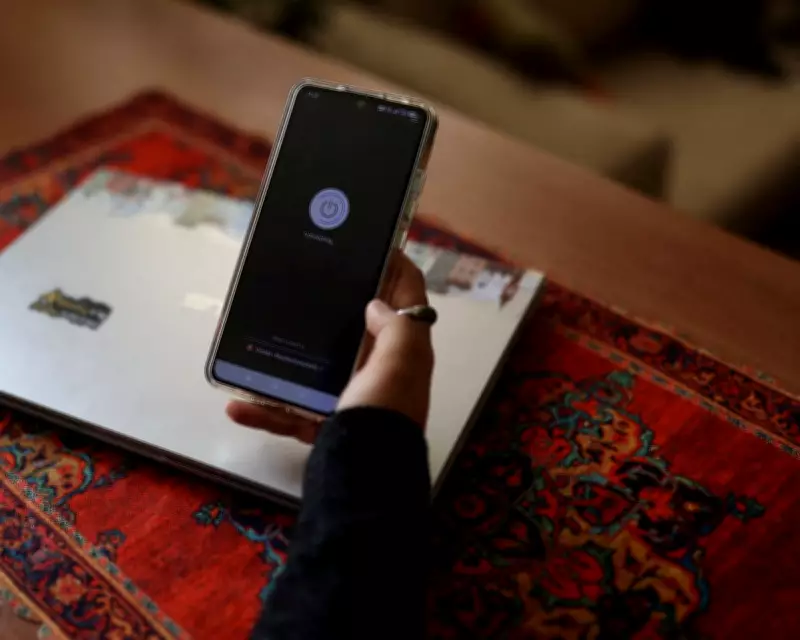
TS Information Technology, established in 2010, maintains its UK branch at a tax accountancy address in Shoreham-by-Sea, West Sussex. This British entity serves as the international arm of Towse'e Saman Information Technology (TSIT), an Iranian software corporation with diverse digital offerings. The company's portfolio includes popular computer games, a payment platform designed to circumvent international sanctions, and Gap Messenger—a sleek purple application marketed as a domestic alternative to Telegram.
Despite Gap Messenger's public claims of encryption and data privacy, multiple Iranian digital rights experts have presented evidence contradicting these assertions. A comprehensive report from FilterWatch, an organisation monitoring Iran's internet censorship landscape, identifies Gap Messenger as one of the "main actors and entities that participate in the Iranian government's internet control and suppression efforts."
Pro-Regime Allegiances and Business Operations
Mahdi Anjidani, serving as TSIT's chief executive, has repeatedly expressed pro-regime sentiments through Iranian media channels. In one notable state television appearance, he advocated for stringent censorship measures. His public statements include praising Iran's elites for "turning threat into an opportunity" amid international sanctions, describing himself as a "child of the Islamic Revolution" in tech publication interviews.
The Anjidanis' business interests extend beyond messaging applications. Archived records connect them to various enterprises including Virasty, a social network reportedly partnered with former Iranian deputy communications minister Amir Mohammadzadeh Lajevardi, and MihanPayment—a platform facilitating international transactions through Iran's banking system despite sanctions.
Iran's Domestic Internet Infrastructure
Gap Messenger forms part of Iran's national internet, a parallel network developed over the past decade that offers government-controlled connectivity to approximately 93 million citizens. This infrastructure has become particularly significant during recent anti-government protests, where authorities have implemented some of the most severe internet shutdowns in history.
Digital rights researchers argue that domestic platforms like Gap Messenger serve primarily as surveillance tools rather than genuine technological innovations. "The overall point is control," explained a researcher from the Outline Foundation, an anti-censorship organisation. "Local platforms make it easier to monitor conversations, collect data, and silence dissidents, without the legal and technical barriers that exist for global services. This isn't about boosting local innovation. It's about consolidating surveillance and shrinking the space for independent expression."
Evidence of Data Sharing and Corporate Secrecy
FilterWatch's investigation suggests Gap Messenger has provided user information to Iranian censorship authorities, based on emails leaked from the attorney general's office in late 2022. The application boasts substantial download figures—over one million on Google's Play Store and approximately four million on Cafe Bazaar, Iran's domestic app marketplace—offering features including built-in payment services, online calls, and various entertainment options.
Attempts to contact the Anjidanis for comment proved unsuccessful. Neither brother responded to Guardian emails, and Hadi Anjidani reportedly closed his door without speaking when visited at his Brighton home. Neighbours describe the family as reclusive, while business associates note their infrequent appearances at their Hove office space despite maintaining it for over thirteen years.
International Business Networks
Mahdi Anjidani's social media presence reveals connections with high-profile figures including former Iranian president Mahmoud Ahmadinejad and the son of Dubai's Sheikh Makhtoum. In interviews with Iranian startup accelerators, he has discussed navigating international sanctions, government support for his applications, and his "satellite offices" in England, Turkey, and the United Arab Emirates.
One Iranian researcher, speaking anonymously due to safety concerns, noted that Anjidani's public statements often echo government positions: "He's reiterating the threats of the government, which shows how close he is to the government." This relationship appears to grant privileged access to Iran's tightly controlled digital ecosystem, with one digital rights expert comparing such access to "the level of oligarchs around Putin."
The ongoing situation highlights complex intersections between international business operations, digital privacy concerns, and geopolitical tensions surrounding Iran's internet governance strategies.




