
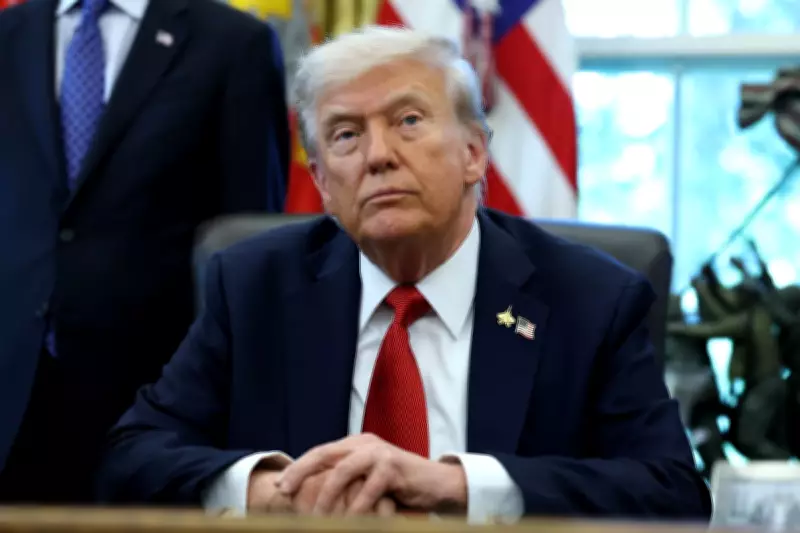
In a dramatic response to escalating tensions, former President Donald Trump has demanded immediate US-backed insurance for vessels operating in the Persian Gulf. This directive comes as the world's largest maritime insurance firms prepare to suspend war-risk coverage for ships entering the volatile region, raising alarms about potential disruptions to global energy supplies.
Insurance Withdrawal Creates Critical Gap
Starting March 5, multiple members of the London-based International Group of Protection and Indemnity Clubs will automatically terminate war-risk insurance for any vessel entering the Persian Gulf. The list of withdrawing insurers includes prominent names such as Gard AS, NorthStandard, Steamship Mutual Underwriting Association, Assuranceforeningen Skuld, American Steamship Owners Mutual Protection and Indemnity Association, The Swedish Club, and the London P&I Club.
Lloyd's of London, which typically underwrites between 70 and 80 percent of the world's war insurance business, is among those scaling back coverage. Insurance companies cite mounting risks from Iranian forces, including threats of vessel boarding, seizure operations, and missile and drone attacks. Recent incidents in the Strait of Hormuz and off the coast of Oman have already resulted in damaged ships and loss of life, prompting this industry-wide retreat.
Economic Implications for Global Trade
The Persian Gulf serves as the primary transit route for more than 20 percent of the world's total oil and liquefied natural gas consumption. Any disruption to shipping through the Strait of Hormuz could have severe consequences for global energy markets. Brent crude oil prices have already surged to over $83 per barrel, reaching their highest level since July 2024.
Dylan Mortimer, marine hull UK war leader at insurance broker Marsh, commented earlier this week: "While it remains very early to predict precise outcomes, we estimate that near-term rate increases for marine hull insurance in the Gulf could range from 25 to 50 percent. A direct attack on merchant shipping would trigger major repercussions across war insurance rates globally."
Trump's Intervention Through Federal Channels
In a post on his Truth Social platform, Trump announced he has ordered the Development Finance Corporation, a federal loan agency, to provide political risk insurance and guarantees for "ALL Maritime Trade, especially energy" traveling through the Gulf. He emphasized this coverage would be offered "at a very reasonable price" to ensure commercial continuity.
The former president added a military dimension to his announcement, stating: "If necessary, the United States Navy will begin escorting tankers through the Strait of Hormuz as soon as possible. No matter what, the United States will ensure the FREE FLOW of ENERGY to the WORLD." This dual approach combining financial guarantees with potential naval protection represents an unprecedented federal intervention in maritime insurance markets.
Broader Strategic Considerations
The insurance withdrawal and Trump's response highlight the fragile nature of global supply chains through strategic chokepoints. With major insurers retreating from the region, the burden of risk management shifts toward governmental entities. The Development Finance Corporation's involvement marks a significant expansion of its traditional role, potentially setting a precedent for future federal interventions in international trade security.
As geopolitical tensions continue to simmer in the Persian Gulf, the interplay between private insurance markets, government policy, and military strategy will likely determine the stability of energy shipments through this crucial corridor. The coming weeks will reveal whether Trump's insurance initiative can effectively bridge the coverage gap created by the private sector's withdrawal.




