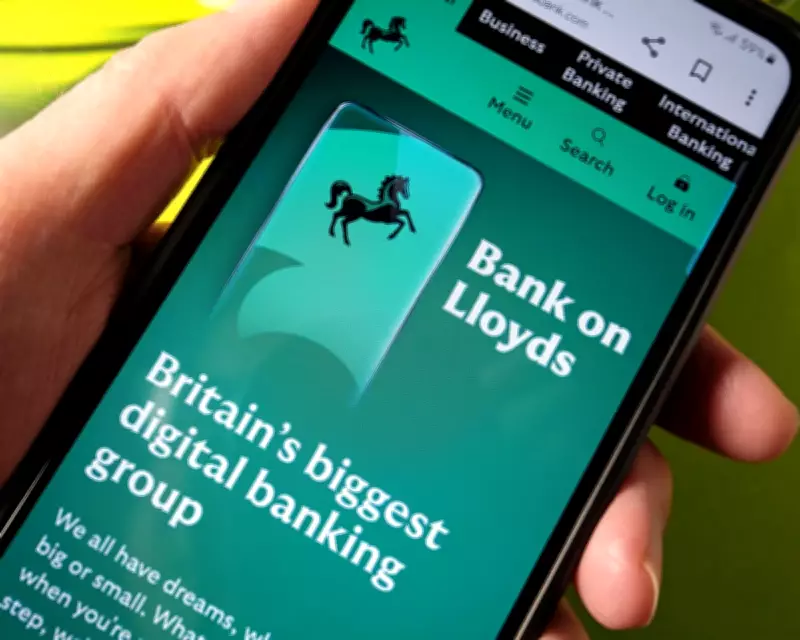
Lloyds Banking Group Exposes Personal Data of Nearly 500,000 Customers in Major IT Glitch
A significant IT failure at Lloyds Banking Group has resulted in the exposure of personal data for almost half a million customers, according to a letter published by MPs on the Treasury select committee. The glitch, which occurred overnight into 12 March, allowed users of the Lloyds, Halifax, and Bank of Scotland mobile banking apps to view sensitive information belonging to other customers, including payments, account details, and national insurance numbers.
Details of the Data Exposure Incident
The bank attributed the incident to a software defect introduced during an IT update to its mobile applications. Lloyds explained that customers would have needed to access their apps within "small fractions of a second" of other users to see the exposed data. Despite this narrow window, the breach potentially affected up to 447,936 customers, with approximately 114,182 individuals clicking into transactions that revealed private information such as account details, national insurance numbers, or payment references.
In a concerning twist, the bank noted that even non-customers of Lloyds Banking Group may have had their transaction details exposed during the glitch. The incident has raised serious questions about data security in an era where digital banking is increasingly prevalent.
Regulatory Response and Customer Compensation
Lloyds reported the incident to the Financial Conduct Authority on the morning of 12 March and notified the Information Commissioner's Office within the required 72-hour timeframe. Jasjyot Singh, the Lloyds chief executive of consumer relationships, stated that the bank is urging any customers who may have recorded, taken screenshots, or posted information about other users to delete it immediately.
"There is currently no evidence of misuse or malicious activity as a result of the incident through our fraud and cyber monitoring process," Singh said. However, he emphasized that the bank would "continue to monitor [potential fraud] closely." To date, Lloyds has paid £139,000 in compensation to 3,625 customers for distress and inconvenience, though no financial losses have been reported as a direct result of the IT failure.
Broader Implications for Digital Banking
This IT glitch highlights ongoing concerns about customer protections as banks increasingly shift towards digital platforms. With the number of UK bank branches declining sharply from roughly 10,565 to 6,870 over the past decade, according to the Office for National Statistics, consumers are more reliant than ever on mobile and online banking services.
Meg Hillier, the Treasury committee chair and Labour MP, commented on the incident, stating, "Modern banking methods mean we can now perform a variety of tasks on our phones in a matter of seconds, and almost anywhere. What this incident brings into focus is the fact that there is a trade-off. By moving more interactions with our bank online, we place our faith in technology which can suffer unpredictable errors. It's critical that consumers understand this."
The glitch occurs against a backdrop of intense competition in the banking sector, with traditional institutions like Lloyds facing pressure from digital challengers such as Monzo and Revolut, as well as foreign rivals like JP Morgan's Chase UK. Singh added that Lloyds' priority is to complete a full analysis, engage with affected customers, and learn from the incident to update processes accordingly.
Lloyds has committed to providing further updates to the Treasury committee about the fallout from the IT glitch in April and September, as the bank works to restore trust and ensure robust data security measures are in place for the future.