
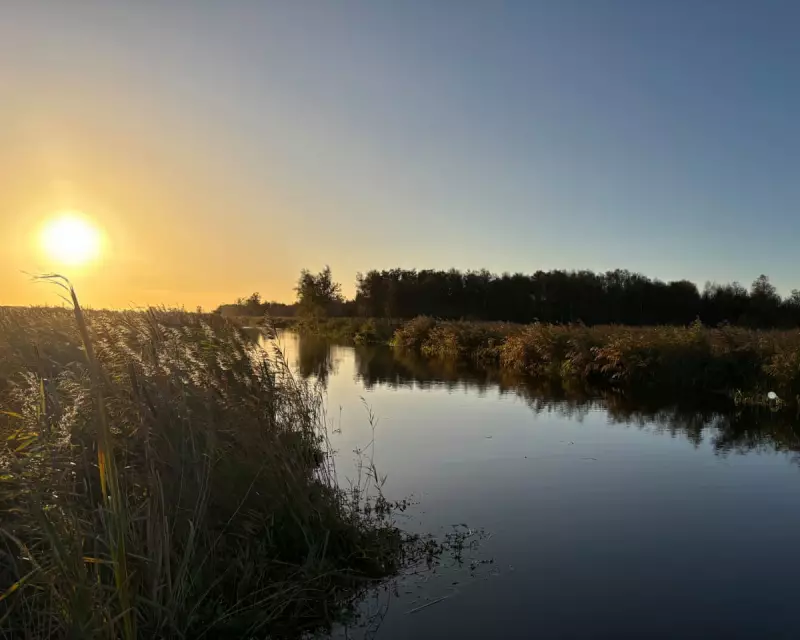
A Peaceful Dutch Wetland Escape
While some destinations demand a whirlwind weekend of intense exploration, others call for a more measured approach. Such is the case with De Alde Feanen National Park in the northern Dutch province of Friesland. As one of the Netherlands' most tranquil protected areas, this expansive 4,000-hectare wetland undergoes a profound transformation after the summer crowds depart.
The waterways, once bustling with kayakers, paddleboarders, and pleasure boats, fall quiet. Museums shutter their doors, the tourist office reduces its hours, and even the park's resident storks begin their migration south. This natural slowing creates the perfect conditions for a restorative winter retreat focused on connection and calm.
Cosy Cabins and Starry Skies
Seeking a place simply 'to be' rather than 'to do', a visitor and their son booked into a simple upcycled cabin named De Ooievaar ("the Stork"). Owned by Jurjen Veldboom, who converted an old barn during the pandemic, the cabin features a galley kitchen and wooden sleeping platforms that create a nautical cosiness. The centrepiece is a large picture window in the living room, offering a perfect frame for watching the winter landscape, from sketching sessions to spotting deer moving through the alder trees.
The local tourist board has coined a new term for this type of holiday: "opfriezen"—a playful word meaning to embrace the cold in Friesland, often with the help of a sauna or hot tub. The travellers took this to heart, using the site's sauna at dusk. Emerging into the dark Friesland night, they were greeted by a spectacular gibbous moon and a sky filled with stars, the cabin's lights twinkling like a giant gingerbread house.
Cycling Through Watercolour Landscapes
The following day, they hired e-bikes from Hollema in Earnewâld for €25 per person per day. Owner Rikele Hollema provided a map for a gentle 50km route through the eastern part of the park and out to the villages and forests around Beetsterzwaag.
Cycling along paths crunchy with seashells felt like pedalling through a painting by Dutch artist Jan Hendrik Weissenbruch. The flat, expansive landscape offered more sky than land, filled with dramatic cloud formations. The journey was meditative, punctuated by hopping on and off small foot and bike ferries to cross stretches of water without bridges. The experience was heightened when the sun emerged, filtering light through golden beech leaves in the forests.
After a restorative lunch of fat chips and mustard soup with sausage at De Witte Huis in Olterterp, the long ride back along windy polders provided whimsical sights, including three cows being transported on a ferry and two swans flying alongside, their white plumage glowing against rose-gold rushes.
Mindfulness and Winter Wildlife
A key encounter was with Jannie Slot, project coordinator for a new mindfulness walking trail launched in the park this summer. Designed to help visitors disconnect from screens and reconnect with their surroundings, the trail requires borrowing a physical guide and following its prompts along a 5km route.
Slot spoke of the delicate balance between welcoming visitors and protecting the park, believing that if people connect with nature, they will love it and want to protect it. Although the guide is currently only available in Dutch or German, an English version is planned.
Following the German guide at dawn, one traveller walked paths through reeds and forests, listening to the wind and the chorus of blackbirds, goldcrests, reed buntings, wigeon, and geese. The guide encouraged gentle yoga poses inspired by birds and trees, and deeper observation of the landscape—easy to accomplish with the rising sun casting an ethereal bronze glow on the ditches.
The route culminated at an observation tower, offering a panoramic view of the park's soul—a million shades of golden brown stretching to the horizon, where the silence was broken only by honking geese at eye level and the reflective glint of a nearby windmill.
The park's symbolism is perhaps best captured by the frogbit plant. In summer, it floats above the water, but in winter it retracts below the surface, freezing until spring when it re-emerges seeking sunlight. As the mindfulness guide suggests, it's equally important for humans to slow down, reflect, and rest—a lesson De Alde Feanen teaches beautifully.
De Alde Feanen National Park is located a 20-minute drive south-east of Leeuwarden in the Netherlands' north-east. Its lakes, ponds, ditches, and canals are remnants of medieval peat-cutting, now creating richly biodiverse habitats home to over 100 bird species as well as otters, pine martens, roe deer, and dragonflies.




