Wild Stingray Encounters Transform Perceptions in New Zealand's Coastal Waters
In the shallow reef waters near Gisborne on New Zealand's North Island, a remarkable wildlife experience unfolds as visitors gather to interact with majestic stingrays in their natural habitat. This unique eco-tourism venture, operated by Dive Tatapouri, offers participants the rare opportunity to connect with these marine creatures while learning about their vital role in Māori culture and coastal ecosystems.
A Crescent Moon of Anticipation
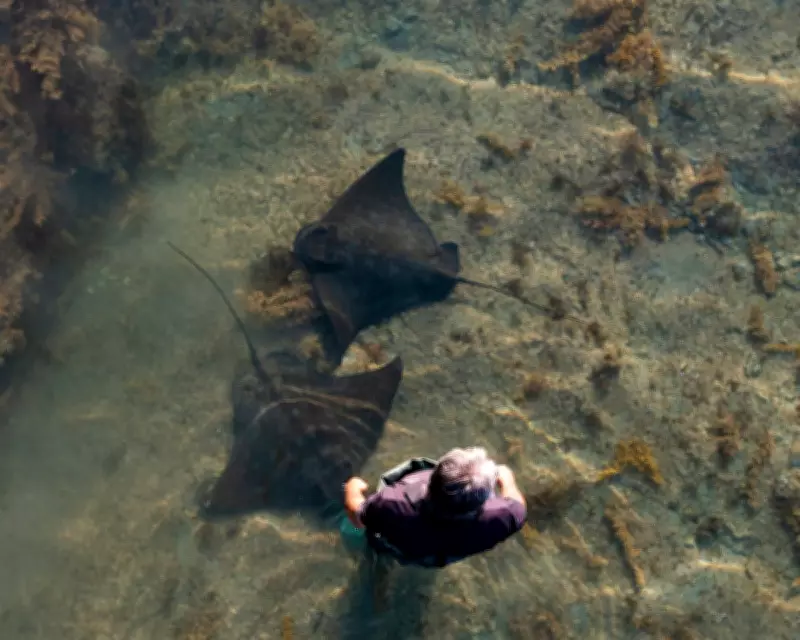
Thirty visitors wearing khaki overalls and boots form a crescent-shaped gathering in the green coastal waters, their anticipation palpable as they await the arrival of the main attraction. They don't wait long before six eagle rays and short-tailed stingrays – some weighing over 300 kilograms – glide gracefully through the water towards the group.
The rays brush gently against legs and, with surprising suction power reminiscent of a vacuum cleaner, they slurp fish from submerged hands. Any initial trepidation among participants quickly transforms into wonder and appreciation for these magnificent creatures.
Changing Perspectives Through Direct Experience
Bella, a 19-year-old participant who joined the experience in January, describes the stingrays as "big sea puppy pancakes" that displayed affectionate behaviour towards both visitors and staff. "They were all so loving to the people and the staff, they just wanted pats and cuddles," she recalls. "It was the coolest thing I've ever seen."
Bella, who preferred to give only her first name, found the interaction "unreal" and transformative. "I would never expect to have a stingray literally right by my feet and petting it, it was honestly breathtaking," she says, highlighting how direct experience can fundamentally alter human perceptions of marine life.
Two Decades of Responsible Eco-Tourism
Dive Tatapouri owner Dean Savage, a 63-year-old former commercial diver and underwater cameraman, established the business more than twenty years ago, though his connection with stingrays began much earlier. Watching his father interact with these animals as a child, Savage understood that "the image of the stingray and the reality of the stingray were two different things."
Together with his wife Chris, Savage transformed their former kina (sea urchin) processing facility into an eco-tourism operation. The location proved ideal, situated near a shallow reef that serves as a stingray nursery, creating perfect conditions for developing a wild stingray experience.
Ethical Wildlife Interactions
Savage emphasises that the stingrays are "not just performing animals" but free creatures that choose to interact with humans. The business maintains strict ethical standards to prevent dependency, limiting both the frequency and duration of interactions throughout the year.
"There are times during the year when we may not interact with animals for a month or six weeks, or limited times during the winter so that they can look out for themselves," Savage explains. "We never get to the point where they totally rely on us."
The stingrays, which detect human movement in the water and come to investigate naturally, have become familiar residents over the years. Some individuals, now over twenty years old, have even been given names like Pancake, Waffle, Hine, and Charlie based on their distinctive markings and personalities.
Cultural Significance and Conservation Education
Stingrays, known as whai in Māori language, hold profound cultural, spiritual, and ecological importance for Māori communities. The North Island itself, Te Ika-a-Māui (the fish of Maui), resembles the shape of a stingray, while many communities view these creatures as protectors of coastlines and shellfish.
Clinton Duffy, marine biology curator at Auckland Museum, suggests that responsible wildlife tourism can serve as a "good conservation advocacy tool" when animals and environments are treated with care and visitors receive proper education about species threats. "As long as people get some sort of education through these sorts of experiences, there should be an overall benefit to the species," Duffy states.
Addressing Misconceptions and Building Empathy
The perception of stingrays as aggressive creatures has been influenced by high-profile incidents like the 2006 death of Australian naturalist Steve Irwin. However, Duffy describes them as curious, gentle animals that are "really intelligent for a fish," capable of inflicting wounds only when threatened.
"It's very hard for people to feel any empathy for animals that they have no knowledge of or no direct contact with," Duffy observes. "Species like [stingrays] can be good ambassadors for marine conservation generally."
A Deep Connection with Nature
For Savage, the experience offers visitors something profound: "It's a deep experience for a lot of people. There are not many places you can go and have a 300kg animal nudge your feet with no ill intent, while genuinely wanting to be there."
By educating visitors about stingrays' Māori significance and teaching respectful interaction, Dive Tatapouri helps foster deeper care for these creatures while enabling meaningful reconnection with the natural world. This approach demonstrates how responsible wildlife tourism can benefit both conservation efforts and human understanding of marine ecosystems.