From Parental Hierarchy to Adult Companionship on the Camino Trail
"Don't let them push you around," my youngest son advised me halfway through our Camino de Santiago pilgrimage. "You don't have to get up early if you don't want to." From his bunk, his brother responded with surprise: "I didn't know that was an option." This exchange perfectly captures how our family dynamic has transformed over the years. What was once a clear parent-child hierarchy has evolved into something more democratic - four adults negotiating each day together.
A Walk Marking Life's Transitions
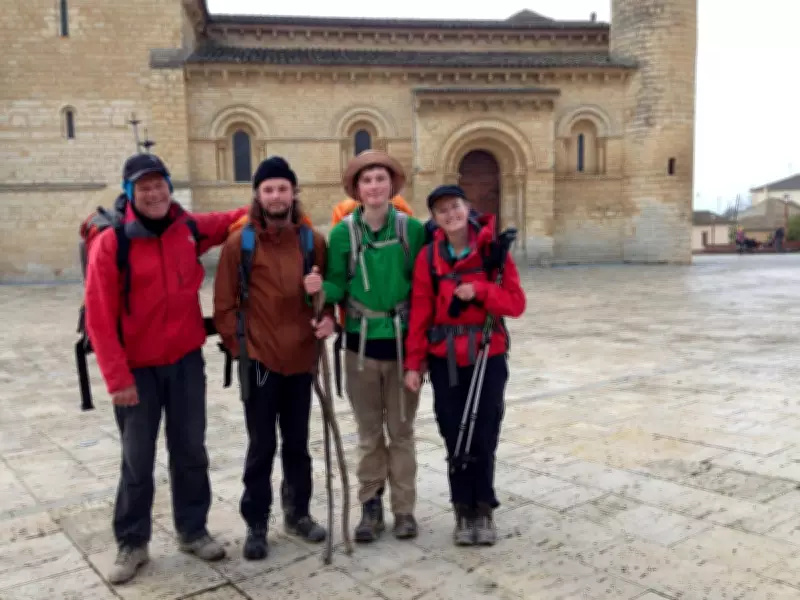
When my husband and I embarked on the Camino de Santiago with our sons a decade ago, we understood this journey represented a significant ending. One son had just completed his schooling, while the other had finished his university degree. Their independent lives awaited them in different cities and countries, with new careers and relationships beckoning. This thirty-day walking pilgrimage was carefully positioned in that narrow window before their adult lives fully commenced - we were consciously operating on borrowed family time.
Walking has always been woven into the fabric of our family culture. We began carrying our boys in backpacks when they were babies, gradually progressing to coaxing them along trails with snacks and stories, and eventually entrusting them with their own packs. Summer holidays meant hiking adventures, while winter brought ski touring expeditions. Though they sometimes resisted this outdoor-focused lifestyle, walking became our shared language. One son famously declared he would never climb another mountain after leaving home - a promise he later spectacularly broke by independently hiking coast to coast across Britain.
Family Myths Forged on Foot
Most of our cherished family stories originated during walking adventures - getting thoroughly lost in New Zealand's wilderness, surviving a flooded tent in Tasmania, and the ongoing, lighthearted debate about which son was responsible for stolen lollies years ago. By the time we tackled the Camino, walking together felt familiar, but the emotional terrain had shifted dramatically. We were no longer simply parents and children, but four individuals with sore feet and differing lunch preferences, navigating decisions democratically.
When it became apparent our allocated thirty days wouldn't suffice to complete the pilgrimage, I suggested catching a bus for part of the journey. I was promptly outvoted by the group. In retrospect, this moment served as valuable rehearsal for a different kind of parenthood - one where I relinquished command and embraced collaboration. There are few established scripts for parenting adult children, particularly after they leave the family home. While births, deaths, and weddings receive public recognition and ceremony, the departure of grown children typically happens quietly, without fanfare. One morning, bedrooms stand empty, daily intimacies vanish, and they're simply not there anymore.
The Camino as Unplanned Ritual
The Camino de Santiago unexpectedly provided the ritual I hadn't realised I needed - a prolonged, unplanned farewell to our previous family structure. I returned home with bittersweet understanding: the primary job of raising children was substantially complete, and it was time to learn new relational skills. What I couldn't have anticipated was how this walking pilgrimage would establish a template for our family's future interactions.
Maintaining Connections Through Shared Journeys
In the decade since my sons established independent lives, we've consistently maintained our walking tradition. At least twice annually, we select a trail and embark as equals. We've hiked the Larapinta Trail with one son, the Three Capes Track with the other, and the K'gari Great Walk with both together. Each journey differs according to who participates, but the fundamental purpose remains constant.
These walking adventures provide uninterrupted, shared time in our increasingly fragmented world. Mobile phones frequently lose service, allowing conversations to unfold gradually and naturally. We discover who each other has become through observation rather than interrogation. Walking together enables us to enter each other's lives without intrusion - I don't need to ask about work pressures or relationship developments. Instead, I witness how they navigate challenging ascents or pause to appreciate changing light patterns. They observe me struggling, adapting, and persisting through difficulties. Thankfully, they now carry more weight than I do, both literally and metaphorically.
Embracing Impermanence Through Movement
These shared journeys contain a conscious awareness of impermanence - we recognise this concentrated time together is finite. At each trail's conclusion, we disperse to different cities and countries. Rather than resisting this reality, our walking adventures contain and honour it, allowing us to part gracefully. We are four individuals who have walked considerable distances together and now mostly walk separate paths. Yet several times each year, we shoulder our packs, step onto a chosen trail, and remember how to move forward in the same direction, however temporarily.