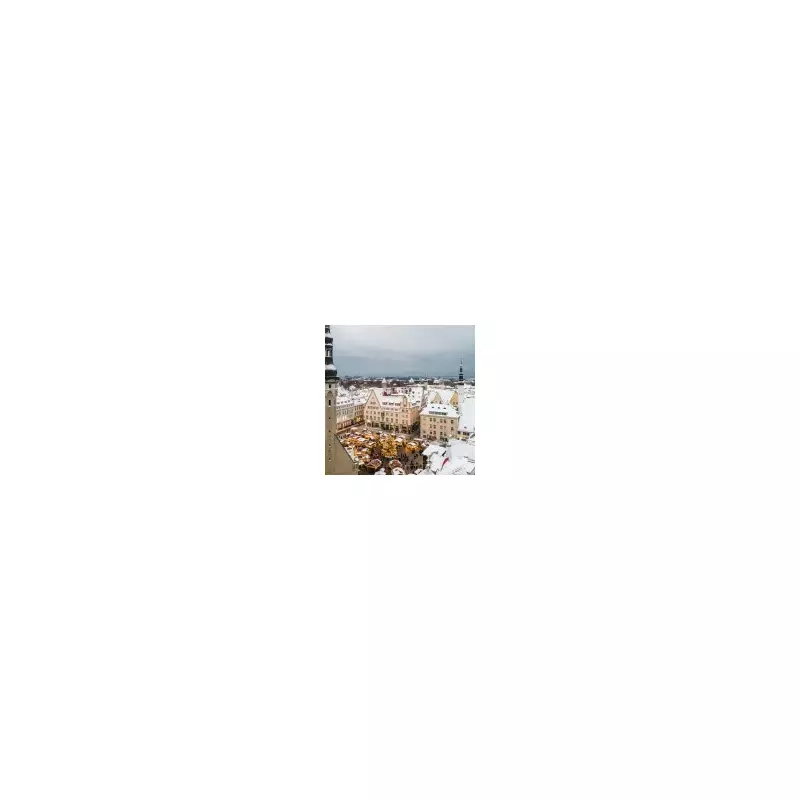
If any city could embody the spirit of December, it would likely be Tallinn. The Estonian capital has been celebrating the holiday season with gusto since 1441, when it reportedly erected the world's first public Christmas tree. Fast forward to 24 years ago, and the city embraced a full festive transformation, establishing a market around a towering 14-metre spruce. This annual event has since earned a consistent reputation as one of Europe's finest Christmas markets.
A Hallmark Movie Come to Life
Wandering through the town square, the scene is undeniably magical. Nestled within one of Europe's best-preserved medieval towns, pastel-coloured buildings encircle the market. Twinkling lights and quaint, kitschy stalls create an atmosphere straight out of a Hallmark film. The market offers everything you'd hope for from a city that takes Christmas as seriously as Tallinn does.
Local vendors proudly display their handmade crafts, from wooden snow-covered cottages and jewel-coloured baubles to intricately decorated rocking horses. The air is thick with the enticing aroma of sausages sizzling over open flames, providing the perfect savoury companion for a cup of traditional Nordic mulled wine, known as Glögg. For the brave, this warm drink can be fortified with Vana Tallinn, a local 40% ABV liquor blending rum, herbs, and spices. Locals claim one shot acts like an internal body sauna, a description that feels remarkably accurate after tasting.
The market radiates a contagious joy. Couples snap selfies and steal kisses, a mother in a fur coat watches her toddler spin on the carousel, and friends share laughter over steaming hot chocolates. On weekends, the stage comes alive with folk ensembles, dance groups, and choirs—a fitting showcase for a nation where 5% of the population is involved in choral singing.
The Charm of Intimacy and Local Critique
Drawing around 200,000 visitors annually, Tallinn's market feels intimate compared to London's three-million-strong Winter Wonderland. This smaller scale adds to its allure, making visitors feel like members of an exclusive VIP club. While the author enjoys the yearly trip to Hyde Park, she notes that Tallinn, with its rich history and genuine medieval backdrop, feels like the real deal, whereas its London counterpart can seem like a more artificial replica.
However, no experience is perfect. The market's main drawback is its repetition. With only approximately 60 stalls, a lack of variety is noticeable. The author counted at least four stalls dedicated solely to Glögg and none serving pints of beer. While several vendors offer sausage, cabbage, and potatoes, other savoury options are scarce. The knitwear selection leans towards novelty 'Sauna Boss' hats rather than modern Estonian designs. This aligns with the recent assessment from the country's own public broadcaster, which described the market as 'tacky' and 'kitschy'. While the oversized gingerbread biscuits have their charm, there is certainly room for more diversity. The tourist board has hinted that a glow-up is planned for the future.
Beyond the Market: Exploring Tallinn
The market's central location provides easy access to the city's culinary delights. At the three-floor Pegasus restaurant, diners can warm up with roasted bell pepper soup and fluffy potatoes with spicy alioli amidst a jungle of house plants. The Estonian tradition of eating dark rye bread at virtually every meal is a joy to adopt, especially at Rataskaevu16, where the bread is baked fresh on-site each morning.
For accommodation, the ibis Styles hotel, located just a 15-minute walk from the bustle, offers a boutique experience within a budget chain, complete with a vintage photo booth. Its Focus restaurant serves cosy, memorable dishes like duck carpaccio. For a more luxurious stay, the Mövenpick Hotel boasts a spa, wine cellar, and a rooftop restaurant, not to mention a daily 'chocolate hour' celebrating Estonia's status as the world's third-largest consumer of chocolate per resident.
Venturing further, a walking tour with a guide like Eva-Maria reveals a city proud of its history, including the world's longest-running pharmacy, Raeapteek, operating since 1422, and the President's surprisingly accessible pink palace. Yet Tallinn isn't stuck in the past; modern cranes and skyscrapers dot the skyline, and cool neighbourhoods like the Telliskivi Creative City buzz with life.
A fascinating aspect of Estonian Christmas is its secular nature. With almost 50% of Estonians not identifying with a religion, the season has been crafted into a unique cultural celebration. While the market itself finishes at the end of December, the city's decorations remain up until the end of February, making it an ideal destination for an early 2026 trip to prolong the festive spirit.
Getting there from the UK is straightforward, with direct flights from several major airports via airlines like Ryanair, Wizz Air, Air Baltic, and Jet2. The most affordable return fare found for December was £61 with Wizz Air.