Europe's Chocolate Paradise in Slovenia's Alpine Foothills
"Ooh, that one please." I gesture toward the salted caramel praline gleaming behind the glass counter, its perfect form beckoning irresistibly. Shop assistant Isabel places the exquisite chocolate creation into a box that seems almost ceremonial for a single piece. Yet here at Radolška čokolada in Radovljica, northern Slovenia, each chocolate receives reverential treatment worthy of its craftsmanship.
I cradle the confection between thumb and forefinger, inhale its rich aroma, then let it melt slowly on my tongue. An intricate tapestry of flavors unfolds across my palate in a symphony of sweetness. Without question, this represents the finest chocolate I have ever experienced—and the story behind it proves equally remarkable.
From Pandemic Pause to Chocolate Passion
When COVID-19 halted the world in spring 2020, Gregor and Nataša Mikel found themselves furloughed from desk jobs with unexpected time. The couple had long been fascinated by sweets through their involvement with Radovljica's Chocolate Festival, established in 2012 and attracting approximately 20,000 international visitors over two days—impressive for a town of merely 6,000 residents.
Chocolate production demands specialized knowledge that cannot be acquired online, presenting a significant challenge for the inexperienced couple. After initial uncertainty, they contacted Samo Osmanchevich, one of Slovenia's pioneering chocolatiers, absorbing every possible lesson. Four months of intensive work followed, supplemented by educational trips to Zagreb, Croatia.
The turning point arrived when they met Riccardo Magni, an Italian master chocolatier. "After ten years organizing Slovenia's largest chocolate festival, our town still lacked its own chocolatier," Nataša explains. "Gregor and I invested every hour, day, week, and month into creating truly exceptional chocolate."
Beginning production in their home, they perfected recipes before launching Radolška čokolada as a family-run enterprise. Today, their shop at the entrance to Radovljica's old town draws chocolate enthusiasts from across the globe.
Beyond Chocolate: Slovenia's Sweet Traditions
Radovljica, nestled at the Julian Alps' foothills near Lake Bled's captivating shores, has earned recognition as Slovenia's "sweetest town" for reasons extending beyond chocolate. Slovenia, with just two million citizens, supports around 10,000 beekeepers producing 2,000 tonnes of honey annually. Beekeeping represents one of the nation's oldest traditional crafts and significant economic activities—so valued that Slovenia uniquely protects its native Carniolan bee within the European Union.
Evidence of this sweet heritage appears throughout town, particularly at Gostilna Lectar. This 500-year-old establishment combines traditional restaurant, inn, bakery, and gingerbread workshop within walls decorated with Slovenian folk art resembling scenes from fairy tales. The original gingerbread workshop, founded by Jakob Krivic in 1766, continues operating today.
Visitors can join tours demonstrating how lects—traditional honey-based gingerbread hearts decorated in vibrant colors—are crafted. Historically, these were love tokens from men to women, often including small mirrors revealing the intended recipient's reflection.
The restaurant, operating since 1822, offers affordable hearty meals featuring locally sourced ingredients. Menus showcase cured meats from regional farms, soups served in bread bowls, black pudding, sauerkraut, and dishes highlighting buckwheat—a nutritious crop thriving in Slovenia's smaller plots where wheat and corn struggle.
Dessert options include the 2025 Gold Award-winning gibanica, a rich layered cake, though the standout remains the traditional slow-cooked leg of lamb with sautéed potatoes and sauerkraut. Priced under €29 and generously portioned for multiple diners, it ranks among the finest lamb dishes imaginable.
Preserving Heritage Through Traditional Crafts
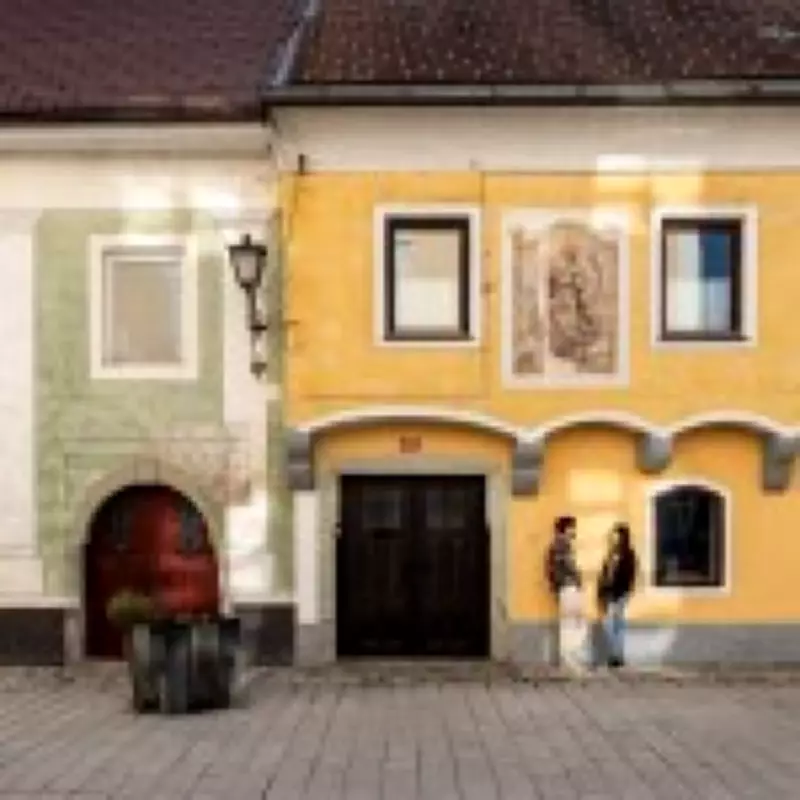
Slovenians maintain profound pride in preserving traditional crafts, from pottery and woodworking to forged iron and textiles. Throughout Radovljica's old town, lined with majestic 16th- and 17th-century buildings, artisans practice skills many might assume vanished, often eagerly sharing knowledge with visitors.
Wandering these historic streets, I discovered pottery displayed outside what appeared an ordinary house. Closer inspection revealed functional bowls and plates alongside decorative ceramic owls, frogs, and plant pots. Inside, I met Nada Jazbec, a 66-year-old local who lost her sight at twenty due to diabetes-related capillary bleeding.
"My life transformed overnight," she recounts. "Within two weeks, both eyes lost vision completely." Having learned basic pottery at fifteen, Nada determined to rebuild her life through clay work, creating pieces guided by her mind's eye. Today, she sells globally sought creations from her home workshop, demonstrating extraordinary resilience.
Woodcraft represents another deeply rooted Slovenian tradition, particularly in Škofja Loka approximately thirty miles from Radovljica. Here, artisan Matija Hiršenfelder creates everything from simple forms to technologically complex pieces. "Originally, I worked with available materials," he explains, "but each wood species' unique aroma completely captivated me."
After secondary school, he apprenticed in woodturning and binding, eventually restoring 450 window frames and 30 doors at Ljubljana's Government Building and President's Office—achievements earning him the 2010 Zlata Vitica Award for Special Handicraft Achievements. Today, he conducts school holiday workshops where children "become absorbed in woodcraft, often putting phones aside for the first time," he observes. "Many report improved mental wellbeing afterward. I hope some carry these skills into adulthood."
Sweet Conclusions and Practical Details
Radovljica exemplifies Slovenia's dual commitment to preserving centuries-old traditions while embracing innovation. Radolška čokolada stands as perfect testament—proof that in this medieval Alpine town, life remains exceptionally sweet.
Travel Information: British Airways, easyJet, and Wizz Air operate direct flights from London (primarily Gatwick, occasionally Stansted) to Ljubljana seasonally and year-round. From Ljubljana, Radovljica is accessible via 35-minute taxi, hour-long bus, or 50-minute direct train running hourly. Accommodations range from private rooms in pensions and walking hostels starting around £70 nightly to boutique hotel doubles from approximately £177 based on Booking.com rates.