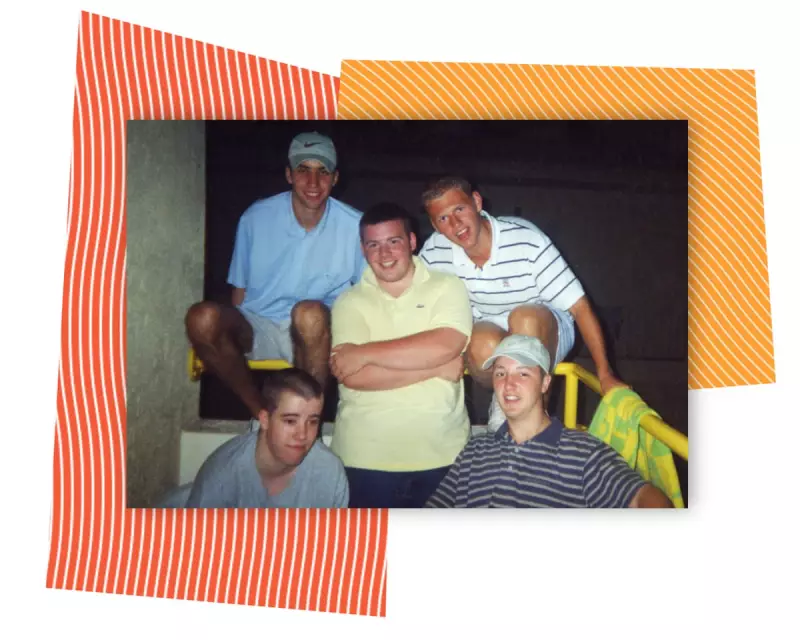
In August 2000, Andy Welch, pictured centre, enjoyed a holiday in Malia, Crete, with his close friends. The group, captured in a memorable snapshot, included Dean, David, Nathan, and Lee, arranged clockwise from the top left. This image, a composite courtesy of Andy Welch and Guardian Design, represents a time of youthful innocence before a profound loss would reshape their lives.
The Crown Bard: An Unlikely Haven in Rhyl
The Crown Bard, located on the main road out of Rhyl in Denbighshire, was a fixture in the local landscape, though Andy had rarely visited it during his teenage years. Living just a five-minute walk away, he passed it countless times, aware of its reputation as a haunt for rugby enthusiasts, while the pub opposite catered to football fans. However, it was not sport that drew him to the Bard for the first time, but an overwhelming sense of grief.
A Shattering Loss at Age 23
At 23, Andy faced the sudden death of Lee, one of his closest friends since childhood. Lee, along with his twin brother Dean, had been a constant presence in Andy's life, from shared school days to endless hours of football, tennis, and later, drinking sessions and holidays. The tragedy occurred outside a hotel across town, where Lee was punched, fell on stone steps, and never regained consciousness.
In the immediate aftermath, Andy's tight-knit friendship group instinctively gathered at the Crown Bard. They commandeered the pub's back room, making it their own with its pool table, dartboard, and jukebox. For weeks and months, this space became their sanctuary, a place where they could drop in unannounced and find comfort in each other's company. Meals like baguettes for lunch and sizzling mixed grills for tea became routine, offering a semblance of normalcy amidst the pain.
Insulated from Gossip and Time
In a small, goldfish bowl town like Rhyl, a local tragedy can feel claustrophobic, with gossip mills churning and prying eyes everywhere. The back room at the Bard provided a crucial bubble, shielding the friends from invasive questions and speculative chatter. Here, conversations focused on kindness, rounds of drinks, and turns at the pool table, rather than rehashing the painful details of Lee's death.
Andy reflects that this period marked a divide in his life: the carefree youth before Lee's passing and the grim reality of adulthood that followed. The Bard's back room served as a bridge between these two eras, a place where the group, still in their early twenties, navigated their grief together, ill-equipped but determined to support one another.
Legacy and Change Over Two Decades
As the 21st anniversary of Lee's death approaches, Andy notes the bleak milestone of his friend being gone longer than he was alive. The surviving friends have since grown up, settled down, and started families, achieving milestones Lee never had the chance to experience. Sometimes, it feels as if those events happened to a different group in a distant town, a feeling compounded by the closure of the Crown Bard in 2017 after years of decline and its subsequent demolition.
Andy's last visit to the pub was for the 2006 World Cup final, an experience that felt surreal, like reopening a door to a past he had tried to leave behind. Despite the lingering sadness, he feels proud of how the friends found an escape in the Bard and grateful for the solace it provided. Today, a McDonald's drive-thru stands on the site, a fitting tribute given Lee's fondness for McChicken sandwiches.
This story underscores the profound impact of shared spaces in times of crisis, highlighting how a simple pub room can become a lifeline for those grappling with loss.