
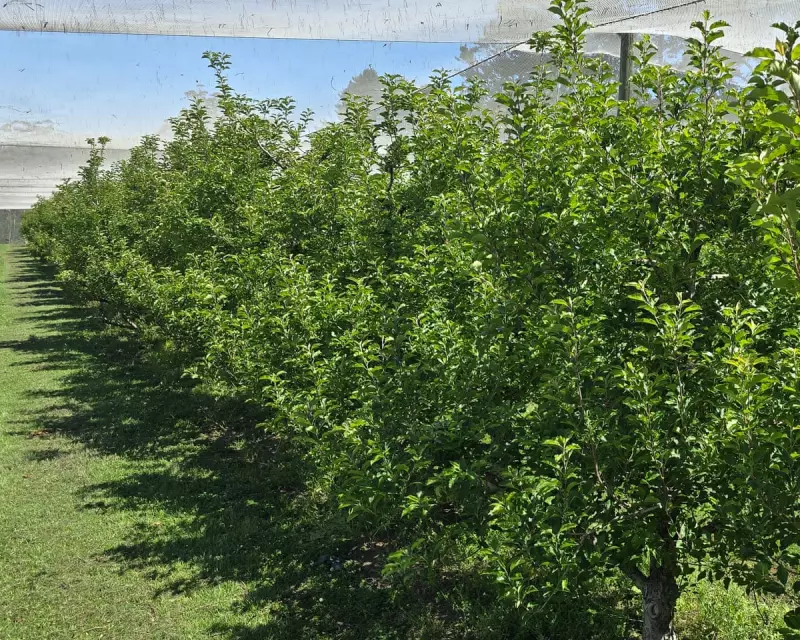
A mysterious and devastating apple shortage has struck the heart of New South Wales' fruit-growing region, leaving orchardists in the Blue Mountains town of Bilpin facing financial ruin and a complete loss of their crop.
A Barren Harvest
At this time of year, Pine Crest Orchard would typically be bustling with around 1,000 visitors a day, all eager to pick their own fruit from branches heavy with apples. This season, however, the rows of trees stand almost completely bare. Despite a promising heavy flowering in the spring, the fruit has simply failed to form.
Orchardist John Galbraith, who owns and runs the family farm with his wife, Erica, described the baffling situation. "We had what looked like good blossom but then watching the trees over the second week of October I started to realise the flowers had fallen off and there were no apples," Galbraith said. He explained that instead of the petals dropping to leave the centre of the flower, which develops into the fruit, the entire flower and its stalk had fallen away.
"You could walk up and down the rows and couldn't find any apples, which should be at that stage the size of a pea," he added. With apple trees comprising about 60% of the family-run orchard, the financial impact on the Galbraiths is expected to be severe.
Investigating the Cause
Pine Crest is not alone; several orchards in the area are reporting the same unusual phenomenon. In late October, the Greater Sydney Local Land Services convened a workshop with growers and experts in Bilpin to investigate the mystery.
Several theories were put forward during the discussions:
- Weather Conditions: It was particularly windy during the critical period, which may have prevented bees from effectively pollinating the crops.
- Varroa Mite: This destructive parasite, first detected in Australia in June 2022, has spread rapidly, decimating wild European honeybee populations that are vital for pollination.
- Competing Flora: The presence of flowering eucalyptus trees in the area, which are more attractive to bees, may have drawn the insects away from the apple blossoms.
A spokesperson for Local Land Services confirmed that the varroa mite has "caused a significant amount of wild bee hives to be destroyed," creating a shortage of pollinators. Furthermore, "There was also the fact that there was flowering eucalyptus in the area... Those hives would have gone for the eucalypt."
Wider Consequences and Ongoing Mystery
The effects of the apple shortage are rippling through the local community. The absence of a viable crop means day-trippers are staying home, leading to a sharp decline in tourism revenue for the region's pick-your-own farms.
Despite the theories, John Galbraith remains unconvinced about the primary cause. He noted that a local beekeeper manages their hives and ensures they are free of varroa mite. The orchard also conducts regular soil and plant tests, which have not revealed any underlying issues.
"The problem with not knowing what it is, is that you can't then take action to ensure that it doesn't happen the next year," Galbraith stated, highlighting the growers' profound frustration. The peak industry body, Apple and Pear Australia Ltd (Apal), was contacted but declined to comment on the matter, leaving local growers to face an uncertain future.




