The Rise of Micro-Restaurants Across the United Kingdom
In a culinary landscape once dominated by sprawling all-you-can-eat buffets and extensive menus, a new dining revolution is taking hold across Britain. Micro-restaurants—intimate establishments typically seating fewer than twenty patrons—are spreading rapidly throughout the UK, transforming how people experience food and community.
From Strangers to Friends at Communal Tables
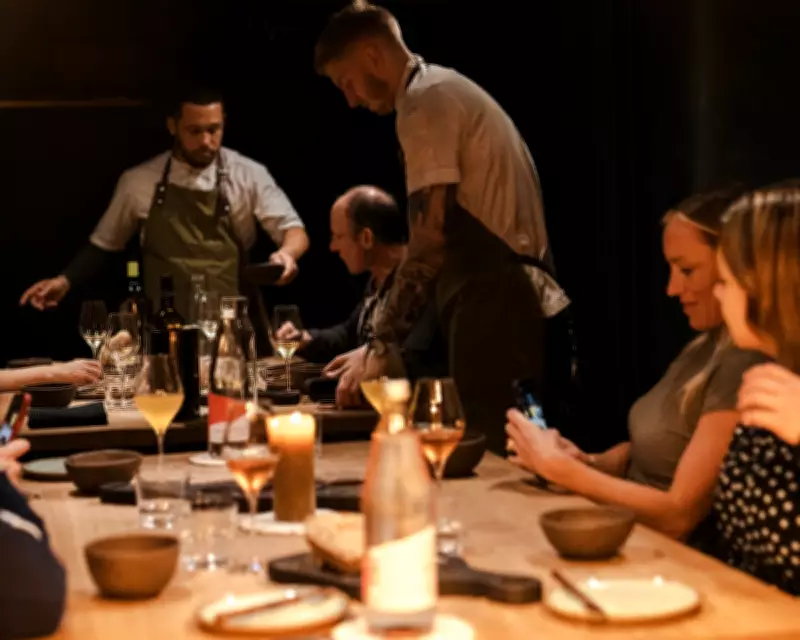
The heart of the micro-restaurant experience lies in the communal table. At Gwen, an award-winning restaurant in Machynlleth, Wales measuring just three meters wide, a single table accommodates all eight customers for the evening. Owner Jake Nutt reports that strangers frequently leave as friends after sharing this intimate dining experience.
"We've witnessed remarkable connections form at our table," says Nutt, whose establishment was named best restaurant in Wales in the Harden's guide 2025. "Couples who booked separately have ended up planning holidays together. People arrive as strangers and depart with dinner plans for future gatherings."
The Solo Diner's Sanctuary
Micro-restaurants have become particularly welcoming spaces for solo diners. At The Table in Edinburgh, which hosts ten customers at a seven-meter-long communal surface, single seats represent the most popular booking option.
"We regularly host six individual diners in one evening—that's over half our restaurant capacity," explains owner Sean Clark. "The inclusive, convenient atmosphere makes solo dining feel natural rather than awkward."
Edinburgh's tight urban spaces have proven fertile ground for micro-restaurants, with establishments like Eorna and Argile joining The Table in offering intimate dining experiences.
Family-Style Intimacy in Tiny Spaces
Some micro-restaurants operate as private dining experiences that blur the line between restaurant and home. At Sugo82, an Italian "family kitchen" in London's Hackney neighborhood, a table for five sits surrounded by traditional Italian memorabilia just above the takeaway counter.
"This space feels like my home," says owner Stefano Pianese, originally from Naples. "Customers receive the same treatment they would in my own house. They often invite us upstairs for drinks because they genuinely feel the warmth and connection."
The Chef-Customer Connection
The defining characteristic of micro-restaurants is the elimination of barriers between kitchen and dining area. At Gwen, the chef works approximately one meter away from customers, creating unprecedented intimacy in the dining experience.
"In traditional restaurants, chefs rarely see customer reactions to their creations," notes Nutt. "For us, that immediate feedback is almost like a cheat code. We witness every expression of delight, surprise, or satisfaction as our food is enjoyed."
The Business of Small-Scale Dining
While many micro-restaurants began simply because limited space was available to their owners, the intimate scale has become a unique selling proposition. "Our size has transformed into one of our greatest assets," Clark explains. "It creates a feeling of inclusion in something special and exclusive."
However, operating within such confined spaces presents distinct challenges. "The kitchen can feel like a micro pressure cooker," admits Nutt. "There's absolutely nowhere to hide. If a glass breaks or a plate drops, everyone knows immediately. You simply have to accept the transparency."
Financial Pressures in Compact Spaces
Economic realities affect micro-restaurants particularly acutely. Sam Betts, owner of The Small Canteen in Newcastle—a fifteen-seater measuring seven by three meters—notes that rising business rates have created significant pressure compared to when he opened five years ago.
"When I started, staff costs and rates were manageable, and rent was reasonable," says Betts. "Now every expense has increased dramatically, making operations increasingly challenging."
Industry surveys indicate broader challenges, with 38% of people reporting they eat out less frequently than the previous year according to October data.
The Premium Intimate Experience
To survive financially, micro-restaurants typically require full bookings every night and often implement pre-paid reservations to avoid cancellations. "If two people cancel at Gwen, that's 25% of our revenue lost for the evening," explains Nutt.
This business model translates to premium pricing. Gwen offers a ten-course tasting menu for £135 per person, while The Table serves a seven-course experience at £110. At Sugo82, meals cost up to £75 per head.
What these establishments lack in physical space, they compensate for with extraordinary attention to culinary detail and personal service. "In large restaurants, you might simply eat and leave," says Pianese. "Here, we explain every plate—its history, origins, and preparation. Each meal becomes a story."
As the UK's dining landscape continues to evolve, micro-restaurants represent both a response to economic pressures and a celebration of intimate culinary connection. These tiny establishments prove that sometimes, the most memorable dining experiences come in the smallest packages.