
Jimmy's Corner: A Fight to Preserve New York's Gritty Past in Times Square
On a recent Friday morning, the air inside Jimmy's Corner was thick with nostalgia and defiance. David Gladman, a 73-year-old former executive chef, meticulously scanned the bar's photo-covered tables, using his phone's torch to illuminate memories frozen in time. He pointed triumphantly at a yellowing image from the early 1980s, capturing him smoking a cigarette beside his smiling wife. "I drank here every day from 1988 to 2012," Gladman recalled, his voice tinged with emotion. "My job was stressful, so I'd spend three or four hours here and go home feeling good." This intimate connection to Jimmy's Corner, a Times Square dive bar opened by former boxer Jimmy Glenn in 1971, is shared by countless regulars who now face the heartbreaking prospect of its closure after 55 years.
The Last Vestige of an Older, Grittier New York
Amid the dazzling neon and tourist crowds of modern Times Square, Jimmy's Corner stands as a stubborn relic of a bygone era. The walls are adorned with aging photographs of boxers, while restroom stickers pay homage to long-defunct bands and shuttered bars. A dust-covered "Happy Birthday" sign hangs behind the narrow bar, where patrons squeeze onto rickety stools or tuck in their pints to let others pass. It's not a swanky establishment, but its authenticity is undeniable. "It's a testament to our community," said Adam Glenn, Jimmy's son, who took over the bar in 2015. He gazed around the bustling space, which had opened early for a protest rally, with dozens fortifying themselves with the bar's famously cheap $3 beers. "Through adversity, communities get stronger. This threat has made us appreciate what we love about this place even more."
Eviction Threat Sparks Legal Battle and Community Outcry
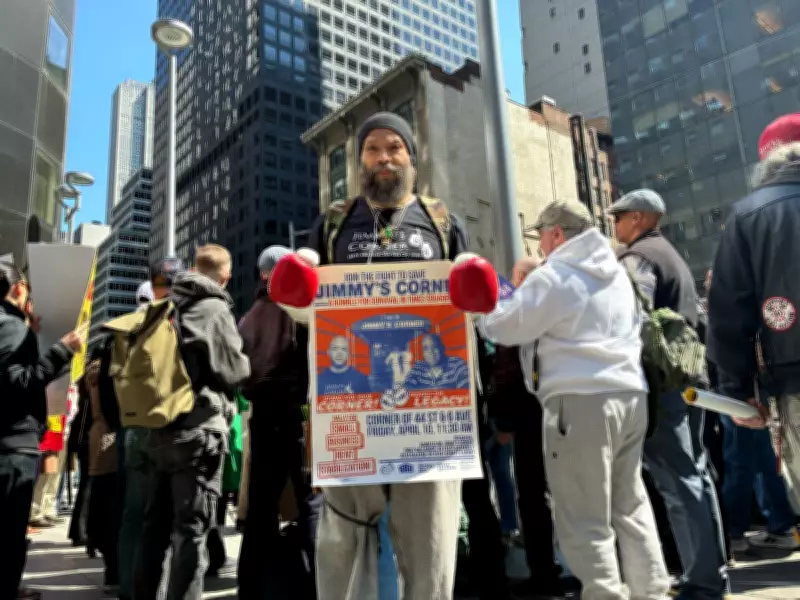
The building's landlord, the Durst Organization, has notified Adam Glenn of eviction and put the property up for sale, citing plans for a new housing development. In response, Adam filed a lawsuit last year, arguing that his father was "tricked" into a lease provision allowing Durst to shut the bar after Jimmy's death in 2020. "My dad would be incredibly hurt and disappointed," Adam said, noting his father's decades-long relationship with the Durst family. The eviction notice has galvanized a fierce campaign to save Jimmy's Corner. On Friday, scores of patrons and local politicians rallied outside Durst headquarters, chanting "Save Jimmy's Corner!" and brandishing signs. Thomas P. Walsh, 68, who has frequented the bar since age 14, lamented, "The landlord is greedy. It's like Cheers here—everybody knows everybody."
Political Support and Broader Implications for Small Businesses
The fight has drawn attention from New York lawmakers, who link Jimmy's plight to wider issues of small business survival. State Senator Julia Salazar addressed the rally, declaring, "This is one example of thousands of businesses forced to close due to unsustainable rent increases. Small businesses are the beating heart of the city, representing culture and employing over half of New York's workers." Her speech resonated with the crowd, echoing concerns about New York losing its unique character. Assembly member Emily Gallagher recalled her first visit: "I met people from all over the world. So often now, New York feels like a strip mall in Iowa. Jimmy's is a beloved family-owned bar, while Durst is an enormous real estate company trying to evict them."
Durst's Defense and the Unyielding Spirit of Regulars
In a statement, the Durst Organization defended its actions, emphasizing a "special personal relationship" with Jimmy Glenn and noting that rent had not been raised in nearly 20 years. "The building is ideal for housing development," they said, adding that they offered Adam money to vacate. "We have done our best to be good neighbors, and we regret it has come to this." However, this justification fell flat with Jimmy's loyal patrons. After the protest, they returned to the bar, where an upbeat atmosphere masked underlying sadness. Gladman, sipping a beer, reflected, "Jimmy was like a dad to me, giving great advice. I don't want this place to go—it holds a lot of memories for everyone." As the battle continues, Jimmy's Corner remains a symbol of resilience, its fate hanging in the balance between corporate interests and community heritage.




