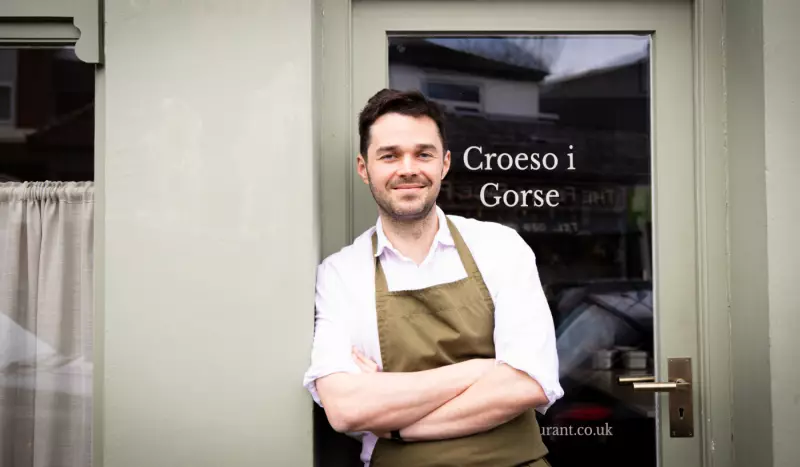
In a landmark moment for the Welsh culinary scene, the city of Cardiff has welcomed its very first Michelin star. The honour has been bestowed upon Gorse, a discreet restaurant nestled in the leafy Pontcanna neighbourhood, signalling a potential shift in the fine dining landscape of the capital.
The achievement is particularly notable given Wales's reputation for outstanding local produce and its collection of starred establishments in more rural locations. For a long time, Cardiff's dining scene has existed in the shadow of these destination-worthy eateries, where the experience is intrinsically linked to their specific coastal or countryside settings. The success of Gorse, with its modern Welsh tasting menu, suggests a new, confident narrative is emerging right in the heart of the city.
The Chef and The Vision
At the helm of this culinary triumph is Chef Tom Waters, a native of Wales who honed his craft in some of the UK's most esteemed kitchens, including The Square and The Fat Duck. Waters returned to his roots with a clear mission. He observes that Cardiff has "come on massively in the last five years or so," and he is now seizing the opportunity to "play a role in pushing this narrative forward."
"Comparatively, Cardiff doesn't have the same culinary clout that London does in England," Waters states. "We're trying to do our bit to change that. I spent a lot of my youth in Cardiff and live here now and love the city, so I want to see it go from strength to strength."
Central to his philosophy at Gorse is a deep reverence for world-class Welsh produce. Waters aims to capture a "snapshot" of the entire country within his concise tasting menu. "The inspiration is Wales in its entirety, everything from the produce to our history, our culture and our landscape," he explains. "We want to reflect this in everything we do."
A Dining Experience of Quiet Confidence
Stepping into Gorse reveals an intimate space with an open kitchen and just a handful of tables, designed to feel "open and unpretentious" yet holding a subtle luxury. The atmosphere is one of calm precision; during service, Waters and his small team work silently on induction hobs, a world away from the typical clatter and ego of a high-pressure kitchen. The front-of-house team complements this with a friendly, effortless ease.
The food itself is characterised by a gentle, lilting quality. There are no jarring spikes of flavour, but rather a smooth, undulating progression of courses. Waters demonstrates a remarkable ability to make his food sing without relying on open flames or heavy-handed seasoning.
The journey begins with a series of inventive snacks that pay playful homage to Welsh ingredients. A rich, umami-packed broth of native seaweeds sets the tone. This is followed by smoked pike-perch roe on a rye 'Communion wafer', a cornetto of preserved mushrooms and juniper that evokes a woodland floor, and cubes of bara brith topped with mature Caws Cerwyn cheese, pickled walnut, and winter truffle.
Subsequent courses continue to showcase this refined approach. Lightly cured trout with horseradish cream and roe is cleverly balanced by a gelatinous tomato broth. A slice of salt-baked kohlrabi rests in a pool of buttermilk, adorned with pickled green strawberry. The monkfish course, served with lovage sauce and a young leek puree, is a masterclass in restraint and perfect balance.
The Crown Jewel of Welsh Produce
The main event features what Waters labels "some of the best in the world" – Gower salt marsh lamb. It is served as blushing, perfectly cooked slabs alongside sea vegetables, a dot of lavender gel, and popping pickled mustard seeds. This dish exemplifies a supreme confidence in the quality of the primary ingredient. A 'second serving' of slow-cooked lamb shoulder with barley and puffed spelt is a hearty yet refined nod to the traditional Welsh cawl.
The dessert selection is equally accomplished. A salted buttermilk ice cream perched on sharp raspberry in a woodruff sauce is described as "the best pudding I've had all year." A second dessert of oat llymru (a traditional Welsh flummery) is sweetened with apple caramel and elevated by a smoked cherry jam. The meal concludes with an Afon Mel honey and meadowsweet cake, a delightful finale that draws favourable comparisons to St John's famous madeleines.
For Waters and the team at Gorse, this Michelin star is part of a broader "reawakening" for Welsh food. This small, unassuming restaurant on a quiet Cardiff street has not only claimed the city's first star but has also firmly placed the Welsh capital on the international fine dining map. It stands as a powerful testament to the quality of Welsh produce and the nation's ability to punch well above its weight.