Unveiling the Depths of the Karst Plateau
The lights go out, plunging the cavern into an abyss of pure darkness. The only sounds are the gentle drip of water and a palpable sense of awe. This is Vilenica, believed to be the world's first cave ever opened to tourists, with visitor records stretching back to 1633. When illumination returns, a majestic chamber reveals itself, sculpted by millennia of erosion, adorned with towering stalagmites and hanging stalactites streaked in hues of red, terracotta, and orange from iron oxide, all glittering with crystalline formations.
A Subterranean Wonderland
Vilenica is merely one jewel in a vast network of thousands of caves scattered across the Karst region, a porous limestone landscape spanning western Slovenia and eastern Italy. Above ground, this geology creates a distinctive terrain marked by striated rocks and dolines—hollows where the limestone has collapsed. Yet, it is underground where the true magic unfolds, with immense caverns, sinkholes, and rushing subterranean rivers.
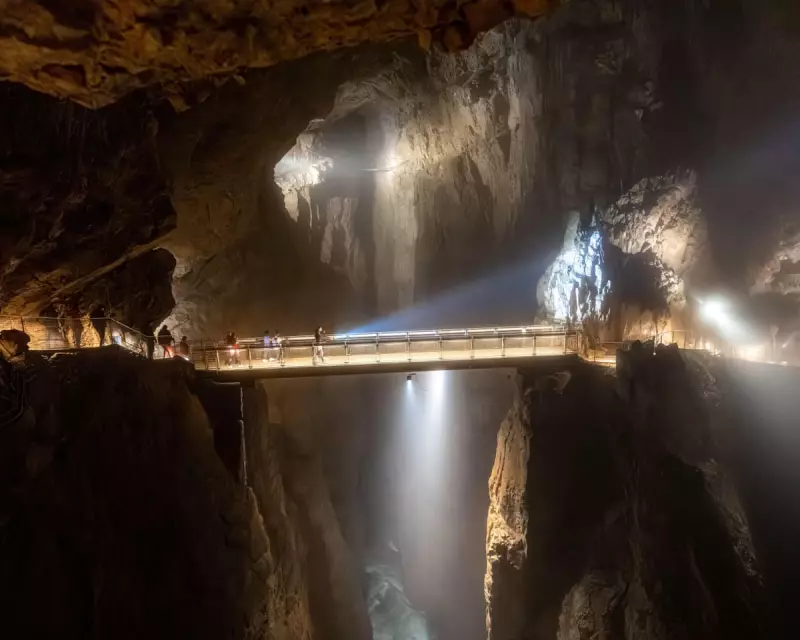
Later, a visit to the renowned Škocjan cave offers a breathtaking spectacle: an underground river thundering through a chamber nearly 150 metres high. The roar of rapids echoes off the walls, creating a surreal sensory experience that highlights the raw power and beauty of this hidden world.

Bridging Two Nations
As one traverses the rolling hills of the Karst, bilingual villages dot the countryside, linking eastern Italy and western Slovenia across a border that shifted multiple times in the 20th century. Increasingly, this area is embracing a unified identity, aiming to draw visitors away from the overtourism plaguing more famous destinations in both countries. The goal is to offer a slower, more authentic experience rooted in local culture and nature.
To celebrate this shared heritage, the region has established the EU-funded GeoKarst geopark, a cross-border initiative showcasing its unique geology, history, and culture. Efforts are underway to secure Unesco designation, further highlighting its global significance.
Medieval Charm and Culinary Delights
Winding through the hills leads to Štanjel, a medieval village reminiscent of Provence but blissfully free of crowds. Its cobbled streets, lined with flint-grey buildings of sturdy Karst stone, evoke a sense of stepping back centuries, with origins tracing to prehistoric and Roman times. At sunset, enjoying a glass of crisp local vitovska wine at Bistro Grad, with its dried flower decor and panoramic valley views, encapsulates the region's serene charm.
Crossing into Italy, the vibrant university city of Trieste offers a blend of Italian culture and Viennese art nouveau architecture, a legacy of its Austro-Hungarian past. Locals pride themselves on an open-minded spirit, where solo dining or coffee is embraced without judgment. Just minutes from the city centre, the Via Napoleonica route provides stunning bay views and connects to Prosecco, the birthplace of the famous sparkling wine.
Farm-to-Table Traditions
The Karst region excels in culinary experiences, with most produce sourced directly from local farmers. A highlight is visiting an osmice, a family-run farm or vineyard like Cantina Parovel, where homemade cheese, wine, prosciutto, honey, and olive oil are served at picnic tables under pine trees. The Parovel family's story mirrors the area's complex history: three generations born in the same village, yet under different sovereignties—Austro-Hungarian, Italian, and Slovenian.
For the adventurous, a 4-mile hike through the Rosandra valley, part of the Alpe Adria Trail, leads through landscapes of wild cherry trees and roe deer. Along the way, one might discover improvised "wine caves"—hollows stocked with local wines and cheeses on an honesty-bar basis, complete with carved wooden seating overlooking the valley. This embodies the Karst's essence: a striking landscape paired with a warm, communitarian spirit.