Rocco Forte Forecasts Middle East Tourism Revival Following Ceasefire
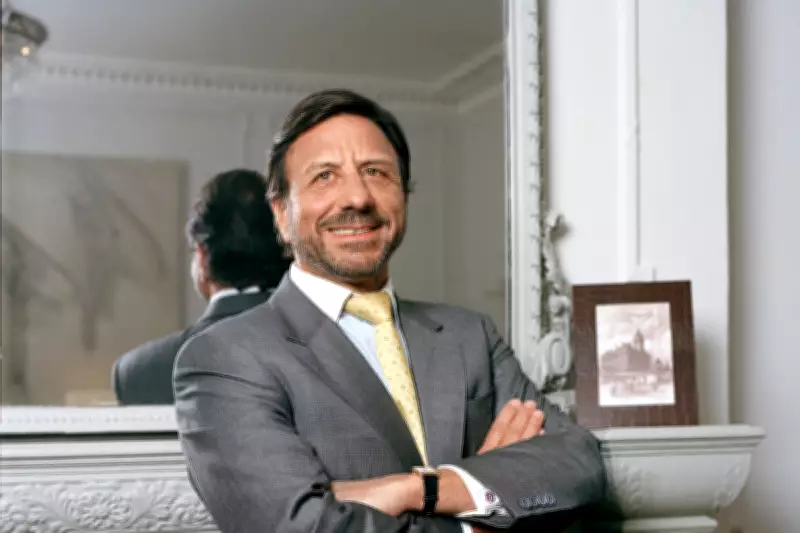
Sir Rocco Forte, the billionaire hotel magnate and owner of Rocco Forte Hotels, has declared that tourism volumes to the Middle East could significantly increase following a ceasefire in the region, particularly if the United States and Israel succeed in toppling the Iranian regime. Forte made these remarks while reaffirming his commitment to expansion plans in the Gulf, despite a current exodus of visitors from the area.
Gulf Expansion Unaffected by Conflict
The hospitality tycoon, whose London-headquartered chain is partially owned by Saudi Arabia's Public Investment Fund, revealed to City AM that the outbreak of war has not derailed his company's expansion strategy across the Gulf region. Forte expressed optimism that once regional tensions subside, the Middle East could transform into an "even better" destination for international travelers.
"With the current situation, people obviously aren't going to travel there, but I don't think this is necessarily a long-term situation," Forte stated in an interview. "The Middle East is an area of significant growth, and if there's the right result after this war, it may become an even better area, because the threat has always been Iran largely creating the trouble."
Massive Economic Impact of Current Conflict
Gulf states including Dubai, Abu Dhabi, and Saudi Arabia have invested heavily in recent years to position themselves as premier holiday destinations for Western tourists, as part of a broader economic diversification strategy to reduce reliance on oil revenues. However, the outbreak of war across the Middle East has triggered widespread flight cancellations, airspace closures, and hotel damage, leading hundreds of thousands of holidaymakers to cancel their trips.
This visitor exodus is costing the region's tourism industry an estimated $600 million (£448 million) daily. According to an analysis conducted by Oxford Economics, a "protracted conflict scenario" could result in the Middle East losing approximately 38 million international visitors in 2026 alone, translating to a devastating 27 per cent reduction in tourism revenue, equivalent to £56 billion.
Post-Conflict Marketing Investment Expected
Despite these staggering figures, Forte remains bullish about the region's long-term prospects. He identified Iran's autocratic regime as a primary deterrent to investment in the Middle East, suggesting that regime change could unlock substantial economic potential. Forte predicted that major Gulf players would "invest huge money" in marketing themselves to Western tourists once stability returns.
"I think the Emirates will invest a huge amount of money in marketing themselves again once things have settled down," Forte projected. "I don't think anything has changed that will change people's attitudes dramatically – particularly if the threat of the war diminishes."
UK Hospitality Sector Challenges
While focusing on Middle Eastern expansion, Forte's hospitality empire also faces challenges closer to home. His portfolio includes prestigious properties such as Brown's Hotel in London and Edinburgh's Balmoral, both of which have been impacted by the UK government's recent business rates hike.
The Treasury's overhaul of the commercial property levy – the business equivalent of council tax – has sparked a nationwide backlash from the hospitality industry. Although pubs and live music venues secured subsidies after weeks of campaigning, the broader sector still faces steep increases that Forte described as potentially "ruinous" for many businesses.
Brown's Hotel, a five-star establishment with roots dating back to the early 19th century, is confronting a £1.5 million annual tax increase once the changes fully take effect in 2028. Forte warned about the cumulative impact of these financial pressures: "Everything's happening at once. All the extra costs have been tied to business all at the same time. And the sort of cumulative effect is enormous."
Forte's comments highlight the complex interplay between geopolitical stability, tourism economics, and domestic business challenges facing the global hospitality industry as it navigates uncertain times across multiple regions.