
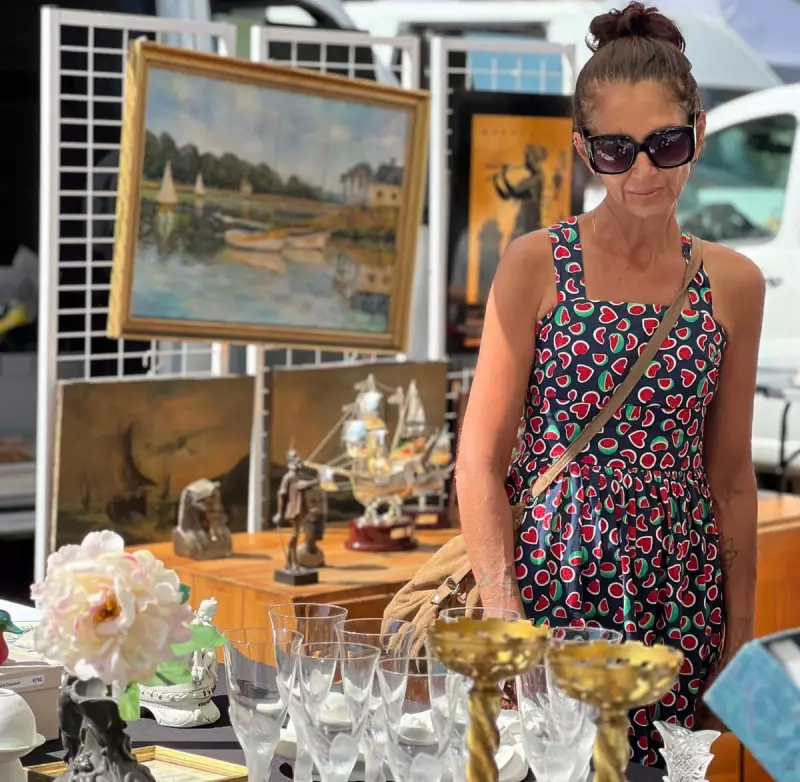
Forget crowded tourist attractions and overpriced souvenirs - there's a new treasure hunt captivating British travellers across Europe. While traditional sightseeing still has its place, a growing number of UK tourists are swapping guidebooks for vintage maps and heading straight to flea markets, brocantes and charity shops when travelling abroad.
The Rise of Thrifting Tourism
What was once considered a niche hobby has exploded into a major travel trend. According to Booking.com's 2025 travel predictions, an astonishing 73% of travellers have purchased secondhand items while abroad. Social media has played a significant role in this shift, with the hashtag "thrifted" appearing more than 7 million times on Instagram alone.
Google data reveals that searches for destination-specific secondhand shopping have skyrocketed, with British tourists increasingly looking up terms like "thrifting in Berlin" or "vintage markets in Stockholm" before their trips. The appeal extends beyond mere shopping - it's about discovering authentic local culture and bringing home unique mementos that tell a story.
Expert Tips for Vintage Treasure Hunts
Seasoned bargain-hunter Sarah Rodrigues, who has been buying secondhand since her early teens, shares her hard-won wisdom for successful vintage shopping abroad. Research is crucial - she recommends familiarising yourself with local charity shop names and following Instagram accounts specialising in vintage finds at your destination.
Technology can be your best ally when hunting for treasures. Google Lens helps determine authenticity and fair pricing, while in France, the website brocabrac.fr provides calendars of brocantes (flea markets) that move between locations each weekend. Rodrigues discovered this worked perfectly when some brass swans she'd been eyeing remained available the following week - just in a different town.
Location strategy matters too. Towns with ageing populations like Kraków and Léon often offer better bargains, while capital cities and university towns tend to have higher prices due to greater demand. Generally, the farther you travel from city centres, the more favourable the prices become.
Memorable Finds and Cultural Connections
The thrill of discovery provides what Rodrigues describes as a genuine "dopamine hit". Her remarkable finds include an ostrich leather handbag for just €2 in Germany, a silk Hermès scarf uncovered in Romania, and in Greece, a beautiful volume of botanical drawings discovered among shelves of ordinary books.
One of her most cherished purchases - an angry rooster jug bought for 100 krone (£12) in Copenhagen - turned out to be a valuable piece from 1930s Czechoslovakia, with similar items selling for nearly £200 on Etsy. Beyond the financial value, these items serve as meaningful souvenirs that evoke lasting memories of travels.
The social aspect of secondhand shopping creates unexpected connections. Market stall holders and small shop owners often prove more engaging than staff in chain stores, leading to memorable interactions and cultural exchanges. These authentic encounters frequently become as treasured as the purchases themselves.
Practical Considerations for British Travellers
While the excitement of discovery can be intoxicating, practical considerations remain important for UK tourists. Packing limitations require careful planning, as many travellers discover when faced with the challenge of fitting their finds into luggage. Some serious suitcase-sitting may be necessary for the journey home, but as Rodrigues asks, "who in their right mind would leave an utterly perfect, €10 camel cashmere coat behind?"
For larger items like furniture or mirrors, shipping options exist but often come with substantial costs, particularly from more commercial operations. This reality has some dedicated vintage hunters considering driving holidays - potentially in larger vehicles - to accommodate their treasures.
The environmental benefits add another layer of appeal to secondhand shopping abroad. By giving pre-loved items new homes across borders, travellers participate in sustainable tourism while discovering unique pieces unavailable in British charity shops. As Rodrigues demonstrates through sending a found blouse to an Australian friend, these treasure hunts can even strengthen international friendships.




