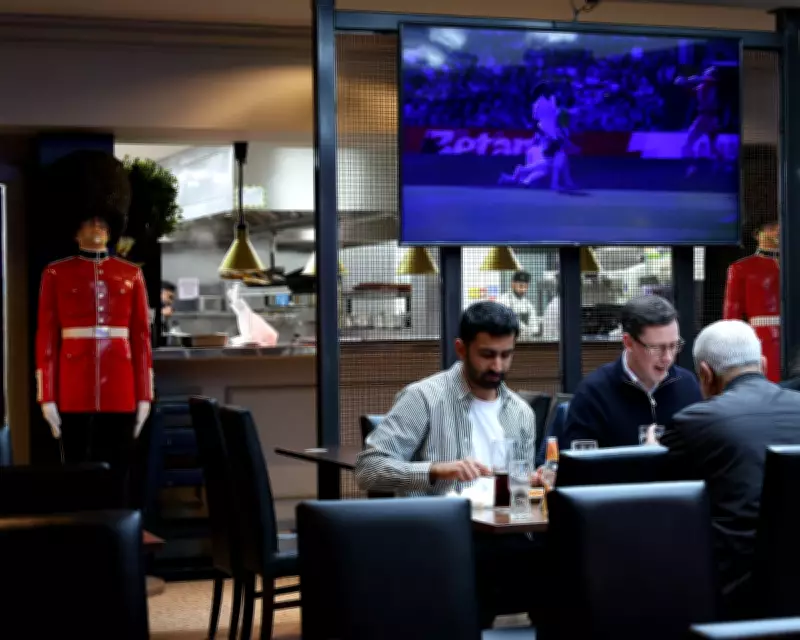
The Royal Oak in West Bromwich stands as a vibrant example of cultural fusion, where the aromas of sizzling mixed grills and the rhythms of Punjabi bhangra music blend seamlessly with the familiar ambiance of a British pub. This establishment, like many across the Midlands, represents the growing phenomenon of Desi pubs—venues that have revitalised struggling pubs by infusing them with South Asian hospitality, cuisine, and culture.
The Evolution of Desi Pubs in the Midlands
Desi pubs have emerged as communal hubs, transforming places that were once sites of exclusion into thriving centres of diversity. Satnam Purewal, landlord at the Red Lion in West Bromwich, reflects on this transformation with pride. "We're breaking down barriers and creating social cohesion," he says, noting that his pub, taken over by his father Jeet in 1997, is part of a broader movement that began in the late 20th century as South Asian communities from India, Pakistan, and Bangladesh settled in the UK.
Overcoming Historical Prejudice
This growth has not been without challenges. In the past, many pubs enforced colour bars that discriminated against people of colour, a practice made illegal in 1965 but persisting for years. The racial discrimination faced by Black and Asian communities was highlighted in 1965 when American civil rights activist Malcolm X visited Smethwick and was refused service at the Blue Gates pub. This historical moment is now commemorated in stained glass art at the Red Lion, symbolising the journey towards inclusivity.

Purewal emphasises that Desi pubs serve as a celebration of diversity in the UK. "Our customers are a melting pot of different cultures," he explains, pointing out that his clientele includes not only Indian patrons but also English, Black, and Muslim communities. "By having pubs like ours, it breaks down those barriers that might exist," he adds, highlighting how shared experiences—such as work and family concerns—unite people across backgrounds.
A Symbol of Cultural Fusion
Amrik Singh Saini, landlord of the Royal Oak in Handsworth, Birmingham, echoes this sentiment. His pub, dedicated to Punjabi musician Sidhu Moose Wala, features paintings of the artist alongside statues of the Queen's Guards, creating a physical representation of cultural blending. Saini disputes recent controversial comments about Handsworth's integration, stating that he "always" sees white faces and diverse groups at his pub, including West Bromwich Albion fans.
Building Success Through Hard Work
Saini, who purchased the Royal Oak in 2011, notes that establishing a Desi pub requires significant effort. "It's not like you buy a building and just put a mixed grill in," he says, emphasising the importance of quality food and atmosphere. His focus has paid off, with Desi pubs across the region experiencing booming business. "All Desi pubs are busy," he observes, attributing their popularity to the unique fusion of British pub culture with South Asian culinary and musical traditions.
The continued rise of Desi pubs comes at a time when concerns about racism and discrimination are resurfacing in the UK. The Midlands, often seen as a focal point for such issues, showcases how these pubs can act as beacons of unity. Through sizzling dishes, lively music, and welcoming environments, Desi pubs are not just preserving the British pub institution but redefining it as a space where communities come together, fostering understanding and cohesion in an increasingly diverse society.