
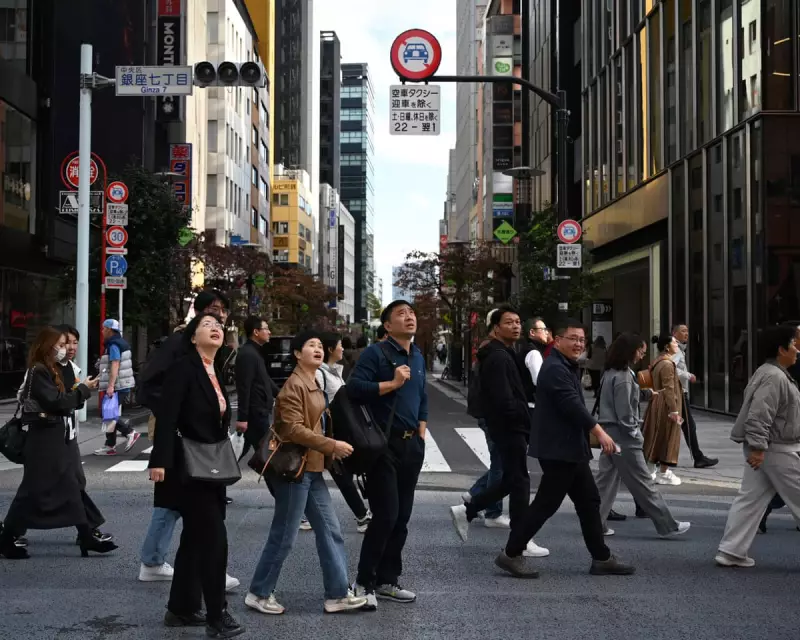
Japanese tourism and retail stocks experienced significant declines on Monday following China's official travel advisory warning its citizens against visiting Japan. The diplomatic tension emerged after comments from Japan's new Prime Minister Sanae Takaichi regarding potential military action concerning Taiwan.
Market Impact and Share Price Falls
The financial markets reacted swiftly to the developing situation. Shares in cosmetics giant Shiseido plummeted by 9% during morning trading, while department store group Takashimaya saw its value drop by more than 5%. Fast Retailing, the parent company of popular clothing brand Uniqlo, experienced a decline exceeding 4%.
This market reaction highlights the substantial economic importance of Chinese tourism to Japan. China represents the largest source of international visitors to the country, making any disruption to this flow particularly damaging for businesses reliant on tourist spending.
The Diplomatic Trigger
The current diplomatic friction originated from statements made by Prime Minister Takaichi in Japan's parliament on 7th November. She suggested that any use of force against Taiwan could constitute a situation threatening Japan's survival, potentially warranting a military response from Tokyo.
"If a Taiwan emergency entails battleships and the use of force, then that could constitute a situation threatening the survival of Japan, any way you slice it," Takaichi told parliamentary members. These comments came despite Japan's self-imposed constitutional rules that restrict military action to specific conditions, including existential threats.
Regional Tensions Escalate
The situation intensified throughout last week, with both China and Japan summoning each other's ambassadors in reciprocal diplomatic protests. Following these diplomatic exchanges, Beijing formally issued its travel advisory recommending Chinese citizens avoid travel to Japan.
Further complicating matters, the Chinese coastguard announced on Sunday that its vessels had conducted a "rights enforcement patrol" through waters surrounding the Senkaku islands. These islands are administered by Japan but claimed by China, where they're known as the Diaoyu islands.
The timing of these developments is particularly notable given that Takaichi had met Chinese leader Xi Jinping just days earlier during an Apec summit in South Korea. That meeting had appeared cordial, contrasting sharply with the current diplomatic strain.
Historical Context and Ongoing Dialogue
Historical tensions between the two nations frequently surface despite their close economic ties. Beijing maintains its position that Taiwan is an inseparable part of Chinese territory and hasn't ruled out using force to achieve reunification. Japan occupied Taiwan for decades until 1945, adding another layer of complexity to the relationship.
In response to the escalating situation, Japanese media reported that Masaaki Kanai, director general of the Asian and Oceanian Affairs Bureau at Japan's foreign ministry, travelled to China on Monday. He was scheduled to hold discussions with his Chinese counterpart Liu Jinsong, where he was expected to reiterate that Takaichi's remarks don't represent a change in Japan's traditional position regarding Taiwan.
The situation continues to develop as both nations navigate this latest diplomatic challenge while managing their significant economic interdependence and longstanding historical tensions.




