
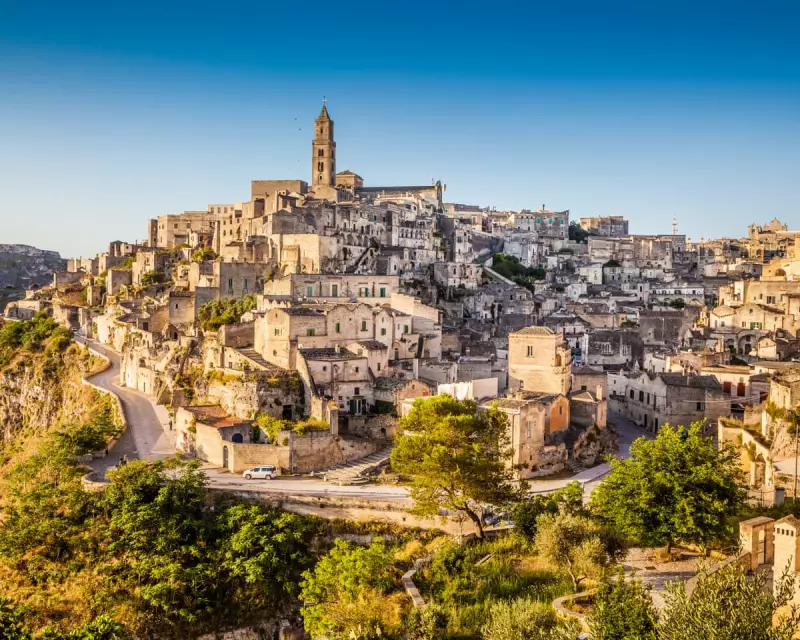
In the heart of Italy's ancient cave city of Matera, a remarkable new hotel-museum is transporting guests back to the era of Magna Graecia. Moyseion offers an unprecedented immersive experience where history comes alive through carefully reconstructed ancient Greek traditions, architecture and daily life.
A Living Journey Through Ancient Greece
The moment visitors enter Moyseion's vaulted breakfast room, they're greeted by the haunting sound of the aulos – a double-piped wind instrument from ancient Greece. Musician Davide, dressed in authentic chiton tunics, sets the scene alongside mosaic floors, decorated vases and flickering flame sconces that create an atmosphere straight from the 8th-6th century BC.
Located in the famous sassi cave dwellings carved into Matera's limestone mountainside, this unique establishment represents four years of meticulous planning and restoration. Owner Antonio Panetta, an artist and lawyer turned hotelier who grew up nearby, envisioned "an immersive experience of history – a living work of art, where archaeology, myth and hospitality combine."
Authentic Details and Historical Accuracy
Every aspect of Moyseion has been designed with historical accuracy in mind. The property features replicas of museum artefacts ranging from urns to jewellery, while handmade furniture copies designs seen on ancient pottery – including three-legged tables, wall-mounted torches and vast wooden chests.
Of the 16 stone dwellings available to guests, eight are directly inspired by ancient Greece, featuring high wooden beds, natural fabrics and cabinets displaying items depicting daily life from that era. Modern conveniences like mirrors and hairdryers are cleverly concealed to maintain the historical illusion.
The basement houses the Sanctuary of Waters, a multilevel spa dedicated to the goddess Demeter that evokes sacred sites of the ancient world. This moodily lit space includes pools, statues of deities and stone basins based on Hellenistic thermal complexes, with floor mosaics replicating actual archaeological finds.
Bringing History to Life
What truly sets Moyseion apart is its young in-house team of archaeologists, classicists, musicians, performers, costume designers and dancers who bring ancient history to life with infectious passion. Staff have collaborated with international specialists in everything from ancient music to choreography and cuisine to ensure authenticity.
"It took a year simply to master the circular breathing needed to play the aulos," musician Davide reveals, demonstrating the level of dedication involved.
Guests become active participants in daily rituals and symposiums rather than passive observers. The experience avoids feeling like a theme park through its genuine commitment to historical recreation. As visitors wander in their chitons while musicians play specially created trigonons (small triangular harps), the atmosphere feels magical rather than gimmicky.
Matera's Rich Historical Tapestry
Matera itself provides the perfect backdrop for this historical immersion. Believed to be the world's third oldest city after Aleppo and Jericho, its dramatic location on the edge of a ravine has made it a favourite filming location for productions ranging from Mel Gibson's The Passion of the Christ to the recent James Bond film No Time to Die.
The city's winding streets and piazzas form a complex jigsaw across two ancient districts – Sasso Caveoso and Sasso Barisano – with the medieval Civita (old town) between them. Dwellings were both natural and human-made, partly dug into the rock and extended over millennia.
Matera's history hasn't been without challenges. By the 1950s, the city had been dubbed the "shame of Italy" due to poverty and unsanitary conditions in the sassi. A 1952 law declared them uninhabitable, forcing over 15,000 residents to relocate to modern quarters on the city's outskirts.
The cave dwellings stood empty until the late 1980s when restoration efforts began, eventually leading to Unesco world heritage status in 1993 and European Capital of Culture designation in 2019.
Beyond the Hotel Walls
Visitors to Matera can explore numerous historical sites, including preserved cave houses showing how families lived as recently as 1956 – complete with mules and chickens sharing living spaces. Churches excavated into rock feature impressive frescoes, while Musma gallery combines a 16th-century palazzo with ancient cave complexes to display contemporary art and sculpture.
Traditional crafts remain alive through artists weaving cloth on looms and carving wooden bread stamps once used to imprint owners' initials on durum wheat loaves before communal oven baking.
A Truly Immersive Experience
Back at Moyseion, the historical immersion continues through carefully curated experiences. Breakfast – known as akratisma – features a menu researched by food anthropologists and historians, prepared by chef Vita. Tables groan under melitoutta (yoghurt, honey and cinnamon cakes), plakous (filo pastry with ricotta, figs and walnuts), barley salad with pomegranate, and various spreads and proteins.
The hotel has begun hosting courses and residencies in ancient music and dance, collaborating with Lotos Lab research centre in Cambridge and world-class scholars.
As Panetta explains, "People don't want to just observe history and stare at things in a museum, they want to experience it in a real way. When guests come here, they soon realise this is not Disney. The past is still alive in our souls – we want you to feel the past in the present, to make the past live again."
Rooms at Moyseion start from €184 per night, including breakfast, rituals and symposium participation. The hotel represents a new approach to historical tourism that engages all the senses while maintaining rigorous academic standards.




