
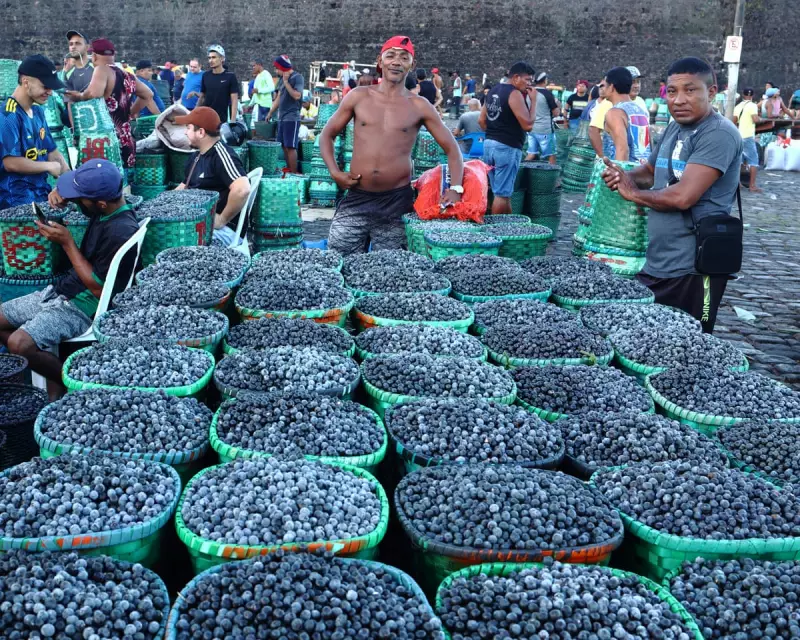
In the bustling open-air markets of Belém, Brazil's gateway city to the Amazon, breakfast becomes an education in biodiversity. Faced with an overwhelming menu of exotic fruit juices—from bacuri and buriti to muruci and mangaba—a traveller's confusion gradually transforms into recognition. These unfamiliar names represent fruits encountered during an extraordinary six-week voyage from the Andes to the Amazon's mouth.
A River Journey Towards Sustainability
The adventure began in 2023 with a sustainable tourism conference in Peru, shortly after Belém had been announced as host city for the upcoming Cop30 climate conference. Determined to minimise air miles, the traveller embarked on an epic downriver journey using public river boats, covering approximately 3,000 kilometres from the Andes to Belém.
Along the way, they sought out individuals working to preserve the Amazon's incredible environment. The experience included night walks with guides who used herbal concoctions to enhance alertness, swimming across the mighty river while hearing electric eel stories, and repeatedly experiencing the disorientation of not knowing which country they were in. Until reaching Manaus, encounters with other visitors were rare, yet questions about tourism's potential role in Amazonia's future persisted.
Tourism Versus Deforestation
The concept that tourism might help combat climate crisis and biodiversity loss presents complex challenges. Flying remains the most carbon-intensive travel method, and tourism is often viewed as a luxury pursuit. However, on the Mamori tributary in central Brazil, surrounded by forest fire smoke, a local schoolboy offered a revealing perspective.
"My father is a rancher," the student explained. "We burn the forest to get grass for our cattle. In emergencies we can sell cleared land, but not jungle—that's worthless. But I don't want to be a rancher; I want to be a tour guide."
His teacher confirmed this sentiment was widespread among local teenagers, who prefer tourism jobs to the brutal physical labour of land clearing. The problem remains limited visitor numbers and scarce NGO or nature project presence, trapping communities in cycles of deforestation.
Açai's Economic Promise
Back in Belém's markets, the journey culminated with sampling local favourite fried fish with açai berry sauce. Local guide Junior explained how açai is generating crucial income for small farmers, who can cultivate it around their homes alongside other trees.
In the Peruvian village where the traveller first encountered açai, residents revealed the fruit had traditionally been an "emergency" wild food, but now commands good prices. Their previous livelihood—hunting river turtles—had become unsustainable due to declining numbers and government bans. Until açai provided an alternative, poaching in national parks represented their only option.
Exploring river islands beyond Belém's waterfront, particularly the tiny green atoll of Ilha do Combu, revealed further insights. Charles, who runs a handicraft shop and sells his own açai, explained its versatility: "It goes with anything. We can eat it with fish or make ice-cream."
Walking through mixed groves of palms, cacao and diverse tree varieties, surrounded by scarlet macaws and giant fruit bats, demonstrated how productive mosaics can provide income while benefiting nature. Rubber collection continues but not commercially, a reminder of Amazonia's complicated history with boom-and-bust cycles.
Learning from Rubber's Legacy
The late 19th century rubber boom triggered catastrophic events that still haunt the Amazon. Hailed as a wonder product, rubber sparked an exploitation stampede that created fortunes for some but proved disastrous for most Amazonian people. After seeds were smuggled to Asia via Kew Gardens in 1876, the boom collapsed, leaving bitter resentment and suspicion.
While açai hasn't replicated rubber's dramatic impact, it isn't without controversies. Overblown superfood claims have dented its reputation, but on Ilha do Combu, Charles remains unconcerned due to strong local demand and good prices.
The Amazon had one final surprise awaiting at Ilha Cotijuba near the river's mouth, where cafe owner Lena served river fish baked in banana leaves, pineapple ceviche and dessert featuring unfamiliar pale green berries. "Like açai," she explained, "but different."
Hidden within these islands, the Amazon continues to safeguard secrets, much as it offers potential solutions through sustainable tourism and diversified agriculture for communities seeking alternatives to deforestation.




