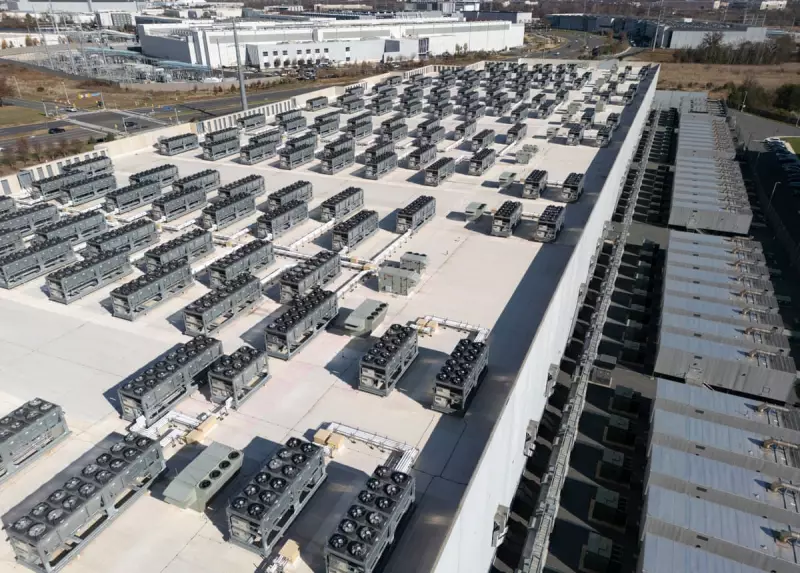
Three prominent Democratic senators in the United States have initiated a formal investigation into the sprawling data centre industry, probing whether the colossal energy demands of tech behemoths are driving up electricity bills for ordinary households.
Lawmakers Demand Transparency from Tech Titans
On Tuesday, Senators Elizabeth Warren of Massachusetts, Richard Blumenthal of Connecticut, and Chris Van Hollen of Maryland dispatched letters to the chief executives of several leading technology and data centre firms. The recipients included the heads of Google, Amazon, Microsoft, and Meta, as well as the operators CoreWeave, Digital Realty, and Equinix.
The lawmakers expressed alarm at reports that the proliferation of energy-guzzling data centres has caused residential electricity costs to "skyrocket" in certain regions. They cited data indicating that areas with significant data centre activity have seen price hikes of up to 267% over the past five years. Nationally, the average family's electricity bill had risen 7% year-over-year as of September, according to the federal Energy Information Administration.

"Through these utility price increases, American families bankroll the electricity costs of trillion-dollar tech companies," the senators stated. They demanded that these corporations "pay their fair share" of electricity rates and contribute more upfront for future energy infrastructure needs.
The Soaring Energy Appetite of AI and Cloud Computing
The inquiry highlights the immense and growing power requirements of the digital economy, particularly with the rapid expansion of artificial intelligence. The senators noted that a single data centre can consume enough electricity to power hundreds of thousands of homes. To meet this demand, utility companies are investing billions in new power plants and transmission lines.
This trend shows no sign of slowing. The US Department of Energy estimates that data centres could account for 12% of the nation's total power consumption by 2028. Currently, roughly one-third of America's more than 4,000 data centres are concentrated in just three states: Virginia, Texas, and California.
The senators' letters seek detailed information on several key points:
- The current and projected number of data centres operated by each company.
- Their current and forecasted energy usage.
- Actions taken to prevent electricity costs from being passed to consumers.
- Tax deductions and financial incentives received from state and local governments.
- Payments made to lobbyists and consultants advocating for data centre construction.
The companies have been given a deadline of 12 January 2026 to respond.
Environmental Costs and Growing Opposition
While the investigation focuses on financial burdens, the senators also allude to the significant environmental footprint of these facilities. A recent Cornell University study published in Nature Sustainability found data centres could annually consume as much water as 6 to 10 million Americans and emit carbon dioxide equivalent to 5 to 10 million cars.
Opposition to data centres on both environmental and financial grounds is mounting across the US. A report by Data Center Watch found local campaigns have blocked or delayed approximately $64 billion worth of data centre projects. The senators criticised the secrecy surrounding these projects, often shielded as trade secrets, and the confidentiality of contracts between data centres and utility companies that leaves the public "in the dark on why their electric bill keeps going up."
They also pointed out a contradiction, noting that while tech firms publicly claim they do not want taxpayers overburdened, they simultaneously oppose state and local regulatory efforts. "Tech companies have paid lip service in support of covering their data centres’ energy costs, but their actions have shown the opposite," the letters asserted.

Initial responses from the companies were limited. Digital Realty stated it "looks forward to working with all elected officials" to support America's tech infrastructure. Meta and Microsoft declined to comment, while Google, Amazon, CoreWeave, and Equinix did not immediately respond to requests.
Not all research supports a direct link between data centres and higher prices. A study from the Lawrence Berkeley National Laboratory suggested data centres may have helped reduce average retail electricity prices, as utility companies can spread fixed infrastructure costs across more customers. This debate is now set to be scrutinised under the senators' spotlight.