Collapse of US-Iran Negotiations Intensifies Global Energy Shock Concerns
The failure of the United States and Iran to secure a peace agreement following extensive negotiations has triggered alarm across global markets, with expectations of rising oil prices and increased borrowing costs this week. The stalemate leaves numerous oil tankers immobilized in the Gulf, exacerbating fears of a protracted energy crisis that could ripple through the world economy.
Vance Blames Nuclear Stance as Talks Disintegrate
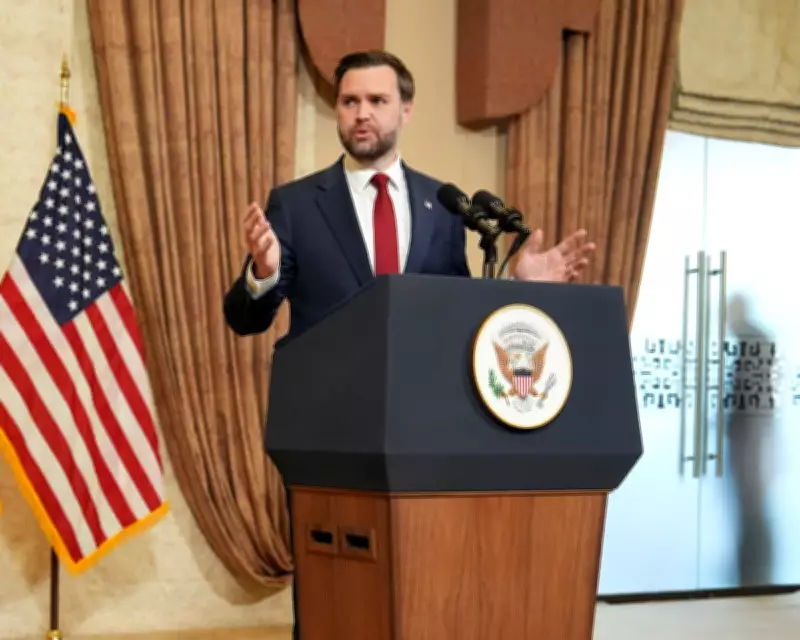
US Vice-President JD Vance, speaking to media on Sunday after marathon discussions with Iranian and Pakistani officials in Islamabad, attributed the breakdown to Tehran's unwavering commitment to its nuclear weapons program. Vance emphasized that his team had clearly outlined non-negotiable red lines, as prospects for a swift resolution to the conflict dimmed. The war, initiated by US and Israeli airstrikes on Tehran on February 28, shows no signs of abating, with Israel continuing assaults on southern Lebanon over the weekend.
Iranian sources countered by criticizing Washington's "excessive" demands, highlighting the deep diplomatic rift. Vance's 21-hour engagement in Pakistan, aimed at brokering peace, ultimately proved futile, leaving the international community grappling with the consequences.

Economic Fallout and Market Volatility
Governments worldwide are increasingly anxious about the long-term inflationary pressures stemming from surging oil and gas prices. Central banks have signaled a reassessment of previously anticipated interest rate cuts, compounding financial uncertainty. Ireland has witnessed social unrest, with protesters flooding Dublin's streets last week and throughout the weekend to decry the escalating cost of living.
Mohamed El-Erian, an adviser to Allianz and former president of Queens' College, Cambridge, noted that ambiguity will persist in evaluating the war's financial impact. "Absent a swift resumption of negotiations, the immediate reaction of financial markets when they open for the trading week will be to push oil prices higher and borrowing costs higher," he warned. El-Erian added that stock market reactions hinge on perceived diplomatic pathways, with the UK facing heightened living costs and constrained policy options.
Oil Price Swings and Geopolitical Maneuvers
Oil markets experienced dramatic fluctuations, with prices plunging below $100 a barrel midweek after a hastily arranged two-week truce, brokered by Pakistan, reopened the Strait of Hormuz. Brent crude closed the week at $94.26 per barrel, down from a wartime peak of $119.45 but still elevated compared to pre-conflict levels near $72. West Texas Intermediate settled at $95.63.
Saudi Arabia moved to mitigate potential price hikes by announcing the restoration of its east-west oil pipeline and other facilities damaged in Iranian attacks, which had curtailed pumping capacity by approximately 700,000 barrels daily. Meanwhile, global stock markets, including the S&P 500, rebounded post-ceasefire but remain volatile.
Global Economic Implications and IMF Forecasts
The war's economic repercussions will take center stage at the International Monetary Fund and World Bank's spring meetings in Washington. IMF Managing Director Kristalina Georgieva plans to present three scenarios, all projecting reduced economic growth and heightened inflation, with particular focus on vulnerable economies.
Wei Yao, an economist at Societé Générale, cautioned that even if the ceasefire unravels, "the more likely near-term outcome is messy non-compliance and low-level retaliation near-term, rather than an immediate return to full-blown escalation." This outlook suggests enduring disruptions to oil and liquefied natural gas flows, prolonging global economic strain.
The situation remains fluid, with Donald Trump's earlier threats to Iran underscoring the precarious geopolitical landscape. As markets brace for further turbulence, the collapse of US-Iran talks underscores the urgent need for diplomatic breakthroughs to avert a deepening energy crisis.