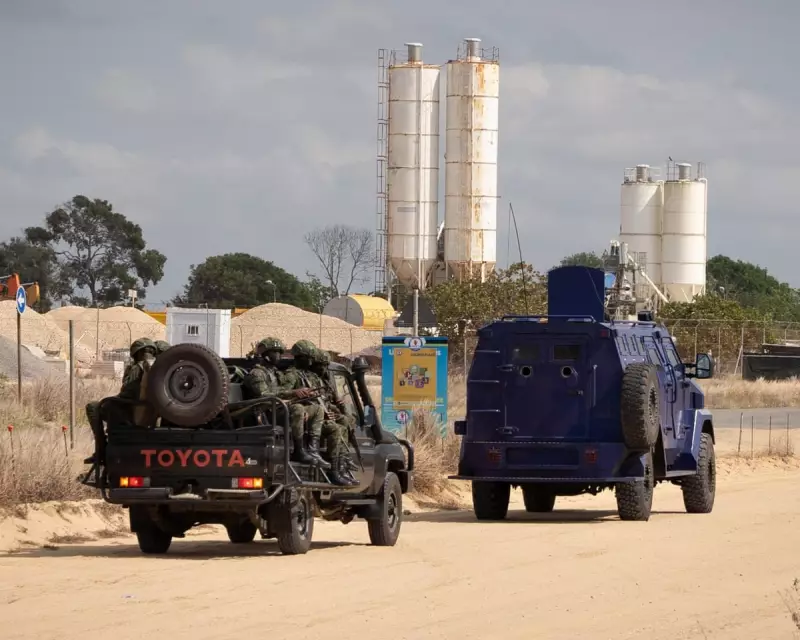
The UK government has committed to providing a substantial financial guarantee for a major gas project in Mozambique, a decision that has ignited a fierce debate over the nation's climate commitments and foreign policy priorities.
A Controversial Financial Backing
Through its export credit agency, UK Export Finance (UKEF), the government has agreed to guarantee a loan of up to £1.1 billion for the Mozambique Liquefied Natural Gas (LNG) project. This project is led by the French energy giant TotalEnergies. The final commitment was made in late November 2025, following a protracted period of internal review and mounting external pressure.
The deal supports the construction of onshore LNG facilities in the northern province of Cabo Delgado. This region has been plagued by a violent insurgency linked to Islamic State, leading to significant security challenges. The UK's backing is intended to help restart the project, which was suspended in 2021 after a deadly insurgent attack.

Clashing with Climate Promises
The decision has drawn immediate condemnation from environmental groups and some MPs, who argue it directly undermines the UK's international climate leadership. Critics point out that financing fossil fuel infrastructure abroad contradicts the government's own commitment to end direct support for overseas fossil fuel projects.
Friends of the Earth labelled the move "climate hypocrisy," while Global Witness stated it locks Mozambique into a fossil-fuel dependent future and exacerbates the climate crisis. The controversy centres on the argument that the world cannot afford new long-term fossil fuel projects if global temperature rise is to be limited to 1.5°C.
Defenders of the deal, including government ministers, frame it as a strategic necessity. They argue it enhances the UK's energy security by diversifying global gas supplies away from Russia and provides vital economic development for Mozambique. The government also contends that gas is a "transition fuel" that can help move countries away from more polluting coal.
Security Risks and Economic Questions
Beyond environmental concerns, the loan guarantee raises serious questions about financial risk and stability. The Cabo Delgado province remains highly unstable. Despite assurances from TotalEnergies and the Mozambican government about improved security measures, the threat of further insurgent activity that could disrupt the project is very real.
This instability poses a direct risk to the UK taxpayer. If the project fails or is halted again due to conflict, UKEF could be liable for the guaranteed billions. Furthermore, analysts question whether the projected economic benefits for Mozambique's population will materialise, given the enclave nature of such large extractive projects and the history of corruption in the region.
The decision places the UK in a delicate diplomatic position. It must balance its stated climate ambitions with geopolitical interests and trade relationships. This loan guarantee signals a continued willingness to support large-scale fossil fuel projects when deemed strategically important, a stance that may attract further criticism at future international climate forums.
The move has been met with silence from the Labour party, which has not publicly opposed the deal. This lack of political opposition suggests a cross-party consensus on the strategic importance of the project, even as backbench MPs and campaigners voice their dismay. The £1.1bn guarantee for Mozambique's gas field is now a litmus test for how the UK reconciles its economic and security interests with its environmental promises on the global stage.