

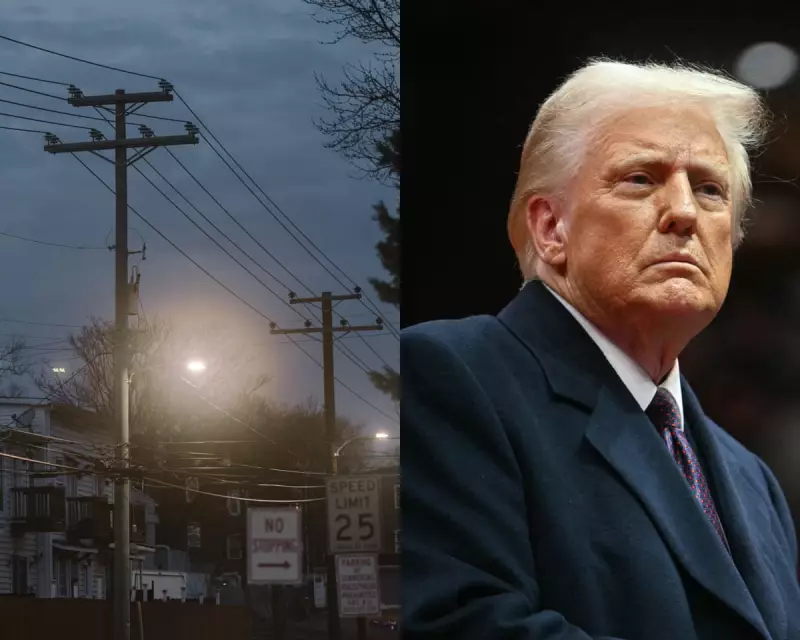
Donald Trump has fallen dramatically short of a central pledge from his 2024 election campaign, failing to slash American energy bills in half within his first year in office. Instead of the promised 50% reduction, a Guardian analysis of official data shows electricity costs have surged across the United States, placing significant strain on household budgets.
Soaring Bills and a Broken Pledge
According to data from the Energy Information Administration (EIA), the statistical arm of the Department of Energy, the average US household electricity bill was 6.7% more expensive in 2025 compared to 2024. This increase translates to an average of nearly $116 in additional costs over the year for American families.
The pain has been far from evenly distributed. The EIA figures reveal extreme hikes in several regions, with Washington DC residents facing a 23% jump in their electricity costs. Indiana followed with a 17% rise, and Illinois with a 15% increase. The Midwest has been particularly hard hit by the steepest bill rises.

Compounding the crisis, gas bills have also climbed, rising by an average of 5.2% over the past year. This dual pressure has led to a sharp spike in power disconnections for unpaid bills. In New York, the disconnection rate increased fivefold compared to the previous year, forcing many households to sacrifice other essentials to keep their lights and heat on.
From Rally Rhetoric to a "Fake Narrative"
During the campaign, Trump was unequivocal. At a rally in Detroit in October 2024, he vowed, "I will cut the price of energy and electricity in half... 12 months from January 20... your electric bill... will be 50, 5-0 per cent, less." He repeated this pledge at numerous events, making it a cornerstone of his economic promises to voters.
As the first anniversary of his inauguration approaches, the reality has sharply diverged. With electricity replacing eggs as a primary inflation concern, Trump has recently dismissed the affordability crisis as a "hoax" and a "fake narrative" created by political opponents. He has instead touted overseeing the "greatest first year in history" for the economy.
Mark Wolfe, Executive Director of the National Energy Assistance Directors Association (NEADA), criticised this stance. "The administration is tone-deaf about this – the president said it’s all made up, when it is in fact quite clear," he said. "Families are struggling to pay energy bills and yet the Trump administration’s actions have made it worse."
Policy Choices and Rising Demand
Experts point to the administration's policy agenda as a key driver behind the unfulfilled promise. The White House has focused on ramping up oil and gas drilling—already at record levels—while rolling back environmental regulations. Simultaneously, Trump has aggressively promoted the artificial intelligence industry, which is significantly raising US electricity demand for the first time in decades.
This push for more demand has been coupled with actions that limit supply. The administration has blocked numerous renewable energy projects, including halting five offshore windfarms in December, a move currently challenged in court. "We have not approved one windmill since I’ve been in office, and we’re going to keep it that way," Trump stated this month.
Abe Silverman, an energy transition expert at Johns Hopkins University, explained the dynamic: "The fundamental dynamic is that we are using more electricity than we did 12 months ago and the infrastructure isn’t keeping pace... The supply horse is losing, by a lot."
Polling indicates electricity bills are now a "major" source of stress for over a third of Americans. Despite this growing burden, the Trump administration has cut federal assistance, eliminating tax credits for energy efficiency and attempting to scrap a programme that helps over 6 million low-income households with heating and cooling costs.
While gasoline prices have fallen by 6% due to a global oil glut, the broken promise on power bills is likely to remain a potent political issue. As Jesse Lee of Climate Power warned, "We’re going to make sure that every Republican who rubber-stamps Trump’s anti-energy agenda pays the political price in 2026."






