
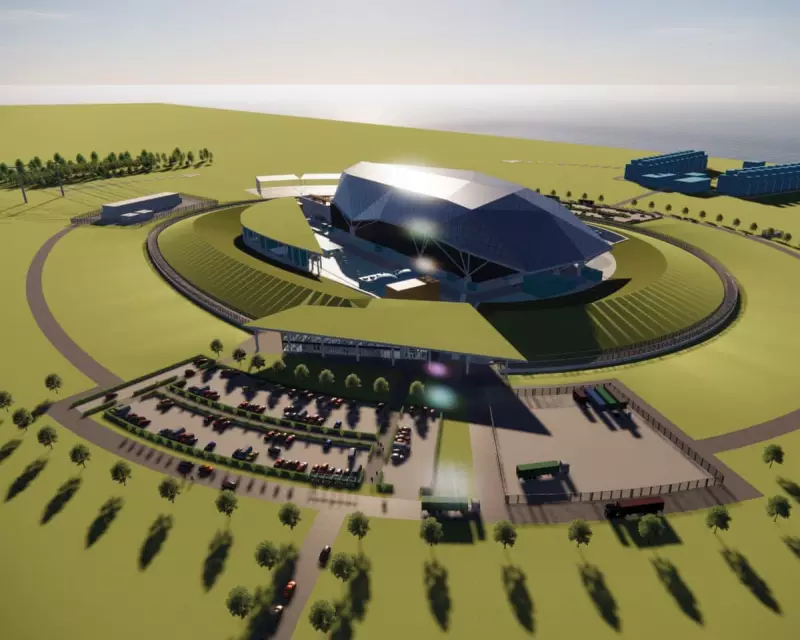
British Nuclear Revival Begins at Wylfa
The Labour government has selected Rolls-Royce SMR to construct Britain's first small modular nuclear reactors at the Wylfa site on Anglesey, North Wales. Prime Minister Keir Starmer confirmed the landmark decision, which involves a substantial £2.5 billion government investment and represents a significant step in the UK's nuclear energy strategy.
US Reaction and Diplomatic Tensions
The announcement immediately provoked a strong response from the United States, with US Ambassador Warren Stephens expressing extreme disappointment that British authorities had overlooked American manufacturer Westinghouse Electric Company. In an unusually direct statement, Stephens suggested Britain should have chosen a different path for the Welsh project, arguing that cheaper, faster alternatives existed.
The diplomatic friction comes shortly after the Trump administration signed an $80 billion (£61bn) deal with Westinghouse to build several larger reactors similar to those proposed for Wylfa. This agreement could eventually see the US government taking a stake in the company.
Technical Details and Strategic Importance
The Wylfa project will feature three small modular reactors, each capable of generating 470 megawatts of power. SMR technology represents an innovative approach to nuclear energy, with components manufactured in factories before assembly on-site. Rolls-Royce plans to build the reactors primarily at its Derby facilities.
This development marks a renaissance for the Wylfa site, which previously generated nuclear power from 1971 until 2015. Previous attempts to revitalise the location, including by Japanese firm Hitachi, collapsed in 2019 due to funding disagreements.
The government's newly established Great British Energy – Nuclear (GBE-N) purchased the site from Hitachi and will also identify potential locations for larger reactors beyond the 3.2GW projects currently under construction at Hinkley Point C and Sizewell C.
Industry and Union Responses
While Tom Greatrex of the Nuclear Industry Association described the project as an exciting opportunity for a UK technology, union leader Sharon Graham of Unite expressed concerns. She argued that building three smaller reactors instead of one larger facility might not maximise job creation for British workers.
Despite these concerns, the confirmation represents a significant achievement for Rolls-Royce SMR, which became the government's preferred developer in June. The consortium includes Qatar's sovereign wealth fund, French resources company BNF, US energy firm Constellation, and Czech utility CEZ.
Prime Minister Starmer emphasised the strategic importance, stating: Britain was once a world leader in nuclear power, but years of neglect and inertia has meant places like Anglesey have been let down and left behind. He highlighted the project's potential to deliver thousands of jobs and drive billions in investment while providing cheaper long-term energy bills.




