Queensland Premier's Bold Claim of 'Sea of Oil' in Taroom Trough
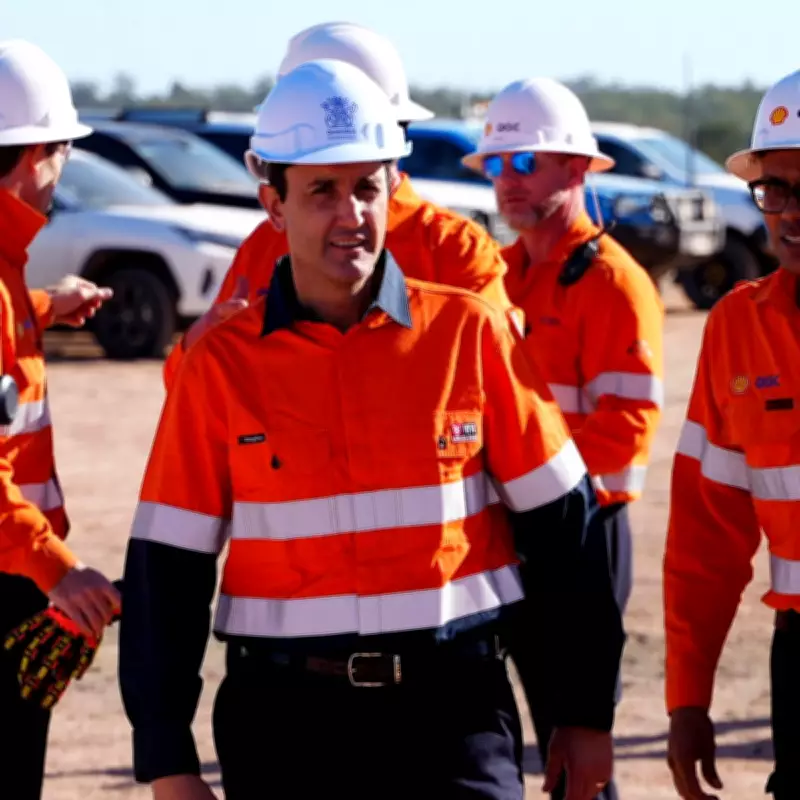
Queensland Premier David Crisafulli has made a striking declaration during a visit to Shell's drill site in the Taroom trough, asserting that a 'sea of oil' lies beneath the ground. This statement comes as politicians from the Liberal National Party (LNP) toured the site near Roma, promoting it as a 'generational opportunity' to reduce Australia's reliance on imported fuel. The visit, captured in social media posts with politicians donning hard hats and hi-vis vests, has garnered significant media attention, especially amid a fuel supply crisis exacerbated by the war in Iran.
What Is the Taroom Trough and Its Potential?
The Taroom trough is a geological formation located approximately 350 kilometers west of Brisbane, covering an area of about 750 square kilometers, comparable in size to Singapore. While companies like Shell, Omega Oil and Gas, and Elixir have been exploring the region for oil and gas, there are no definitive assessments of the resource's volume or accessibility. Crisafulli emphasized that this could be the first oilfield developed in Australia in over 50 years, but the Queensland resources department offers a more cautious view, noting early exploration has identified 'gas-rich underground systems with some associated liquids' without full understanding of their extent.
Expert Opinions and Industry Perspectives
Tony Wood, a senior climate and energy fellow at the Grattan Institute and former gas industry executive, expressed skepticism about the trough's potential. He highlighted that speculation about the area dates back to the 1960s, and past fossil fuel discoveries have often fallen short of expectations. Wood cautioned that any oil in the trough, estimated to be three to four kilometers deep, would likely require fracking—a controversial extraction method. Despite this, companies like Elixir have projected the region could eventually produce 'hundreds of thousands of barrels' daily, though Geoscience Australia has not conducted formal assessments.

Shell's Role and Production Details
Shell, involved in early-stage exploration at the site, has drilled a small number of appraisal wells to assess the trough's potential for liquefied natural gas (LNG) projects and domestic market supply. The company currently produces about 200 barrels of liquid condensate per day, which is refined into low-particulate diesel for underground mining and chemical solvents. Queensland Resources Minister Dale Last shared footage of this process, suggesting the fuel could soon reach service stations in the state.
Government Calls for Fast-Tracked Approvals
The Crisafulli government has urged the federal government to designate the Taroom trough as a project of national interest, advocating for accelerated environmental approvals through a new fast-track pathway. However, federal reforms to national environment laws exclude fossil fuel projects from such expedited processes. Energy Minister Chris Bowen stated that no changes are necessary, while Environment Minister Murray Watt noted a willingness to consider concrete proposals from Queensland, though none have been submitted to date.
Climate Change Considerations
Amid the excitement over potential oil reserves, there has been minimal discussion of the greenhouse gas emissions associated with extracting and burning fossil fuels. Wood pointed out the inconsistency with global efforts to achieve net-zero emissions, advocating instead for a shift toward electric vehicles and renewable energy sources. This oversight raises questions about the long-term environmental impact of developing new oil fields in an era focused on sustainability.
Conclusion: Balancing Opportunity and Caution
The Taroom trough represents a complex intersection of economic opportunity and environmental responsibility. While political leaders tout it as a solution to fuel import dependency, experts urge caution due to uncertain resource estimates and climate concerns. As exploration continues, the debate over fast-tracking approvals and aligning with climate goals will likely intensify, shaping Australia's energy future.