Oil Markets Plunge Into Turmoil Following Trump's Aggressive Iran Address
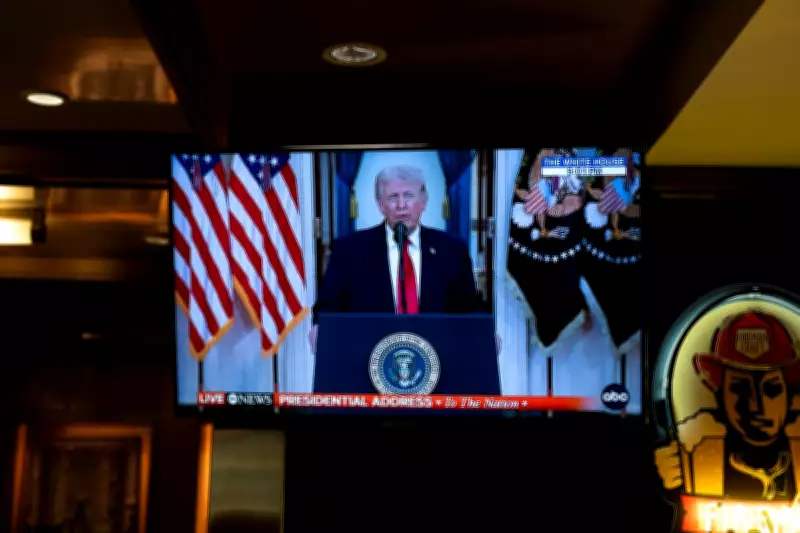
The global oil market experienced a dramatic surge of over 7 percent immediately after former President Donald Trump delivered a national address vowing to continue striking Iran "extremely hard" in the coming weeks. This sharp increase reflects deepening anxiety among traders and analysts about prolonged Middle Eastern instability.
Trump's Speech Sends Shockwaves Through Financial Markets
During a 17-minute Wednesday evening speech that failed to calm international markets, Trump escalated rhetoric by threatening to bomb Iran "back to the Stone Ages" if diplomatic negotiations collapse. Brent crude, the worldwide oil benchmark, responded by jumping 5 percent to reach $106 per barrel.
Market experts immediately warned that Trump's combative language would trigger renewed financial volatility. Chris Beauchamp, chief analyst at IG, observed: "In what might be the most dramatic April Fools' development in recent memory, Donald Trump completely contradicted expectations during his address."

Beauchamp further explained: "This returns markets to the precarious position of last week, forcing us to account for hundreds of millions of barrels of oil that will remain unavailable indefinitely."
Extended Conflict Timeline Contradicts Earlier Predictions
The United States and Israel-led military engagement in Iran is now projected to continue for an additional two to three weeks, despite Trump's repeated recent assurances that hostilities would conclude shortly. This extended timeline compounds existing supply chain disruptions.
Global Energy Crisis Intensifies as Vital Shipping Lane Remains Closed
With the Strait of Hormuz—the primary oil export corridor from the Middle East—effectively shut down, governments and corporations worldwide are confronting escalating energy shortage concerns. The European Union has activated emergency protocols, with officials advising citizens to work remotely, reduce automobile usage, and limit air travel.
Asian governments have implemented fuel tax reductions to alleviate economic pressure. South Korean President Lee Jae Myung has publicly appealed for citizens to "conserve every single drop of fuel."
British authorities have adopted a contrasting approach, with Downing Street representatives encouraging residents to "maintain normal routines" while emphasizing that governmental plans to ensure supply guarantees are underway.
Alternative Export Routes Under Consideration
Gulf nations are reevaluating expensive infrastructure proposals to construct oil and gas pipelines that would circumvent the blocked Strait of Hormuz. These contingency measures, previously deemed economically prohibitive, are gaining renewed urgency as the regional conflict persists.
The convergence of geopolitical tensions, supply chain interruptions, and market uncertainty continues to create perfect storm conditions for global energy stability, with immediate price fluctuations signaling broader systemic vulnerabilities.