Oil Markets React Sharply to Escalating US-Iran Tensions
The global oil market experienced significant volatility late Sunday as prices surged dramatically following Iran's accusation that the United States had broken a ceasefire agreement that had been in place since early April. This development comes amid heightened military tensions in the strategically vital Strait of Hormuz, a crucial conduit for international oil and liquefied natural gas shipments.
Price Movements and Market Response
America's benchmark oil contract, West Texas Intermediate (WTI), surged by 7.5% to reach $90.17 per barrel by 8pm Eastern Time on Sunday. Meanwhile, the international oil benchmark Brent North Sea crude gained 6.5% to trade at $96.27 per barrel. These substantial price increases reflect growing market concerns about potential supply disruptions in one of the world's most important energy transit corridors.
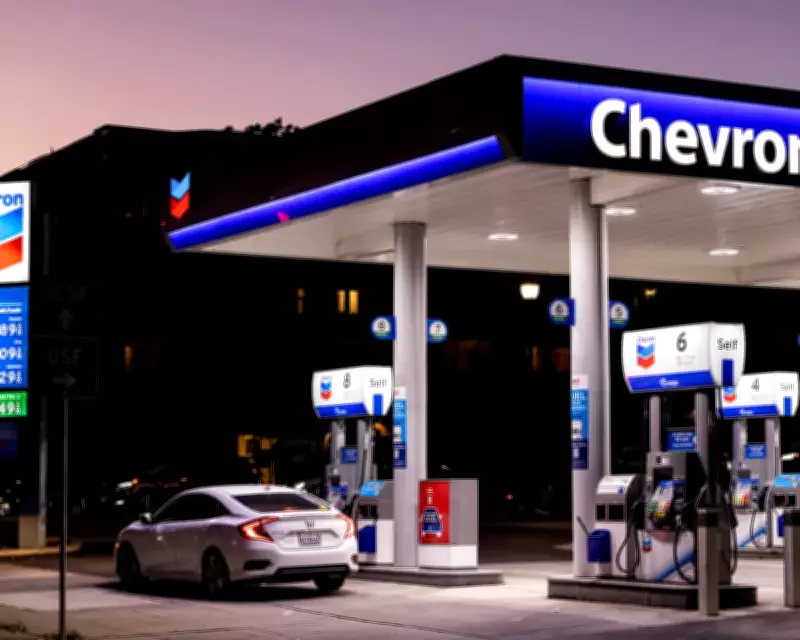
The price surge was immediately visible at gas stations across the United States, including at a Chevron station in San Francisco, California, where displayed prices reflected the rapid market adjustment. This development comes at a time when American consumers are already grappling with elevated fuel costs, with Energy Secretary Chris Wright suggesting that gasoline prices might not drop back below $3 per gallon until 2027 during a recent CNN interview.

Military Incident Triggers Diplomatic Crisis
The immediate catalyst for the market reaction was a military incident involving the destroyer USS Spruance, which fired on an Iranian-flagged cargo ship in the Gulf of Oman on Sunday. The vessel had allegedly attempted to evade the United States naval blockade of the Strait of Hormuz, which has been virtually closed since the beginning of the US-Israeli conflict with Iran.
Iran's military swiftly vowed to respond to what it characterized as an act of aggression, while former President Donald Trump announced that the US military had taken custody of an Iranian-flagged container ship that attempted to bypass the American blockade near the strategic waterway. These developments have created renewed uncertainty about the stability of oil shipments through the region.
Diplomatic Fallout and Political Reactions
The military confrontation has further complicated already strained diplomatic relations between Washington and Tehran. Iranian state media reported on Sunday evening that Tehran has "no plans to participate" in new talks with the United States, just hours after Trump announced he was dispatching negotiators to Islamabad for further discussions.
Political reactions within the United States have been mixed, with Republican Senator John Kennedy of Louisiana, typically a Trump supporter, criticizing what he termed the president's "holy war" with Pope Leo during a Fox News interview. Meanwhile, Pope Leo XIV stated that it was "not in my interest at all" to debate Trump about the Iran conflict, though he emphasized his commitment to preaching messages of peace.
Broader Context and Analysis
Analysts suggest that Trump's decision to send US officials to Islamabad for talks with Iran just 24 hours after Iran once again closed the Strait of Hormuz sends a clear signal to Tehran that the strategic waterway remains a significant bargaining asset. This development comes amid what observers describe as an increasingly chaotic approach to foreign policy that has brought confusion to international negotiations.
The oil price surge occurs against a backdrop of other significant developments in the United States, including a tragic mass shooting in Shreveport, Louisiana, that left eight children dead, political divisions over redistricting in Virginia, and widespread property damage from severe weather systems across multiple states. These domestic concerns intersect with international energy market dynamics to create a complex geopolitical landscape with direct implications for American consumers and the global economy.