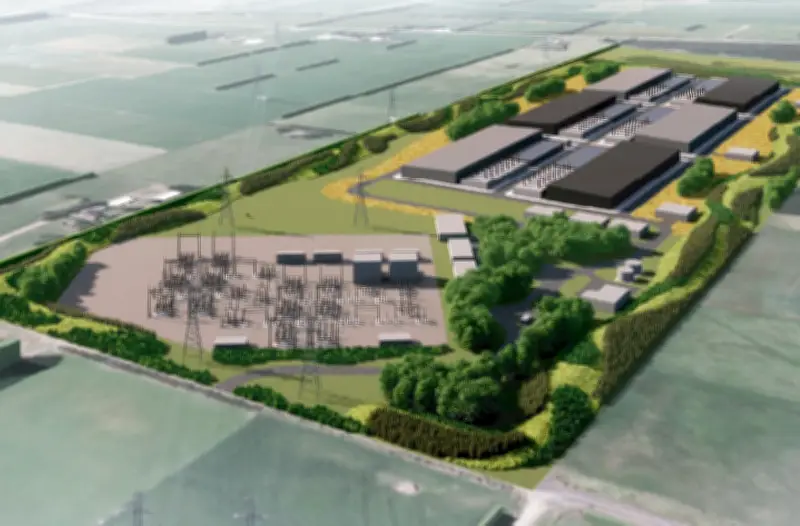
Plans to build New Zealand's first AI datacentre in Makarewa, near Invercargill, have sparked concerns among local residents about electricity and water consumption, noise pollution, and a lack of transparency from the developer, Singapore-based Datagrid.
Project details and local concerns
Datagrid has secured approval to build a NZ$3.5bn (US$2bn) AI datacentre on a 49-hectare site in Makarewa, just north of Invercargill. Construction is expected to begin this year, with the centre becoming operational by 2028. The facility will be used for AI training, processing, and data storage, serving global AI and cloud providers. Datagrid also plans to build a high-speed internet cable between Invercargill and Australia.
Local authorities have hailed the project as a win for the region, citing job creation and improved internet speeds. The company says about 1,200 jobs will be created during construction and about 50 permanent positions upon completion.

Environmental and economic impact
The datacentre will become New Zealand's second-largest electricity user, consuming 280MW of power, after the nearby Tiwai Point aluminium smelter. It has approval to draw up to 604,800 litres of groundwater per day, discharge up to 5,000 litres of treated wastewater daily, and remove a nearby wetland. Additionally, up to 84 diesel backup generators have been approved for air contaminant discharge.
Angus Dowell, an economic geographer studying datacentre construction, said there were "a lot of red flags" about the project and New Zealand's push to become an AI hub. "[The centres] provide short term economic benefits in the form of construction, but they’re very, very low employers long term, and so the long term benefits to local economic development are just not there, they don’t stack up," he said.
Community opposition and demand for transparency
Residents have expressed frustration over the lack of information. Kelly Blomfield, chair of the Southland Sustainable Resource coalition, said, "Locals down here kind of feel like we’ve had our region sold out from underneath us. I think that most people’s actual concern is that we don’t find out anything until it’s done." She added that attempts to gather more information from Datagrid have been unsuccessful.
Amanda, a Makarewa resident who wished to give only her first name, said her initial ambivalence turned to concern after learning more. "Now that I know a lot more from what I’ve seen overseas, I am alarmed … not just for Makarewa, but for New Zealand." She worries about water and power use, the potential operation of 84 diesel generators during power shortages, and round-the-clock noise and light affecting the community and farm animals.
Government push for AI investment
The datacentre is part of the New Zealand government's strategy to attract foreign investment. Invest New Zealand aims to secure NZ$25-30bn in foreign investment for datacentres and AI infrastructure. The agency cites New Zealand's access to renewable energy, available land, cool climate, digital connectivity, skilled workforce, and rule of law as compelling opportunities. A Boston Consulting Group report claims the industry could "unlock up to $70bn of economic activity" over the next decade.
Datagrid did not respond to requests for comment, but CEO Rémi Galasso previously stated that concerns about water and power use were unfounded, noting that Southland's cool climate minimizes water needs and that the company would operate under long-term renewable energy arrangements. Invest New Zealand's CEO, Robert Wall, was not available for an interview.
Dowell emphasized the need for greater scrutiny: "It’s fair for us to look at other places in the world and see the environmental impacts of datacentres, the highly asymmetrical distribution of value as part of the big tech AI economy, and say: we need to know more. We should demand more, because there’s a lot at stake."