British households and businesses face a prolonged wait for substantial energy bill reductions, with the government confirming there is no quick solution to lowering costs despite falling wholesale gas prices.
The Infrastructure Challenge
Energy Minister Michael Shanks told Sky News that while wholesale gas prices have decreased from their 2022 peak following Russia's invasion of Ukraine, energy bills remain approximately 35% higher than pre-war levels. The comments come as Chancellor Rachel Reeves explores potential relief measures ahead of the budget.
Mr Shanks acknowledged that Labour's election pledge to cut bills by £300 through clean power conversion remains undelivered. The UK currently suffers the second-highest domestic electricity prices and the highest industrial electricity costs among developed nations, despite renewable sources generating over 50% of the country's electricity last year.

"The truth is, we do have to build that infrastructure in order to remove the volatility of fossil fuels from people's bills," Mr Shanks stated. "We obviously hope that will happen as quickly as possible, but there's no shortcut to this."
Rising Costs of Green Transition
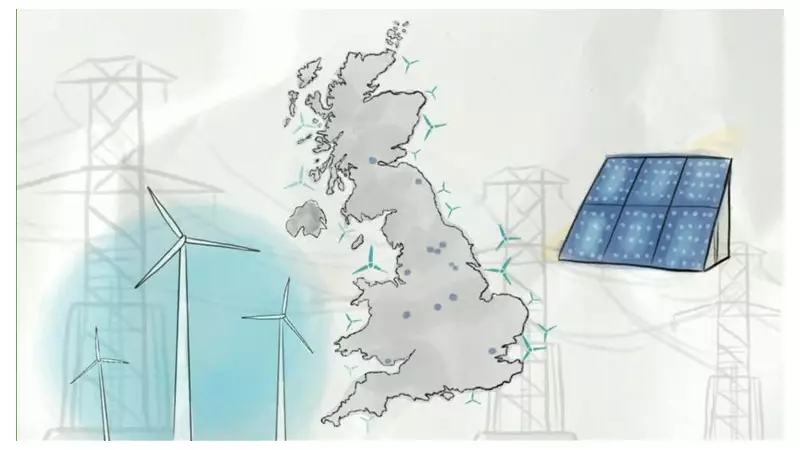
The government's pursuit of a clean power grid by 2030 is contributing to higher bills through several mechanisms. Subsidies for offshore wind projects and grid management costs have increased sharply, driven by supply chain inflation and higher financing costs for major capital projects.
In response, the government has increased the maximum price it will pay for offshore wind by more than 10% in the latest renewables auction and extended price guarantees from 15 to 20 years. The auction concludes early next year, potentially setting new wind power prices higher than the current average wholesale electricity cost.
Renewable subsidies and network costs now constitute over one-third of energy bills and are projected to increase further. Additionally, the cost of new nuclear power generation will be added to bills from January.
Political Consensus Fractures
The persistent high energy costs have fractured political consensus on net zero targets. The Conservatives under Kemi Badenoch have reversed previous policies, with shadow energy secretary Claire Coutinho arguing that "net zero is now forcing people to make decisions which are making people poorer."
Reform UK has made opposition to net zero a central theme, with deputy leader Richard Tice calling renewables "a catastrophe" and blaming them for the UK having "the highest electricity prices in the developed world."
Despite this criticism, Mr Shanks maintains that renewables represent the only viable long-term solution, noting that more than half of Britain's economic shocks over the past 50 years resulted directly from global fossil fuel crises.
The government has also increased social costs funded through bills, including the warm home discount providing £150 payments to approximately six million less-affluent households.