Ed Miliband's Political Crossroads: North Sea Drilling Debate Intensifies
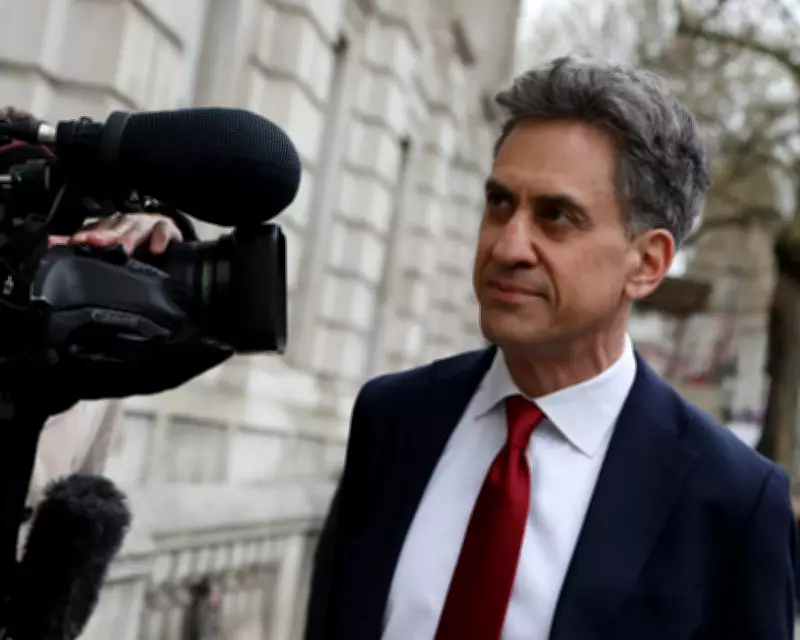
Energy Secretary Ed Miliband arrived at the Cabinet Office in London on March 31, 2026, for a Cobra meeting addressing the Middle East crisis. This high-stakes gathering occurs as Miliband faces mounting political pressure regarding Britain's energy future.
Reform UK's Fossil Fuel Push Challenges Labour's Green Agenda
Reform UK, led by Nigel Farage, has been aggressively promoting new oil and gas licenses in the North Sea as a solution to reduce fuel bills. This proposal has gained surprising traction, finding supporters not only in media circles but also within some trade unions. The situation presents a significant dilemma for Labour, which entered government with strong green energy commitments that have already seen some erosion.
For Miliband, whose career has been defined by climate advocacy, approving North Sea exploration would contradict his fundamental principles. Yet Reform UK has skillfully framed the energy debate as a battle between ordinary citizens and elite interests, capitalizing on economic anxieties exacerbated by the Middle East conflict.

The Geopolitical Context: War Fuels Energy Anxiety
The ongoing Middle East crisis has amplified Reform's narrative, fostering perceptions of energy scarcity and vulnerability to global market fluctuations. Although the full impact of oil price spikes hasn't yet materialized—with much current supply predating recent conflicts—the psychological effect is already shaping political discourse.
Recent polling reveals surprising attitudes, with 38% of Green party supporters favoring North Sea drilling compared to 33% opposing it. This unexpected data point illustrates how energy security concerns are transcending traditional political boundaries.
Practical Realities vs. Political Posturing
The Conservative government initiated the 33rd licensing round in October 2022, but investor interest has been tepid. Only about a quarter of available blocks received bids, suggesting the North Sea's declining appeal despite energy companies enjoying record profits from the Ukraine conflict.
Even if Labour approved new licenses immediately, the practical impact would be negligible. New wells would require five to seven years to become productive, and UK-produced energy couldn't be isolated from global market pricing structures. The fundamental reality remains: fossil fuel prices determine energy costs regardless of production location.
The Renewable Alternative: A Clear Path Forward
The constructive solution lies in accelerating renewable energy development. Separating clean power from fossil fuel markets could provide immediate bill relief while building long-term energy security. Wind and solar generation have been breaking records since the Middle East crisis began, demonstrating renewable energy's growing capacity.
This approach offers multiple benefits: reducing vulnerability to global oil price fluctuations, creating sustainable jobs, and addressing climate change. The narrative of renewable energy as a story of abundance and innovation contrasts sharply with the declining prospects of North Sea fossil fuels.
Political Strategy: Storytelling vs. Substance
The core challenge for Labour isn't policy adjustment but communication effectiveness. Reform UK's empty oil drum rhetoric doesn't require policy capitulation. Instead, Labour must better articulate how renewable investment delivers both immediate economic relief and long-term security.
As Miliband navigates this complex landscape, his decisions will shape not only Britain's energy future but also the political battle lines for years to come. The coming months will test whether practical environmental policy can withstand populist pressure in an increasingly volatile global energy market.