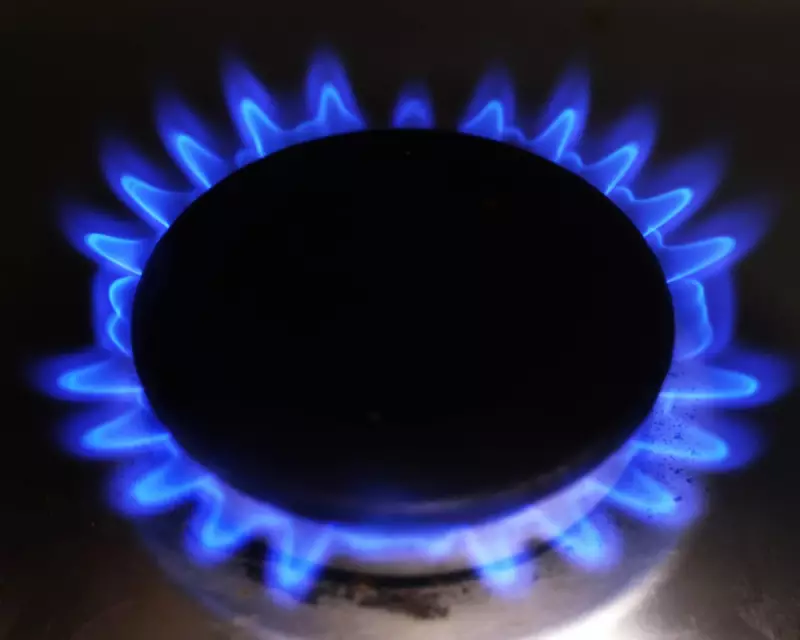
The head of the UK's offshore energy industry has issued a stark warning, stating that domestically produced natural gas will remain a cornerstone of the nation's energy security for decades to come, potentially until 2050. This declaration underscores the critical role of the North Sea even as the country pursues ambitious net-zero targets.
The Case for Continued Domestic Production
David Whitehouse, the chief executive of Offshore Energies UK (OEUK), emphasised that turning away from homegrown gas would be a grave mistake. He argued that importing liquefied natural gas (LNG) from international markets exposes the UK to volatile global prices and potential supply shocks, as witnessed during the recent energy crisis. Relying on foreign gas, he contends, simply exports the nation's environmental and economic challenges elsewhere.
Whitehouse's comments were made ahead of a crucial general election, where energy policy is a key battleground. He stressed that new oil and gas licences for the North Sea are not incompatible with climate goals. The industry's plan involves continuing production from existing basins while simultaneously investing billions in technologies like carbon capture and storage (CCS) and hydrogen production to decarbonise operations.

Balancing Security with Climate Commitments
The OEUK's analysis presents a challenging pathway. It suggests that to maintain energy security while transitioning, the UK will need a significant portion of its gas to come from its own resources. Even with rapid expansion of renewables, gas is expected to play a key role in providing flexible power and heating for millions of homes and businesses well into the future.
However, this stance faces strong opposition from environmental groups and some political quarters. Critics argue that granting new licences locks in fossil fuel dependency and undermines the UK's climate leadership. They advocate for a much faster pivot to renewables, insulation, and other clean technologies, asserting that new fossil fuel projects are not the answer to price volatility or long-term security.
The debate centres on the pace of change. The industry warns that natural decline in existing North Sea fields means new investment is urgent to avoid a cliff-edge drop in domestic supply. Without it, the import gap would widen dramatically, increasing reliance on countries like the US, Qatar, and Norway.
The Road to a Managed Transition
OEUK's vision is one of a managed transition. It calls for a clear policy framework from the next government that supports both energy security and net-zero ambitions. This includes:
- Streamlining the consent process for new projects.
- Accelerating the rollout of carbon capture and storage clusters.
- Maintaining a stable tax regime to encourage long-term investment.
The core message from the industry is that homegrown gas, produced to high environmental standards, offers a safer and more secure bridge to a low-carbon future than unchecked imports. The outcome of this debate will significantly shape the UK's energy landscape, economic resilience, and environmental progress for the next quarter-century.