
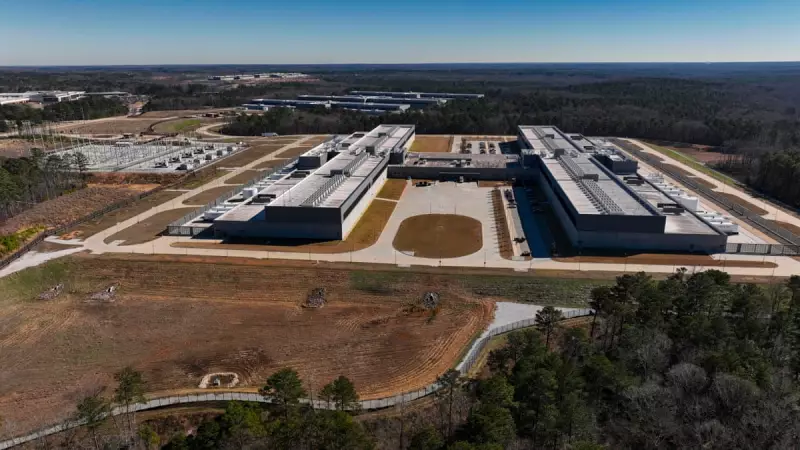
Georgia Proposes Groundbreaking Statewide Moratorium on New Data Centres
Lawmakers in Georgia have introduced a bill that could establish the first statewide moratorium on new data centre construction in the United States. This legislative move places the southern state at the forefront of a growing national debate over the unchecked expansion of these energy-intensive facilities, which are crucial for powering the artificial intelligence industry.
A National Trend Takes Root in Georgia
The Georgia bill, designated HB 1012, is one of at least three similar statewide moratorium proposals introduced across the country in recent weeks, with Maryland and Oklahoma also considering comparable measures. State Democratic legislator Ruwa Romman, who is sponsoring the Georgia bill, stated that the proposed halt on all new data centre projects until March of next year aims to provide state, county, and municipal officials with necessary time to develop comprehensive regulatory policies.
"These facilities permanently alter the landscape of our state," Romman explained, highlighting the urgency for structured oversight. Her bill has garnered bipartisan support, with Republican state congressman Jordan Ridley signing on as a co-sponsor. Ridley emphasised the need for local governments to have adequate time to establish zoning regulations, noting that data centres "seem like they're being built across the state." He acknowledged their economic benefits, including tax revenue and high-paying jobs, but stressed the importance of public input in planning processes.
Energy and Environmental Concerns Drive Opposition
The push for a moratorium comes amid significant energy developments in Georgia. Last month, the state's Public Service Commission approved a plan by utility company Georgia Power to provide an additional 10 gigawatts of energy in the coming years—the largest such request in the commission's history. This expansion, driven largely by data centre demand, is expected to rely predominantly on fossil fuels, raising environmental alarms.
Charles Hua, founder and executive director of PowerLines, an organisation focused on lowering utility bills, pointed out that in Georgia, the utility company profits from new capital investments, incentivising the construction of new power plants. This model has contributed to electricity rates increasing by a third in recent years. Hua argued that improving grid efficiency could lower prices, but current incentives do not support such measures.
Beyond energy costs, concerns over water usage and lost tax revenue have fuelled opposition. Republican legislators in Georgia have introduced bills this year to protect consumers from utility bill hikes and to end tax breaks for data centres. Meanwhile, a Democratic proposal calls for annual public disclosure of energy and water consumption by these facilities.
Local Actions and Political Implications
At the local level, at least 10 Georgia municipalities, including the Atlanta suburb of Roswell, have already enacted their own moratoriums on data centre construction. This trend mirrors actions in municipalities across 14 states, according to Tech Policy Press, reflecting widespread community apprehension.
Romman's bill carries significant political weight, as she is also a candidate for governor, aiming to break the Republican Party's nearly 25-year hold on the office. The moratorium proposal is framed not only as a policy measure but also as a mechanism to allow Georgians to vote on Public Service Commission seats, which make final decisions on energy projects. Recent elections have shifted the commission's makeup, with progressive Democrats Alicia Johnson and Peter Hubbard joining, ending its all-Republican composition for the first time in nearly two decades.
In an editorial, Hubbard criticised the commission's historical approval of utility requests, stating that Georgians oppose being treated as "collateral damage" by unregulated data centre growth. Paul Glaze, spokesperson for Georgia Conservation Voters, suggested that the bill's progression could preview broader electoral dynamics, with data centres becoming a key issue in the upcoming general election.
"The question is, in communities where data centres are coming, who are voters going to trust to have their back?" Glaze remarked, urging candidates to take clear positions on the matter.
As the Atlanta metro area led the nation in data centre construction in 2024, the outcome of Georgia's legislative efforts may set a precedent for other states grappling with the balance between technological advancement and sustainable development.




