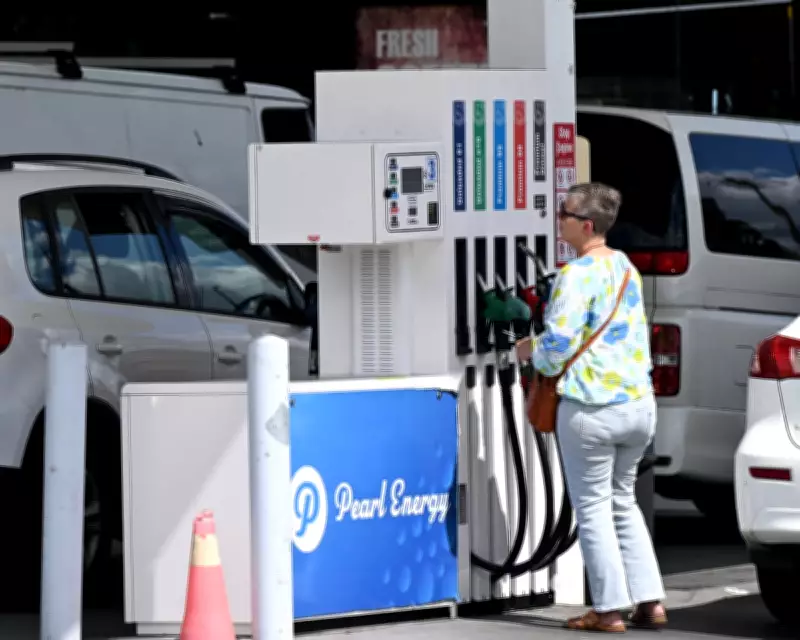
Prime Minister Anthony Albanese has announced a landmark agreement between the federal government and state leaders that will deliver immediate relief at the petrol pump for Australian motorists. The deal will see an additional 5.7 cents per litre reduction in fuel prices for three months, building on existing measures to combat soaring living costs.
Substantial Savings for Households and Businesses
This latest reduction, combined with the recent halving of the fuel excise, brings the total price cut to 32 cents per litre. Government calculations indicate that filling a standard 65-litre vehicle will now cost nearly $23 less than before these interventions. The GST changes have already been legislated, with Albanese emphasizing that "we want this added relief to start showing up at petrol stations straight away."
Rapid Implementation and Market Response
Fuel retailers have been surprisingly swift in passing on previous excise reductions, with prices already dropping approximately 20 cents per litre across major cities. According to NRMA data, unleaded petrol averages have fallen below 240 cents per litre in all capital cities, with Sydney at 236.6 cents, Melbourne at 237.7 cents, Brisbane at 236.4 cents, Hobart at 232 cents, and Canberra at 234.5 cents.

State Cooperation and Consumer Protection
The agreement follows extensive negotiations between federal and state governments, with a joint communique stating that governments "should not benefit from the extra GST paid on higher fuel prices, but should instead ensure that this amount is passed back to the community." New South Wales Premier Chris Minns welcomed the arrangement, noting it "helps take the edge off higher fuel costs" for drivers.
Simultaneously, the Australian Competition and Consumer Commission has taken action against potential price gouging, serving legal notices to businesses in South Australia, Western Australia, Queensland, and the Northern Territory. These companies must justify substantial fuel surcharges imposed on deliveries to remote areas, some exceeding 70 percent. ACCC Chair Gina Cass-Gottlieb warned of strong measures against unfair pricing practices.
Queensland's Crucial Role in the Agreement
Queensland, initially hesitant about the national approach, ultimately joined the consensus on Thursday. The state had previously advocated for using GST windfalls for direct cost-of-living support but agreed to the coordinated fuel price reduction. Queensland Treasurer David Janetzki confirmed the state "played our part" in the federal arrangement while maintaining commitment to targeted relief measures through the budget process.
Broader Economic Context and Future Concerns
The combined measures represent significant fiscal commitments, with the fuel excise reduction costing $1.5 billion and the GST arrangement adding approximately $400 million. Despite this substantial relief, concerns persist about prolonged impacts from international conflicts affecting global oil markets.
Former Treasury Secretary Martin Parkinson has warned that disruptions from Middle East tensions could have "long-lasting effects," noting that even immediate conflict resolution would require considerable time to restore normal trade flows through critical shipping routes like the Strait of Hormuz.
Government Guidance for Motorists
In a national address, Prime Minister Albanese urged Australians to adopt sensible fuel consumption practices, particularly ahead of holiday weekends. He advised motorists to "fill up like you normally would" and consider alternative transportation where possible, stating that using public transit "saves fuel for people who have no choice but to drive."
The government continues to monitor the situation closely, balancing immediate relief with long-term energy security considerations as global uncertainties persist.