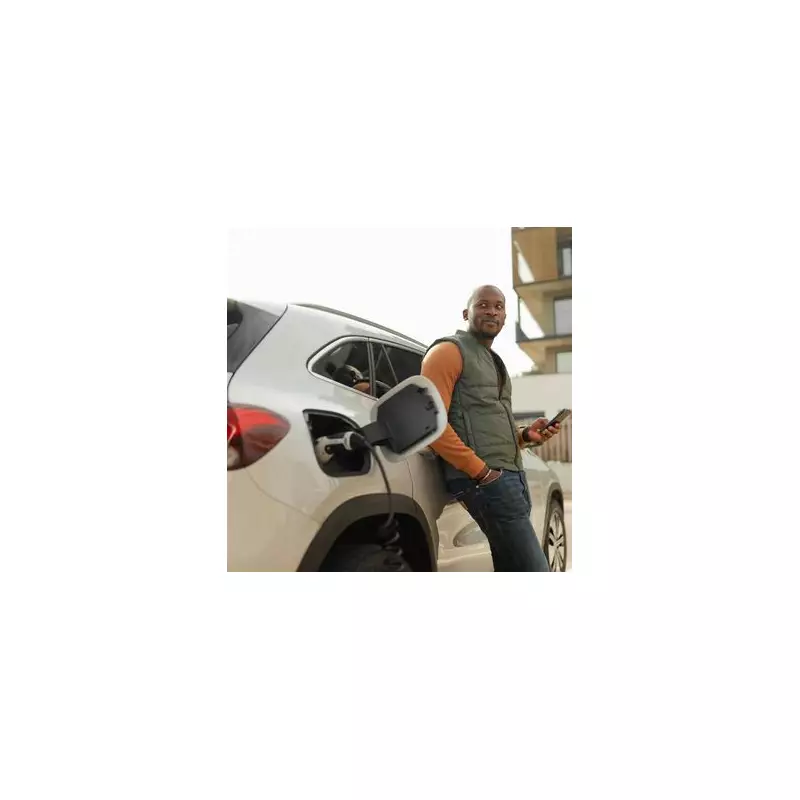
Campaigners and industry leaders are urging the government to introduce new regulations for electric vehicle charging to address what they term "driveway discrimination." The call comes as thousands of EV owners without access to off-street parking face significantly higher costs due to a VAT disparity.
The VAT Divide: A Two-Tier Charging System
At the heart of the issue is a stark difference in Value Added Tax applied to electricity used for charging. Home charging currently incurs a reduced VAT rate of just 5 per cent. In contrast, using public charging points attracts the full standard rate of 20 per cent VAT. This financial penalty disproportionately affects urban households, including younger renters and less affluent early adopters of electric technology who lack a private driveway or garage.
Matt Galvin, the Managing Director of Polestar, has been vocal in highlighting this inequity. In a discussion with the Express, he emphasised the need for change. "We have long called for VAT on public charging to match the lower rate applied to home charging," Galvin stated. "Ending what many call 'driveway discrimination' must be a priority."

The Stark Reality of Charging Costs
The financial impact of this VAT imbalance is substantial and is compounded by already higher base costs for public electricity. Recent analysis has revealed that some of the most expensive public charging stations can cost up to ten times more than the cheapest domestic tariffs.
To put this into perspective, some motorists have reported paying as much as 98p per kWh at public points. Meanwhile, the most economical home energy rates can be as low as 8p per kWh. This vast difference directly influences the running costs and overall satisfaction of EV owners.
Satisfaction Gap and the Road Ahead
A recent survey conducted by the Electric Vehicle Association (EVA) underscores the real-world consequences of this charging divide. The poll found that a overwhelming 87 per cent of EV drivers with a driveway or garage considered their vehicles more economical to run than traditional petrol or diesel models.
However, this positive sentiment plummeted to just 50 per cent among EV owners reliant on public charging infrastructure. This satisfaction gap highlights how the current system risks creating a two-tier ownership experience, potentially slowing the broader transition to cleaner transport.
Matt Galvin connected the issue to wider environmental goals, noting the persistent pollution in towns and cities. "With EV sales increasing, and the latest models being the most technologically advanced, efficient, and environmentally friendly vehicles ever produced, more drivers are clearly deciding to go green and enjoy the benefits," he said. Addressing the charging cost disparity is seen as a crucial step in supporting this shift and ensuring the EV revolution is accessible to all.