Critical Fuel Pipeline Leak Discovered After Extensive Search
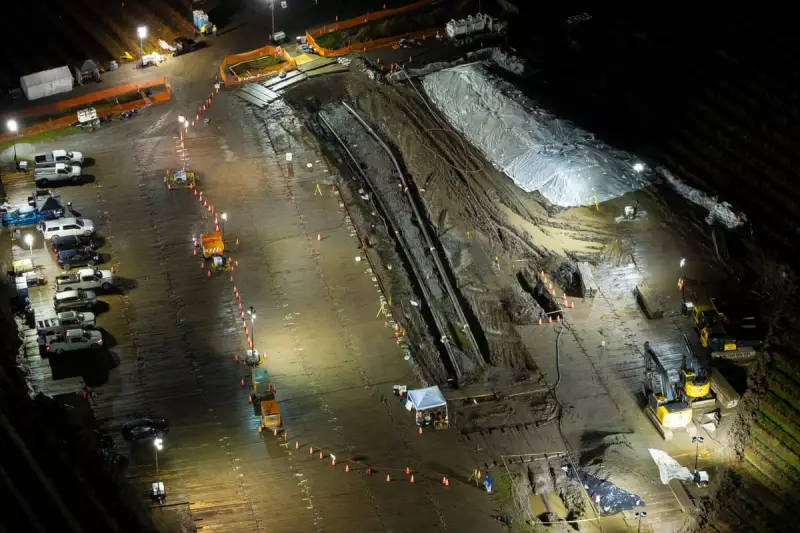
Authorities have finally located the source of a significant fuel leak in BP's Olympic Pipeline, exactly two weeks after the initial discovery near Everett, Washington. The breakthrough comes after an intensive investigation that involved excavating over 200 feet of pipeline and round-the-clock operations by response teams.
Emergency Declarations and Regional Impact
The situation escalated to crisis levels, prompting both Washington Governor Bob Ferguson and Oregon Governor Tina Kotek to declare states of emergency. The Olympic Pipeline is crucial infrastructure, supplying 90% of Oregon's transportation fuel and significant quantities of jet fuel to Seattle-Tacoma International Airport.
BP confirmed the leak originated from a 20-inch pipeline section, while an adjacent 16-inch pipeline has been cleared for restart. "Repair plans for the 20-inch segment are being developed and a timeline for repair and restart will be shared when available," the energy company stated.

Timeline of Events and Response Measures
The leak was first reported on November 11th between Everett and Snohomish, where fuel was spotted in a ditch near a blueberry farm. Washington's ecology department identified the leaked substance as a combination of gasoline, jet fuel, and diesel.
BP initially shut down both parallel pipelines on November 16th, briefly restarted the 16-inch line, but had to shut it down again after observing increased product in collection points. The company maintained overnight operations throughout the investigation period.
Governor Ferguson's emergency declaration on November 19th waived commercial driving regulations to facilitate extended hours for fuel truck operators delivering jet fuel to Seattle-Tacoma airport. Governor Kotek followed with similar measures in Oregon this Monday.
Airlines Implement Contingency Plans
Major airlines serving Seattle-Tacoma airport quickly developed backup strategies to prevent holiday travel disruptions. Alaska Airlines assured passengers: "We do not expect disruption to our operations at Seattle-Tacoma International Airport through the Thanksgiving travel week."
The airline implemented multiple measures including transporting extra fuel on inbound flights, arranging additional truck shipments, and adding fuel stops to certain routes. Delta Air Lines adopted similar precautions, adding refueling stops to some long-haul flights.
Following Tuesday's discovery of the leak source, both airlines began scaling back emergency measures. Delta discontinued fuel stops on select long-haul flights, while Alaska reduced its additional fuel transportation efforts as pipeline operations gradually return to normal capacity.
History of Safety Concerns
This incident adds to a troubling safety record for the Olympic Pipeline. Washington state's ecology department recently fined BP $3.8 million for a 2023 gasoline spill from the same pipeline system. According to the Pipeline Safety Trust, a Washington-based non-profit, the pipeline has leaked at least 13 times since 1999.
The most tragic incident occurred in 1999 near Bellingham, where a pipeline leak caused an explosion that killed three children. Alarmingly, this represents the pipeline's third leak incident in 2025 alone.
Kenneth Clarkson, spokesperson for the Pipeline Safety Trust, emphasized the severity in a statement: "These incidents have caused over $100 million in property damage. Olympic Pipeline must explain what has changed and what they're doing to stop it."
As repair operations commence, regional authorities and energy officials continue monitoring the situation closely, balancing the urgent need to restore fuel supplies with ensuring comprehensive safety measures are in place.