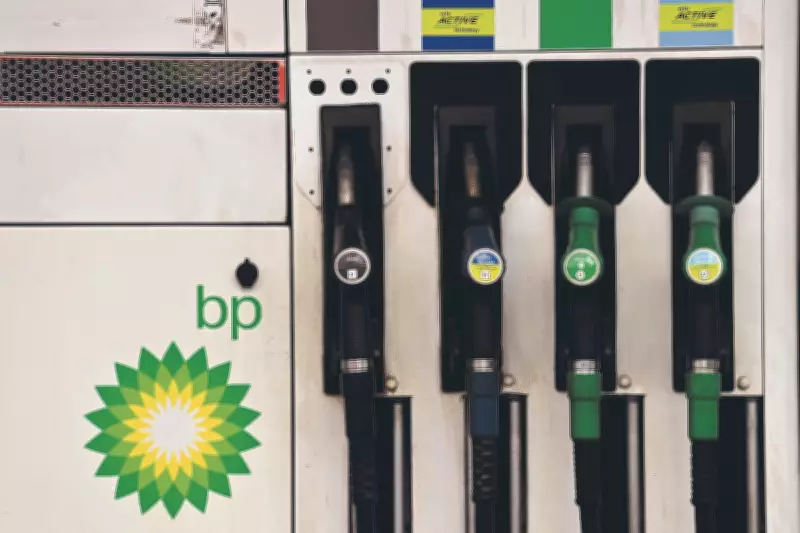
BP Toasts to 'Exceptional' Oil Trading Performance Following Iran War Volatility
Energy giant BP has projected "exceptional" results in its oil trading division, citing significant price volatility triggered by the ongoing war in the Middle East. The FTSE 100 company upgraded its outlook on Tuesday, marking a sharp recovery from the "weak" performance reported in the final quarter of 2025.
Market Turmoil Drives Profit Surge
Global energy markets experienced heightened volatility, particularly in the latter half of the first quarter of 2026. Brent crude prices, the international benchmark for oil, averaged $81.13 per barrel during this period. This represents a substantial increase from the $63.73 average seen in the fourth quarter of 2025.
The primary catalyst for this price volatility has been the blocking of the Strait of Hormuz. This narrow waterway, located between the Persian Gulf and the Gulf of Oman, facilitates the flow of approximately one-fifth of the world's oil supply. Traffic through the strait has halted since the conflict escalated at the end of February.

Refining Margins and Production Outlook
BP expects stronger refining margins to contribute significantly to its financial performance. Refining margins measure the profit generated from converting crude oil into products such as gasoline and diesel. The company forecasts these margins will add between $100 million and $200 million to its bottom line compared to the previous quarter.
Despite the positive trading outlook, total production is anticipated to remain broadly flat. BP estimates production will stay at approximately 2.34 million barrels of oil equivalent per day. The gas segment is expected to deliver "average" results, supported by higher prices for natural gas.
Debt Pile Grows Amid High Prices
While surging oil prices are set to fuel trading success, they also impact BP's debt levels. The blue-chip giant anticipates its net debt will rise to between $25 billion and $27 billion. This is up from $22.2 billion at the end of 2025.
The increase is attributed to a substantial $4 billion to $7 billion in "working capital build." This reflects the company holding higher-value inventory and managing the increased costs associated with operating in a high-price environment.
Leadership and Strategic Challenges
This financial update comes shortly after new CEO Meg O'Neil assumed leadership at the beginning of April. BP announced in December that it would replace previous boss Murray Auchincloss, who had been in the role since early 2024, with O'Neil, the former chief of Woodside Energy. O'Neil was expected to face significant challenges in addressing BP's ongoing struggles.
Activist investor Elliott Management built a £3.8 billion stake in BP in 2025, becoming the company's third-largest shareholder. The size of this stake has increased pressure for a strategic overhaul at the oil major.
Recent Financial and Environmental Pressures
BP revealed in January that it would take a hit of up to $5 billion in the final quarter of 2025 due to the declining value of its green energy projects. In its fourth-quarter update, the firm announced major cost-cutting initiatives as its full-year profit fell 15.7 percent to $7.5 billion, down from $8.9 billion in 2024.
At the upcoming Annual General Meeting (AGM), BP could face its second consecutive revolt over scrutiny of its environmental policies. The company opted to exclude a resolution on climate targets filed by Dutch shareholder activist group Follow This. This decision means O'Neil, alongside chairman Albert Manifold, may confront a significant test of strength.
Last year, nearly a quarter of shareholders voted against the re-election of outgoing chair Helge Lund at the firm's AGM. This conflict intensified following BP's decision to scale back on its climate goals.