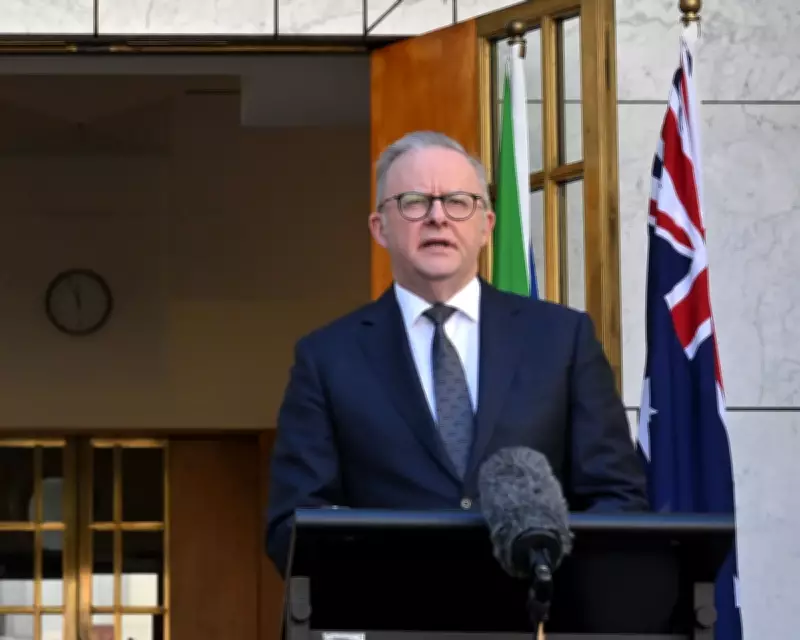
Albanese Accelerates Singapore Visit to Bolster Australian Fuel Supplies
Australian Prime Minister Anthony Albanese has rescheduled his trip to Singapore to an earlier date this week, aiming to secure critical fuel shipments for Australia. This move comes as petrol prices have stagnated despite recent government interventions, and diesel costs are climbing again.
Diplomatic Efforts Intensify Amid Global Energy Concerns
In a bid to shore up fuel supplies, Albanese held discussions with Chinese Premier Li Qiang on Tuesday night. Both leaders agreed to enhance government-to-government communication to support regional energy security. Although it remains unconfirmed whether the Singapore visit will directly yield additional fuel, Albanese emphasized that securing petrol, diesel, and LNG shipments is a top priority.
"This will be important, and we'll continue discussions on securing our trade in petrol, diesel and LNG," Albanese stated on Tuesday. He noted that the Singapore trip, originally planned for later in the year, has been brought forward due to urgent needs.

Fuel Price Trends and Supply Chain Pressures
Data from the Australian Institute of Petroleum reveals that wholesale unleaded prices ceased their decline on Tuesday, after dropping approximately 40 cents per litre since late March, partly due to a 32-cent fuel excise cut by the federal government. Meanwhile, diesel prices have increased by 10 cents per litre for both fuel companies and consumers.
Federal Energy Minister Chris Bowen reported that only 3% of petrol stations nationwide, totaling 241 outlets, experienced diesel shortages as of Tuesday. He assured that fuel companies have supply contracts extending into May, with the government using new powers to underwrite shipments, hinting at further announcements soon.
International Context and Opposition Criticism
Global tensions add complexity to Australia's fuel crisis. U.S. President Donald Trump has threatened to target Iranian civilian infrastructure if negotiations fail to reopen the Strait of Hormuz, a vital oil shipping route. Trump also criticized Australia, among other nations, for lack of support in international efforts.
Opposition Leader Angus Taylor has demanded more transparency, calling for daily updates on fuel supply chain data and advocating for increased domestic oil drilling to ensure long-term energy security. "We need a longer-term plan to ensure this never happens again," Taylor asserted.
Collaboration with Singapore and Future Outlook
Singapore, Australia's largest source of petrol, accounts for 26% of refined fuel imports, 55% of petrol imports, 22% of jet fuel, and 15% of diesel. Last month, Albanese and Singaporean Prime Minister Lawrence Wong issued a joint statement committing to maintain fuel flow and strengthen energy supply chain resilience.
Albanese expressed gratitude for public cooperation during the Easter holiday, noting minimal disruptions despite fears of supply outages. "We saw very few cancellations. That was a good thing," he remarked, highlighting efforts to conserve fuel.
As the Middle East conflict persists, the government continues to seek additional fuel supplies, with current stockpiles holding at 39 days of petrol, 30 days of jet fuel, and 29 days of diesel. Energy experts warn that nations may prioritize domestic consumption over exports, following Malaysia's recent statement to focus on its own needs.