
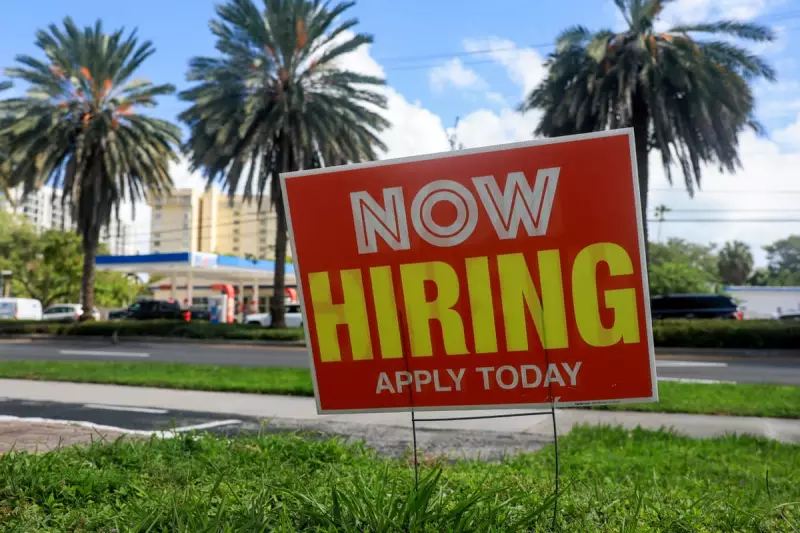
The US labour market experienced significant turbulence in the final months of the year, according to long-delayed official data, revealing a sharp contraction followed by a partial recovery. The figures, released after a disruptive federal government shutdown, paint a picture of an economy grappling with uncertainty.
A Volatile Two-Month Snapshot
The highly anticipated report from the Bureau of Labor Statistics (BLS), published on Tuesday, showed the US economy lost an estimated 105,000 jobs in October. This was followed by a rebound in November, with 64,000 jobs added. November's growth exceeded the consensus economist forecast of around 40,000 new positions.
However, the headline unemployment rate continued its upward trajectory, climbing to 4.6% in November. This marks a four-year high for the key indicator, suggesting underlying weakness despite the monthly job gains.
Data Integrity Under Scrutiny
The release of this critical economic data was severely disrupted by the 43-day federal government shutdown. The BLS could not release full October data on schedule, and the November report was also delayed. This has led to serious questions about the accuracy and completeness of the figures.
Federal Reserve Chair Jerome Powell explicitly warned that the jobs data should be treated with a "skeptical eye" as the statistical system recovers from the shutdown's disruption. He suggested there may be an overcount in the payroll numbers, potentially by about 60,000 jobs per month, which could significantly alter the interpretation of the headline figures.
"We are going to get data, but we are going to have to look at it carefully and a somewhat skeptical eye by the January meeting," Powell added, casting doubt on the immediate reliability of the government's labour market statistics.
A Weakening Trend and Institutional Challenges
Other indicators support the view of a cooling jobs market. A separate report from payroll processor ADP indicated that US private sector employers shed about 32,000 jobs in November, following an addition of 47,000 in October.
The BLS itself is facing profound institutional challenges. The agency was without permanent leadership after the Trump administration fired Commissioner Erika McEntarfer in August. A subsequent nominee was withdrawn, and the agency has yet to have a new leader confirmed. Furthermore, staff levels have shrunk under the administration, with a proposed 20% reduction in employees from fiscal year 2024 to 2026.
This lack of stable leadership and resources coincides with a period where accurate economic data is crucial for policymakers. The Fed, which cut interest rates by a quarter point recently citing labour market concerns, is navigating this fog of imperfect information. Chair Powell also pointed to restrictive immigration policies as a factor hurting labour supply, which has helped keep the unemployment rate from rising even more sharply.
The delayed September report, released in November, showed 119,000 jobs were added that month, with unemployment ticking up to 4.4%. The latest volatile data for October and November confirms that the US jobs engine, once a beacon of stability, is now sputtering amidst political and institutional headwinds.




